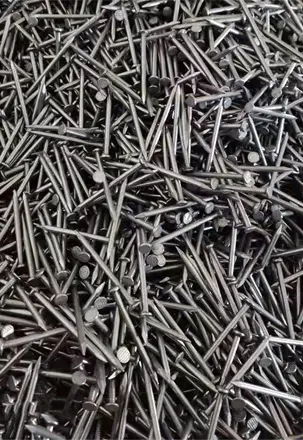
Selecting the correct coil roofing nail length is an essential part of installing asphalt shingles securely and ensuring long-term roof performance. Although roofing nails may appear to be small construction fasteners, their dimensions directly affect fastening strength, wind resistance, roof durability, and the overall quality of a roofing project. Choosing nails that are too short can result in insufficient penetration into the roof deck, while nails that are too long or incorrectly specified may create unnecessary installation problems.
For roofing contractors, building material distributors, hardware wholesalers, and construction project buyers, understanding how to select the right coil roofing nail length is particularly important when purchasing roofing fasteners in bulk. Different roof deck materials, shingle thicknesses, underlayment systems, and installation conditions require different nail specifications.
Coil roofing nails are widely used in asphalt shingle installation because they are compatible with pneumatic coil roofing nailers. Their collated design allows workers to install shingles efficiently, maintain consistent fastening patterns, and reduce manual labor on large roofing projects.
However, choosing the correct length involves more than simply selecting a standard nail size. Buyers need to consider the thickness of the roofing materials, the required penetration depth, local building regulations, and the installation recommendations provided by asphalt shingle manufacturers.
As a professional China building materials and roofing fastener supplier, RoofGlory understands the importance of consistent product specifications and reliable fastening performance. This guide explains how to select the right coil roofing nail length for asphalt shingles and what international buyers should evaluate when sourcing roofing nails from Chinese manufacturers.
Why Coil Roofing Nail Length Matters in Asphalt Shingle Installation
Coil roofing nail length determines how deeply a nail can penetrate the roofing materials and enter the underlying roof deck. This penetration is essential because the roof deck provides the structural foundation that holds asphalt shingles in position.
A roofing nail must pass through the shingle and any other roofing layers before achieving sufficient anchorage in the deck. If the nail does not penetrate deeply enough, the connection between the shingle and the roof structure may become weak.
This problem becomes particularly serious in areas exposed to strong winds, heavy rainfall, temperature fluctuations, and severe weather conditions.
1.1 Preventing Insufficient Fastening
One of the most common problems associated with incorrectly selected roofing nails is insufficient penetration.
When a nail is too short, it may pass through the asphalt shingle and underlayment but fail to achieve the required depth in the roof deck. As a result, the nail may not provide adequate holding strength.
During strong winds, poorly fastened shingles can lift, loosen, or become detached. Once the roofing system is damaged, water may enter through exposed areas and cause additional problems.
Selecting an appropriate coil roofing nail length helps ensure that the fastener reaches the structural deck and provides dependable mechanical attachment.
1.2 Improving Wind Resistance
Wind resistance is one of the most important performance considerations for asphalt shingle roofing.
During storms, wind creates pressure differences around the roof surface. These forces can lift shingle edges and place stress on individual fastening points.
Correct nail length contributes to better fastening performance because it allows the nail to achieve the required penetration into the roof deck.
However, nail length alone does not determine wind resistance. Nail placement, shingle design, nail quantity, installation accuracy, adhesive sealing, roof slope, and local wind requirements also play important roles.
In high-wind regions, contractors should follow the shingle manufacturer’s enhanced fastening instructions and applicable building codes. Some installations may require additional nails per shingle or specific nail patterns.
1.3 Reducing Roof Installation Problems
Incorrect nail length can also create problems during installation.
Short nails may not provide adequate deck penetration, while excessively long nails can extend through the underside of the roof deck. Although penetration through thinner sheathing may be necessary to meet certain installation requirements, unnecessary protrusion can be undesirable in exposed roof assemblies.
The correct specification should balance the roofing material thickness with the required penetration depth.
1.4 Supporting Long-Term Roofing Performance
Asphalt shingles are designed to function as part of a complete roofing system. Their performance depends on the interaction between shingles, underlayment, roof decking, flashing, ventilation, and fasteners.
A properly selected coil roofing nail helps maintain the mechanical connection between these components.
For roofing contractors and wholesalers, selecting the correct nail length is therefore not just a purchasing decision. It is an important part of ensuring that the complete roofing system performs as intended.
What Is the Standard Coil Roofing Nail Length for Asphalt Shingles?
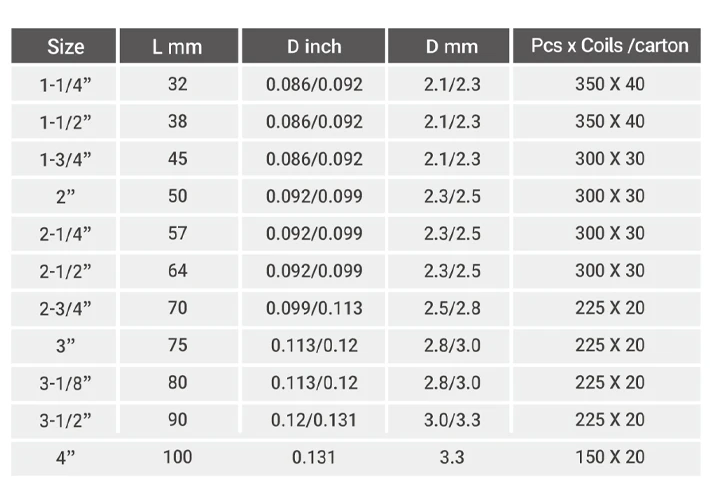
There is no single nail length suitable for every asphalt shingle roofing application. The correct size depends on the combined thickness of the roofing materials and the penetration requirement specified by the applicable installation standards.
Nevertheless, 1-1/4-inch coil roofing nails are a commonly used starting point for many new asphalt shingle installations over standard wood roof decking.
For example, some asphalt shingle manufacturers specify a minimum nail length of 1-1/4 inches for their products. However, this should not be treated as a universal requirement. Thicker shingles, multiple roofing layers, and different deck constructions may require longer nails.
2.1 Common Coil Roofing Nail Lengths
Coil roofing nails are manufactured in different lengths to accommodate different roofing applications.
Commonly available lengths include:
| Nail Length | Typical Application Considerations |
|---|---|
| 3/4 inch | Specialized thin-material applications; generally not suitable as a standard asphalt shingle fastening choice |
| 1 inch | Certain thin roofing or specialized fastening applications; check penetration requirements carefully |
| 1-1/4 inches | Common starting point for many new asphalt shingle installations |
| 1-1/2 inches | Thicker shingles or assemblies requiring additional penetration allowance |
| 1-3/4 inches | Certain thicker roofing assemblies or specialized deck conditions |
| 2 inches | Roof-over installations and applications involving additional material thickness |
| 2-1/2 inches | Specialized applications requiring longer fasteners; verify compatibility and deck requirements |
The table provides general purchasing and specification guidance rather than a universal installation schedule. Always check the actual roofing assembly and manufacturer instructions before selecting a nail.
2.2 Why 1-1/4-Inch Roofing Nails Are Commonly Used
A 1-1/4-inch roofing nail is frequently selected for standard asphalt shingle installations because it can accommodate the thickness of typical shingles and underlayment while providing sufficient length for penetration into many conventional wood decking assemblies.
However, the nail must still meet the required penetration depth.
According to the Asphalt Roofing Manufacturers Association (ARMA), roofing nails should penetrate at least 3/4 inch into the roof deck. Where the roof sheathing is thinner than 3/4 inch, the nail should penetrate through the sheathing by at least 1/8 inch.
This requirement explains why a nail that is suitable for one roof assembly may not be suitable for another.
2.3 Understanding Nail Length and Penetration Depth
It is important to distinguish between the total nail length and the actual penetration depth into the roof deck.
For example, assume a roofing assembly consists of:
- Asphalt shingle thickness: 3/16 inch
- Underlayment thickness: 1/16 inch
- Required roof deck penetration: 3/4 inch
The theoretical minimum nail length is:
3/16 + 1/16 + 3/4 = 1 inch
In this simplified example, a 1-inch nail would meet the calculated dimensional requirement. However, real installations must also account for actual material thickness, shingle construction, nail seating, installation tolerances, and the roofing manufacturer’s minimum nail length.
A 1-1/4-inch nail may therefore be the more appropriate specification for a particular standard roofing assembly.
The key principle is simple: calculate the thickness of all materials above the deck and add the required penetration depth.
Five Key Factors to Consider When Selecting Coil Roofing Nail Length
Choosing the correct coil roofing nail length requires an understanding of the entire roof assembly. Buyers should evaluate the following five factors before placing bulk orders.
3.1 Asphalt Shingle Thickness
The thickness of the asphalt shingles is one of the first factors to consider.
Different asphalt shingle products have different constructions:
- Three-tab asphalt shingles
- Architectural asphalt shingles
- Laminated asphalt shingles
- Premium dimensional shingles
- Heavyweight multilayer shingles
Three-tab shingles generally have a simpler and thinner construction than many architectural and premium laminated products.
Architectural shingles often contain multiple layers of asphalt-coated fiberglass material. Their greater thickness may require longer nails to ensure that the fasteners pass through the complete shingle structure and achieve the required penetration into the roof deck.
For example, a roofing contractor installing standard three-tab shingles may use a different nail specification from a contractor installing thick laminated architectural shingles.
When purchasing coil roofing nails, buyers should therefore confirm the actual shingle thickness and the recommended fastener dimensions rather than relying exclusively on the product category.
3.2 Roof Deck Thickness
Roof decking is another critical consideration.
Common roof deck materials include:
- Plywood
- Oriented Strand Board (OSB)
- Solid wood boards
- Other approved structural wood sheathing
Different decking materials and thicknesses influence nail selection and fastening performance.
For conventional wood roof decking, the widely referenced minimum penetration requirement is 3/4 inch into the deck. Where the sheathing is less than 3/4 inch thick, the International Residential Code (IRC) specifies that roofing fasteners must penetrate through the sheathing.
The actual nail length must therefore be selected according to both the roofing assembly and the deck construction.
For example, a 1/2-inch plywood deck and a thicker wood deck may require different fastening calculations.
Contractors should also avoid assuming that all wood-based roof decks have identical holding characteristics. The deck material, structural condition, thickness, and applicable fastening requirements all matter.
3.3 Number of Existing Roofing Layers
Roof replacement projects frequently involve installing new shingles over an existing roofing system.
This situation is different from new roof construction because the nail must pass through additional material layers before reaching the roof deck.
For example, when new asphalt shingles are installed over an existing shingle layer, the fastener must pass through:
- The new asphalt shingles
- The existing asphalt shingles
- Any applicable underlayment
- The roof decking
A standard 1-1/4-inch nail may not provide sufficient penetration in this situation.
Longer coil roofing nails, such as 1-3/4-inch or 2-inch options, may be needed depending on the actual roofing assembly.
However, roof-over installations are subject to local regulations and the shingle manufacturer’s requirements. Buyers should confirm whether the existing roofing system is suitable for an overlay before specifying longer fasteners.
3.4 Underlayment and Additional Roofing Components
Underlayment is installed between the roof deck and the asphalt shingles. Although it is generally thin, it contributes to the total thickness that a roofing nail must pass through.
Additional materials may also affect nail length, including:
- Multiple underlayment layers
- Ice and water protection membranes
- Additional shingle layers
- Hip and ridge cap shingles
- Certain flashing details
- Specialized roofing components
For example, ridge cap shingles may have a different thickness from standard field shingles. Their fastener specifications may therefore differ.
When selecting coil roofing nails for a complete roofing project, contractors should evaluate each fastening application separately.
3.5 Local Building Codes and Manufacturer Requirements
The fifth factor is compliance with relevant installation standards.
Building regulations differ between countries and regions. Even within the same country, local authorities may adopt different editions of building codes or impose additional requirements.
For asphalt shingle installations in the United States, the International Residential Code provides important requirements for roofing nail dimensions and penetration.
The 2021 IRC Section R905.2.5 specifies corrosion-resistant roofing nails with:
- A minimum 12-gauge shank
- A minimum shank diameter of 0.105 inch
- A minimum head diameter of 3/8 inch
- A length sufficient to penetrate through the roofing materials and at least 3/4 inch into the roof sheathing
Where roof sheathing is less than 3/4 inch thick, the fastener must penetrate through the sheathing.
The 2021 IRC Section R905.2.6 also addresses the minimum number of fasteners required for asphalt shingles.
For buyers sourcing roofing nails internationally, the most reliable approach is to provide the target market, shingle specifications, deck thickness, and applicable installation standard to the manufacturer before ordering.
How to Calculate the Correct Coil Roofing Nail Length
A practical way to select roofing nail length is to calculate the total thickness of the roofing materials above the roof deck and add the required penetration depth.
The basic formula is:
Required Nail Length = Total Roofing Material Thickness + Required Roof Deck Penetration
This calculation provides a starting point for selecting a suitable nail length. The final specification must also satisfy the shingle manufacturer’s minimum nail length and applicable building regulations.
4.1 Example 1: Standard New Asphalt Shingle Roof
Assume the following roofing assembly:
| Component | Assumed Thickness |
|---|---|
| Asphalt shingle | 3/16 inch |
| Underlayment | 1/16 inch |
| Required deck penetration | 3/4 inch |
| Calculated nail length | 1 inch |
Based on the simplified calculation, the nail must be at least 1 inch long.
However, if the shingle manufacturer’s instructions specify a minimum 1-1/4-inch roofing nail, the contractor should use the manufacturer’s specified length rather than the shorter calculated result.
This is why 1-1/4-inch coil roofing nails are commonly considered for standard new-roof installations.
4.2 Example 2: Architectural Asphalt Shingles
Now consider a roof using thicker laminated architectural shingles.
Assume:
| Component | Assumed Thickness |
|---|---|
| Architectural shingle | 1/4 inch |
| Underlayment | 1/16 inch |
| Required deck penetration | 3/4 inch |
| Calculated nail length | 1-1/16 inches |
In this example, the calculated length is slightly greater than 1 inch.
A 1-1/4-inch nail may be appropriate if it also meets the shingle manufacturer’s minimum requirements and provides the specified penetration.
However, actual laminated shingle thickness and nail placement requirements vary by product.
Some manufacturers require nails to penetrate specific laminated portions of the shingle. Therefore, length selection and nail placement must be considered together.
4.3 Example 3: Installing New Shingles Over Existing Shingles
Roof replacement projects may require longer roofing nails.
Assume:
| Component | Assumed Thickness |
|---|---|
| New asphalt shingles | 1/4 inch |
| Existing asphalt shingles | 1/4 inch |
| Underlayment or additional layer | 1/16 inch |
| Required deck penetration | 3/4 inch |
| Calculated nail length | 1-5/16 inches |
In this simplified example, a nail longer than 1-1/4 inches is needed to satisfy the calculated penetration requirement.
A 1-1/2-inch nail could be a candidate, provided it meets the roofing manufacturer’s instructions and all other installation requirements.
For thicker roof-over assemblies, 1-3/4-inch or 2-inch roofing nails may be necessary.
4.4 Why You Should Not Select Nails by Length Alone
Although nail length is essential, it is only one part of the fastener specification.
Two coil roofing nails may have the same length but different shank diameters, head diameters, materials, surface treatments, or shank designs.
These differences influence corrosion resistance, holding performance, and compatibility with roofing nailers.
A professional buyer should evaluate the complete nail specification rather than selecting a product based only on its length.
Coil Roofing Nail Specifications Beyond Length
For international distributors and construction material importers, understanding the complete specification of coil roofing nails is important when comparing suppliers and preparing purchase orders.
5.1 Nail Shank Diameter
The shank diameter determines the thickness of the nail body.
For asphalt shingles installed under the referenced US residential code requirements, roofing nails must have a minimum nominal 12-gauge shank, corresponding to approximately 0.105 inch or 2.7 mm.
A nail with an unsuitable diameter may fail to satisfy the applicable installation specification.
Buyers should confirm both the nominal gauge and actual diameter when evaluating roofing nail manufacturers.
5.2 Nail Head Diameter
The nail head distributes fastening pressure over the shingle surface.
The 2021 IRC specifies a minimum head diameter of 3/8 inch, approximately 9.5 mm, for asphalt shingle roofing nails.
A sufficiently large head helps hold the shingle securely without concentrating all the fastening force on an excessively small area.
The nail head must sit tightly against the shingle without cutting into or damaging the asphalt surface.
5.3 Nail Shank Design
Coil roofing nails are available with different shank configurations.
Common types include:
Smooth Shank Nails
Smooth shank nails have a relatively simple surface design and are commonly used in standard roofing applications.
Ring Shank Nails
Ring shank nails feature circumferential rings along the nail body. These rings can improve resistance to withdrawal from suitable wood substrates.
They may be specified for roofing projects where additional fastening performance is required.
Screw Shank Nails
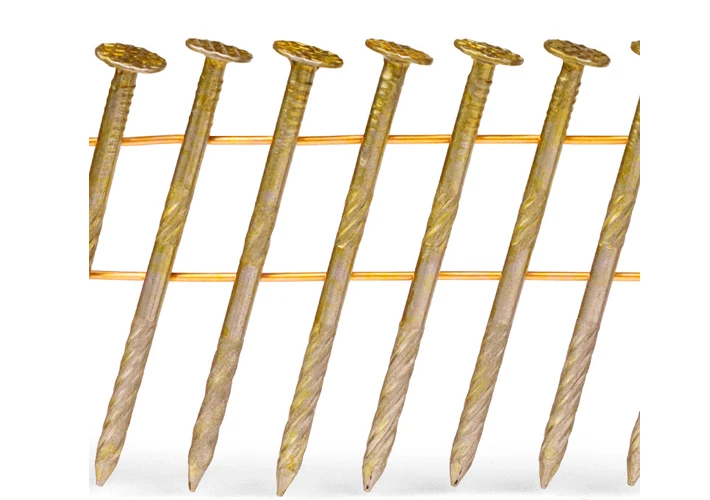
Screw shank nails have a twisted body designed to provide a different mechanical engagement with the substrate.
Their suitability depends on the roofing system, nailer compatibility, and applicable manufacturer specifications.
The shank type should be selected according to project requirements rather than assuming that one design is suitable for every roof.
5.4 Nail Material and Corrosion Resistance
Roofing nails are continuously exposed to environmental conditions, including moisture, temperature changes, and potentially corrosive substances.
Common materials include:
- Galvanized steel
- Stainless steel
- Aluminum
- Copper
Galvanized steel coil roofing nails are widely used in general roofing applications because the protective zinc coating helps resist corrosion.
Stainless steel nails may be preferred in certain coastal or highly corrosive environments.
Aluminum and copper nails are also used in selected roofing applications, subject to material compatibility and project requirements.
For steel roofing nails, buyers should verify the coating type, coating quality, corrosion-resistance requirements, and relevant standards.
5.5 Coil Collation and Nail Angle
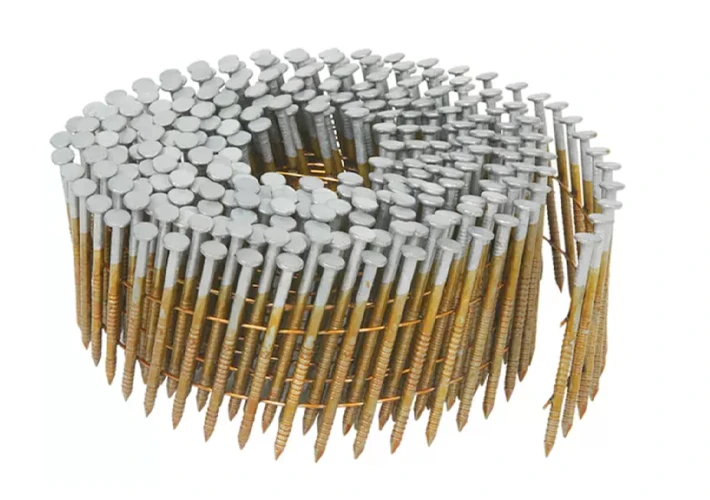
Coil roofing nails are supplied in connected strips or coils, allowing them to be loaded into pneumatic roofing nailers.
Common collation angles include 15-degree and 16-degree configurations, although compatibility varies by nailer manufacturer and model.
The collation material may include wire or plastic, depending on the product design.
Before ordering coil roofing nails in bulk, buyers should confirm:
- Nail length
- Shank diameter
- Head diameter
- Shank type
- Collation angle
- Number of nails per coil
- Coil configuration
- Nailer compatibility
Choosing the wrong collation angle can prevent the nails from fitting the intended pneumatic nailer, even if all other dimensions are correct.

Common Mistakes When Choosing Coil Roofing Nail Length
Even experienced roofing contractors and distributors can encounter problems when ordering roofing fasteners. Understanding common mistakes helps buyers reduce installation risks and avoid unnecessary purchasing costs.
6.1 Using the Same Nail Length for Every Roofing Project
Different roofing projects have different material thicknesses and structural conditions.
A 1-1/4-inch nail may be suitable for one standard new-roof installation but insufficient for another project involving thick laminated shingles or multiple roofing layers.
The correct approach is to evaluate each roofing assembly before finalizing the fastener specification.
6.2 Ignoring Roof Deck Thickness
Roof deck thickness directly affects the required nail length.
Selecting a nail based only on shingle thickness may result in insufficient penetration or unnecessary protrusion.
Buyers should confirm whether the project uses plywood, OSB, or solid wood decking and obtain the actual thickness before selecting the product.
6.3 Focusing Only on Nail Length
Some buyers compare suppliers primarily by nail length and unit price.
However, shank diameter, head diameter, coating quality, material, collation, and dimensional consistency are equally important.
A low-cost nail that does not meet the required specifications may create higher costs through installation delays, fastening failures, or product replacement.
6.4 Ignoring Pneumatic Nailer Compatibility
Coil roofing nails are designed for specific pneumatic nailers.
Differences in nail angle, coil configuration, shank diameter, and nail head design can affect tool compatibility.
Before placing a wholesale order, buyers should provide the nailer brand and model to the supplier or verify the required nail configuration.
6.5 Overdriving or Underdriving Nails
Correct nail length cannot compensate for incorrect installation.
Underdriven nails may leave the nail head above the shingle surface, preventing proper fastening.
Overdriven nails may cut into the asphalt shingle, reducing the effective holding area.
Crooked nails may also provide inadequate fastening and cause shingle distortion.
The nail head should sit flush with the shingle surface without cutting through it. Pneumatic nailers must be adjusted according to the roofing material and installation conditions.
6.6 Overlooking Corrosion Protection
A roofing nail may have the correct length and dimensions but still be unsuitable if its corrosion protection does not match the project environment.
In coastal locations, areas with high humidity, or environments exposed to corrosive substances, buyers should pay particular attention to material selection and coating performance.
Corrosion-resistant roofing nails help maintain fastening integrity throughout the service life of the roofing system.
How to Choose a Reliable Coil Roofing Nail Manufacturer in China
For international roofing material distributors, hardware wholesalers, and construction companies, sourcing coil roofing nails from China can provide access to a wide range of fastener specifications and competitive manufacturing options.
However, selecting a reliable supplier involves more than comparing quotations.
A professional roofing nail manufacturer should be able to understand different market requirements, provide consistent specifications, and support buyers throughout the purchasing process.
7.1 Check Product Specification Capabilities
A qualified supplier should be able to provide detailed information about its coil roofing nail products.
Important specifications include:
| Specification | What Buyers Should Confirm |
|---|---|
| Nail length | Available sizes and dimensional tolerance |
| Shank diameter | Actual diameter and nominal gauge |
| Head diameter | Head dimensions and consistency |
| Shank type | Smooth, ring, or screw shank |
| Material | Steel, stainless steel, aluminum, or other specified material |
| Surface treatment | Galvanized coating and corrosion protection |
| Collation angle | Compatibility with the target nailer |
| Packaging | Coil quantity, carton quantity, and labeling |
| Application | Asphalt shingles and other approved roofing uses |
Clear technical documentation helps importers compare products accurately and reduce communication problems.
7.2 Evaluate Manufacturing Quality Control
Consistency is especially important when buying roofing nails in large quantities.
Small dimensional variations can affect pneumatic nailer operation, nail positioning, and installation efficiency.
A professional supplier should maintain quality-control procedures covering raw materials, wire drawing, nail forming, head dimensions, surface treatment, collation, and finished-product inspection.
Buyers should ask about inspection procedures and request relevant quality documentation where necessary.
For galvanized steel roofing nails, coating consistency and corrosion resistance deserve particular attention.
7.3 Confirm Packaging and Export Capability
Packaging quality is important for international transportation and warehouse management.
Coil roofing nails should be packed to protect the product from moisture, contamination, and physical damage during shipping.
Typical export packaging considerations include:
- Protective inner packaging
- Strong outer cartons
- Clear product labels
- Nail specification information
- Quantity identification
- Palletized loading when required
For distributors, customized packaging and private-label options may also be important.
A supplier capable of supporting different packaging requirements can help importers develop their own product brands and improve market recognition.
7.4 Request Samples Before Bulk Purchasing
Samples allow buyers to evaluate product dimensions, nailer compatibility, collation quality, and general manufacturing consistency before committing to a large order.
A practical sample evaluation should include:
- Checking nail length and diameter.
- Measuring nail head dimensions.
- Inspecting the galvanized surface.
- Checking coil arrangement and collation.
- Testing the nails with the intended pneumatic roofing nailer.
- Observing whether nails feed and drive consistently.
- Reviewing packaging and product identification.
For large-volume procurement, buyers may also request inspection reports and agreed quality specifications before production.
7.5 Consider OEM and Wholesale Cooperation
Many international importers prefer working with manufacturers that can support long-term purchasing arrangements.
OEM and customized supply options may include:
- Customized nail lengths
- Different shank designs
- Specified coating requirements
- Customized coil configurations
- Private-label packaging
- Bulk carton packaging
- Product labeling for different markets
Before confirming an order, buyers should agree on the detailed technical specifications, acceptable tolerances, packaging requirements, inspection criteria, and delivery terms.
7.6 Why Work with RoofGlory?
RoofGlory is a China-based building materials and roofing products supplier serving international B2B buyers.
For importers, wholesalers, and construction material distributors, working with a China factory supplier can provide opportunities to consolidate sourcing, discuss customized product specifications, and establish long-term supply cooperation.
When evaluating coil roofing nail requirements, RoofGlory encourages buyers to confirm the intended application and provide the relevant technical information before ordering.
This includes:
- Required nail lengths
- Shank and head dimensions
- Smooth, ring, or screw shank preferences
- Galvanized or other material requirements
- Coil angle and pneumatic nailer compatibility
- Target market and applicable standards
- Packaging and branding requirements
By confirming these details in advance, buyers can reduce specification misunderstandings and identify suitable roofing fasteners for their markets.
RoofGlory’s broader building materials business also serves international buyers looking for coordinated sourcing solutions for roofing and construction projects.
For wholesale inquiries, contact RoofGlory to discuss your roofing product requirements and obtain product information.
Frequently Asked Questions About Coil Roofing Nail Length
Q1: What length coil roofing nails should I use for asphalt shingles?
A 1-1/4-inch coil roofing nail is a common starting point for many standard new asphalt shingle installations.
However, the correct length depends on shingle thickness, underlayment, roof deck construction, and required penetration depth.
Always follow the shingle manufacturer’s installation instructions and applicable building regulations.
Q2: Are 1-inch roofing nails long enough for asphalt shingles?
Not necessarily.
A 1-inch roofing nail may be suitable for certain specialized roofing assemblies, but it may not satisfy the minimum nail length specified by a particular shingle manufacturer.
The nail must pass through the roofing materials and achieve the required penetration into the roof deck.
For US residential asphalt shingle installations, the referenced IRC requirement is at least 3/4 inch of penetration into roof sheathing, or penetration through the sheathing where it is thinner than 3/4 inch.
Q3: When should I use 1-1/2-inch coil roofing nails?
A 1-1/2-inch coil roofing nail may be appropriate when installing thicker asphalt shingles, when the roofing assembly includes additional material layers, or when the shingle manufacturer specifies a longer fastener.
It can also be considered for certain roof replacement projects, provided it achieves the required deck penetration.
The actual application must be checked before selecting the nail.
Q4: What length roofing nails should I use for a second layer of shingles?
When installing new shingles over an existing layer, longer nails are generally required because the fastener must pass through additional material before reaching the roof deck.
Depending on the thickness of the existing shingles and the new roofing assembly, 1-3/4-inch or 2-inch nails may be suitable candidates.
However, the exact length must be calculated based on the actual roof construction and confirmed against the roofing manufacturer’s instructions.
Q5: How deep should roofing nails penetrate the roof deck?
According to the Asphalt Roofing Manufacturers Association, roofing nails should penetrate at least 3/4 inch into the roof deck.
If the roof sheathing is less than 3/4 inch thick, the nails should penetrate through the sheathing by at least 1/8 inch under ARMA’s recommendation.
The applicable building code and project-specific requirements should always be checked.
Q6: What is the minimum diameter for asphalt shingle roofing nails?
The 2021 International Residential Code specifies a minimum nominal 12-gauge shank, approximately 0.105 inch or 2.7 mm, and a minimum nail head diameter of 3/8 inch or approximately 9.5 mm.
These dimensions are important when specifying roofing nails for markets that follow the referenced US residential code.
Q7: Are ring shank coil roofing nails better than smooth shank nails?
Ring shank nails have circumferential ridges that can improve withdrawal resistance in suitable wood substrates.
Smooth shank nails have a simpler body design and are also commonly used in roofing applications.
The best choice depends on the roofing manufacturer’s requirements, the roof deck material, local building codes, and project conditions.
Q8: Can coil roofing nails be used with any pneumatic roofing nailer?
No.
Coil roofing nails must match the nailer’s specifications, including collation angle, nail length, head type, shank dimensions, and coil configuration.
Buyers should confirm the nailer brand and model before ordering.
Q9: Are galvanized coil roofing nails suitable for outdoor roofing projects?
Galvanized steel roofing nails are widely used for outdoor roofing applications because the zinc coating helps protect the steel against corrosion.
However, the appropriate coating level depends on the environment and project requirements.
Coastal and highly corrosive environments may require stainless steel or other specifically approved corrosion-resistant fasteners.
Q10: What information should I provide when requesting a wholesale coil roofing nail quotation?
To obtain an accurate quotation, buyers should provide:
- Required nail length
- Shank diameter
- Head diameter
- Shank design
- Material and coating
- Coil angle
- Nails per coil
- Estimated order quantity
- Packaging requirements
- Destination market
Providing this information helps manufacturers recommend suitable products and prepare more accurate wholesale quotations.
Conclusion
Selecting the right coil roofing nail length for asphalt shingles requires a clear understanding of the roofing assembly, including shingle thickness, underlayment, roof deck material, existing roofing layers, and required nail penetration.
Although 1-1/4-inch coil roofing nails are commonly considered for standard new asphalt shingle installations, there is no universal nail length suitable for every project. Thicker shingles, roof-over installations, and different decking conditions may require longer fasteners.
The most important principle is to ensure that the nail passes through all roofing materials and achieves the required penetration into the roof deck while complying with the shingle manufacturer’s instructions and applicable building regulations.
For roofing material importers, wholesalers, and construction companies, selecting a dependable manufacturer is equally important. Consistent dimensions, suitable corrosion protection, reliable coil collation, and clear product specifications all contribute to better purchasing decisions.
RoofGlory welcomes inquiries from international B2B buyers looking for roofing products and building material supply solutions from China.
RoofGlory – Build With Glory!
Contact us to discuss your roofing fastener specifications, wholesale requirements, and customized sourcing needs.