Introduction: Why Source Black Annealed Iron Wire from China?
Black annealed iron wire is an essential industrial material used across construction, agriculture, packaging, manufacturing, and general hardware applications. Known for its flexibility, softness, dark surface finish, and practical tying performance, this wire is widely purchased by construction material wholesalers, hardware distributors, importers, and industrial supply companies.
For international buyers, China is one of the most important sourcing destinations for black annealed iron wire. Chinese manufacturers offer a broad selection of wire diameters, packaging formats, coil weights, and customized specifications. Combined with established steel processing capabilities, competitive production costs, and mature export logistics, China provides attractive sourcing opportunities for businesses purchasing black annealed wire in bulk.
However, choosing the right wholesale supplier involves more than comparing quotations. Buyers need to evaluate raw material quality, annealing consistency, tensile strength, surface condition, production capacity, packaging standards, delivery reliability, and export experience.
A reliable supplier should be able to provide stable product specifications, consistent production quality, flexible packaging solutions, and professional communication throughout the purchasing process.
For overseas wholesalers and project procurement companies, RoofGlory is a China-based building materials manufacturer and supplier offering black annealed iron wire alongside other construction-related materials. With a focus on factory supply and international B2B cooperation, RoofGlory aims to help buyers establish dependable sourcing relationships.
This article introduces the key considerations when sourcing black annealed iron wire from China, explains the characteristics of leading supplier types, and provides practical guidance for selecting a suitable wholesale partner.
Understanding Black Annealed Iron Wire and Its Main Characteristics
Before comparing wholesale suppliers, international buyers should understand what black annealed iron wire is, how it is manufactured, and which properties determine its commercial value.
What Is Black Annealed Iron Wire?
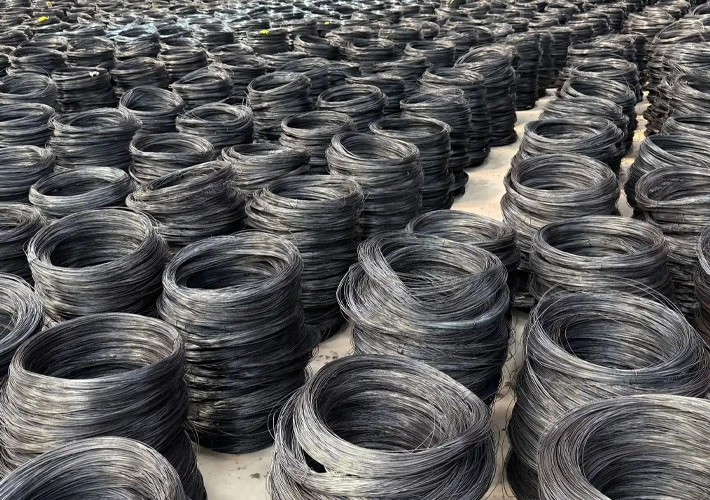
Black annealed iron wire, also known as black annealed steel wire, soft annealed wire, or black iron binding wire, is generally manufactured from low-carbon steel wire rod. The material is processed through wire drawing and annealing to achieve the required diameter, softness, and mechanical properties.
The annealing process involves heating the drawn wire to a controlled temperature, maintaining it for an appropriate period, and then cooling it under controlled conditions. This heat treatment changes the internal structure of the steel and reduces hardness and residual stress.
Compared with untreated hard-drawn iron wire, black annealed wire offers improved flexibility and ductility. It can be bent, twisted, and tied more easily, making it particularly suitable for applications that require frequent manual handling.
The black appearance is another characteristic of this product. Depending on the manufacturing process and surface treatment, the wire may have a dark oxide surface or a slightly oily black finish.
For wholesale buyers, it is important to understand that black annealed wire is not simply ordinary black iron wire. Its performance depends on the raw material composition, drawing process, annealing temperature, cooling conditions, and final inspection.
Main Characteristics of Black Annealed Wire
The following properties make black annealed iron wire a popular choice in industrial and construction supply chains.
1. Excellent Flexibility
Flexibility is one of the most important reasons buyers choose black annealed wire. After heat treatment, the wire becomes softer and easier to bend.
Construction workers can twist it around reinforcing bars, secure building materials, and complete binding operations without requiring excessive force.
2. Good Ductility
Ductility refers to a material’s ability to deform without breaking. Black annealed wire is designed to withstand bending and twisting during normal applications.
This property is particularly important for rebar tying, packaging, and agricultural binding, where the wire may undergo repeated manual deformation.
3. Consistent Black Surface
The dark surface appearance makes black annealed wire easy to distinguish from galvanized and bright steel wire.
Some manufacturers apply a light oil coating to help protect the surface during storage and transportation. Buyers should confirm the surface treatment before placing an order, especially when the wire will be used in environments with specific cleanliness requirements.
4. Cost-Effective Material
Black annealed iron wire is generally more economical than stainless steel wire and many specialized corrosion-resistant wire products.
For wholesalers purchasing several tons per order, the combination of low-carbon steel raw materials, established production technology, and flexible packaging can help control procurement costs.
5. Multiple Packaging Options
Chinese manufacturers commonly supply black annealed wire in small coils, standard commercial coils, large coils, and spool formats.
Depending on the supplier, packaging can be customized according to the buyer’s distribution channels and warehouse requirements.
Common Raw Materials
Q195 and Q235 low-carbon steel are commonly used as raw materials for black annealed wire.
- Q195 steel: A commonly selected low-carbon steel grade for general-purpose soft wire and binding applications.
- Q235 steel: A structural carbon steel grade that may be selected when buyers require different strength or mechanical characteristics.
The actual performance of the finished wire depends on more than the steel grade. Chemical composition, wire drawing reduction, annealing conditions, and quality control also influence the final properties.
Therefore, buyers should request material information and mechanical test results instead of selecting a supplier based only on the Q195 or Q235 designation.
Recommended Wholesale Suppliers of Black Annealed Iron Wire in China
China has several established industrial regions specializing in iron wire, steel wire, wire mesh, and related metal products. Hebei and Tianjin are particularly important sourcing locations, while manufacturers in other industrial regions also supply international markets.
The following companies are examples of Chinese suppliers with publicly available black annealed wire product information. They provide useful starting points for overseas buyers conducting supplier research. This is not an independently audited ranking, and buyers should conduct their own factory verification before placing orders.
1. RoofGlory – China-Based Building Materials and Wire Supplier
RoofGlory
Website: https://www.sinogrp.com/
RoofGlory is a China-based building materials supplier serving international B2B customers. Its product portfolio covers a range of construction and industrial materials, including roofing products, steel materials, and black annealed wire.
For overseas importers, RoofGlory focuses on providing practical sourcing support for buyers who need reliable Chinese supply channels for construction-related products.
Its black annealed wire offering is relevant to wholesalers, building material importers, hardware distributors, and project procurement companies looking for bulk purchasing opportunities.
Key purchasing considerations include:
- Black annealed iron wire for general binding and tying applications.
- Multiple diameter and packaging requirements.
- Product specification confirmation before mass production.
- Factory-oriented B2B quotation and order communication.
- Export-oriented cooperation for international buyers.
- Potential coordination with other construction material purchasing requirements.
One advantage of working with a supplier that covers several building material categories is the opportunity to coordinate different product purchases through a more integrated sourcing relationship.
For example, importers purchasing roofing sheets, steel products, and other construction materials may also want to evaluate black annealed wire as part of their wider procurement portfolio.
Why consider RoofGlory?
RoofGlory is positioned around China factory sourcing and international construction material supply. For buyers seeking a long-term supplier rather than a one-time transaction, the ability to communicate specifications, coordinate bulk orders, and discuss export requirements is important.
2. Tianjin Meijiahua – Black Annealed Wire Manufacturer
Tianjin Meijiahua is another Chinese supplier worth considering when sourcing black annealed iron wire.
Its published product information identifies black annealed wire made from Q195-type low-carbon steel wire rod. The company lists a diameter range of approximately 0.63–4.5 mm, with coil and spool packaging options.
The supplier also describes applications in construction and industrial manufacturing.
Its product information highlights the purpose of annealing: reducing hardness and improving machinability. The company references GB/T 343 requirements for general-purpose low-carbon steel wire.
For buyers, Tianjin Meijiahua may be worth comparing when standard wire diameters and conventional packaging formats are required.
Before purchasing, request confirmation of available tensile strength, elongation, diameter tolerance, coil weight, and current production lead time.
3. Tianjin Huayuan Metal Wire Products – Industrial Wire Supplier
Tianjin Huayuan Metal Wire Products Co., Ltd. is another supplier that international buyers can include in their sourcing research.
Its published black annealed wire specifications include diameters from approximately 0.63 mm to 4.5 mm and coil or spool packaging.
The company describes its production process as involving low-carbon steel wire drawing, heating, temperature control, cooling, and subsequent processing.
Its product portfolio also includes other wire products, which may be useful for buyers who want to compare several types of industrial wire through one supplier.
Potential purchasing considerations include:
- Standard black annealed wire specifications.
- Coil and spool packaging.
- General-purpose low-carbon steel wire.
- Construction and industrial applications.
- Related metal wire products.
For wholesale orders, buyers should confirm whether the manufacturer can provide the required diameter range, custom coil weights, packaging specifications, and inspection documentation.
4. Huanghua Jinhe Hardware Products – Customized Black Annealed Wire
Huanghua Jinhe Hardware Products Co., Ltd. is a Chinese wire and hardware supplier that publishes detailed information about black annealed wire production.
Its product information references Q195 and Q235 low-carbon steel materials and several commonly purchased diameters, including 0.5 mm, 0.8 mm, 1.0 mm, 1.2 mm, 1.6 mm, 2.0 mm, 2.5 mm, 3.0 mm, and 4.0 mm.
The company also discusses the main manufacturing stages, including pickling, cold drawing, and annealing.
For overseas buyers, this supplier may be relevant when comparing customized diameter requirements and packaging specifications.
Its published product information indicates that coils can be packed in moisture-resistant materials, with customized packaging available depending on the order.
Before cooperation, buyers should confirm the exact mechanical specifications and request product samples for testing.
5. Dingzhou Yikang Metal Products – Wire and Wire Mesh Supplier
Dingzhou Yikang Metal Products Co., Ltd. is based in Hebei Province, an important Chinese industrial region for iron wire and wire mesh manufacturing.
Its product portfolio includes iron wire, barbed wire, razor wire, galvanized wire, PVC-coated wire, and different types of wire mesh.
For wholesale buyers, suppliers with a broader wire and mesh portfolio may provide additional sourcing options when black annealed wire is part of a larger hardware purchasing program.
Buyers should assess the company’s specific black annealed wire specifications, available production capacity, quality documentation, and export arrangements.
6. Other Chinese Suppliers Worth Comparing
In addition to the companies above, international buyers can investigate several other suppliers through their official websites and established B2B sourcing channels.
| Supplier | Location | Sourcing focus |
|---|---|---|
| Qingdao Zongyu Industry and Trade | Qingdao, Shandong | Black annealed wire and customized coil weights |
| Dingzhou Shengbo Metal Products | Hebei | Black annealed wire and iron wire |
| Hebei Qunkun Metal Products | Hebei | Iron wire and wire mesh products |
| Suzhou Huangdai Metal Wire Mesh | Suzhou, Jiangsu | Black iron wire and binding wire |
These companies have publicly listed relevant products or business information. Their current production capabilities, certifications, pricing, and delivery performance should be verified directly.
For buyers comparing several Chinese suppliers, it is advisable to request quotations using exactly the same technical specifications. This makes the comparison more meaningful and reduces the risk of choosing a quotation that appears cheaper only because the wire diameter, weight, or mechanical requirements differ.
An important sourcing recommendation: Do not choose a black annealed wire supplier based exclusively on the lowest price per ton. A dependable supplier should demonstrate consistent product quality, accurate coil weights, clear specifications, and the ability to meet the agreed delivery schedule.
Black Annealed Iron Wire Specifications and Manufacturing Process
Product specifications are among the most important factors when purchasing black annealed iron wire in wholesale quantities. Different industries require different wire diameters, tensile strengths, elongation rates, and packaging formats.
A professional supplier should be able to provide detailed technical information before production begins.
Common Black Annealed Wire Specifications
The following table provides a general reference for buyers. Actual specifications should be confirmed with the manufacturer before ordering.
| Specification | Common options |
|---|---|
| Material | Low-carbon steel |
| Common steel grades | Q195, Q235 |
| Wire diameter | 0.5–6.0 mm |
| Common diameters | 0.8, 1.0, 1.2, 1.6, 2.0, 2.5, 3.0 mm |
| Surface | Black annealed finish |
| Cross-section | Round |
| Condition | Soft annealed |
| Packaging | Coil, spool, bundle |
| Coil weight | 5 kg, 10 kg, 25 kg, 50 kg or customized |
| Application | Construction, agriculture, packaging, manufacturing |
| Customization | Diameter, coil weight, packaging and labeling |
These are general market reference options rather than a guarantee that every supplier offers every specification.
Wire Diameter and Gauge Selection
Wire diameter directly affects the weight, flexibility, and performance of black annealed wire.
For example:
- 0.5–0.8 mm: Suitable for relatively light binding, packaging, and handicraft applications.
- 0.9–1.2 mm: Commonly considered for general-purpose tying and light industrial applications.
- 1.4–1.8 mm: Useful for heavier binding tasks and certain construction applications.
- 2.0–3.0 mm: Suitable for applications requiring a thicker wire and greater resistance to handling loads.
- 3.0–6.0 mm: Used in selected industrial and specialized applications where thicker wire is required.
The appropriate diameter depends on the intended use, required tying strength, bending characteristics, and customer specifications.
International buyers should also be careful when comparing BWG and metric diameter measurements. Different gauge references may use different conversion tables, so it is better to include the exact diameter in millimeters in purchase orders.
Tensile Strength and Elongation
Tensile strength describes the maximum tensile stress a material can withstand before breaking. Elongation indicates how much the wire can stretch before fracture.
For black annealed iron wire, these two properties must be considered together.
A wire with excessive tensile strength may be too hard for certain manual tying applications. Conversely, a wire that is too soft may not provide the required performance for some industrial uses.
There is no single tensile strength suitable for every application. Buyers should specify the required range according to their production process or end-user requirements.
For large orders, a technical data sheet should ideally include:
- Wire diameter and tolerance.
- Tensile strength range.
- Elongation percentage.
- Steel grade and raw material information.
- Surface condition.
- Coil weight tolerance.
- Relevant test methods.
How Is Black Annealed Iron Wire Manufactured?
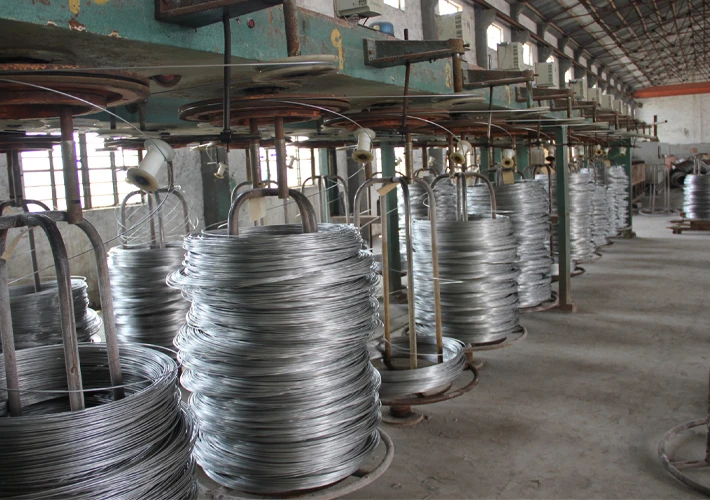
The manufacturing process determines the consistency and usability of the finished wire. Although production arrangements differ between factories, the main stages generally include the following.
Step 1: Raw Material Selection
Production begins with low-carbon steel wire rod. The manufacturer selects the appropriate material according to the required wire diameter, mechanical properties, and intended application.
The quality of the raw material influences the drawing performance, final flexibility, and consistency of the finished wire.
Step 2: Surface Preparation
The wire rod may contain scale, oxidation, and surface contaminants.
Depending on the production line, the material undergoes mechanical or chemical surface preparation to remove unwanted substances and improve the conditions for subsequent processing.
Proper surface preparation helps reduce defects during wire drawing.
Step 3: Wire Drawing
The prepared wire rod passes through a series of drawing dies that gradually reduce its diameter.
This process produces the required wire dimensions.
However, cold drawing increases work hardening and may reduce ductility. This is one reason why annealing is necessary when manufacturing soft black annealed wire.
Step 4: Annealing Heat Treatment
The drawn wire is heated under controlled conditions and maintained at an appropriate temperature.
The purpose is to reduce hardness, relieve internal stress, and improve ductility.
The precise temperature and holding time depend on the steel composition, wire diameter, and desired mechanical properties.
Poorly controlled annealing may lead to inconsistent softness, uneven mechanical performance, or wire breakage during subsequent use.
Step 5: Controlled Cooling
After heat treatment, the wire is cooled according to the selected annealing process.
Cooling conditions influence the final mechanical characteristics. Consistency between batches is particularly important for wholesale customers who need predictable product performance.
Step 6: Inspection and Testing
Finished wire should be checked against the agreed product specifications.
Typical inspection items include:
- Diameter measurement.
- Surface appearance.
- Tensile strength.
- Elongation.
- Flexibility and bending performance.
- Coil weight.
- Packaging condition.
Step 7: Coiling and Packaging
The finished wire is wound into coils or spools and packed for storage and transportation.
The supplier should ensure that coils are properly secured and protected against moisture, contamination, and physical damage.
For export orders, suitable packaging is particularly important because products may experience long transportation periods and different climatic conditions.
Why Annealing Quality Matters to Wholesale Buyers
For distributors and importers, consistent softness is more important than simply receiving wire with a black surface.
If one batch is significantly harder than another, customers may experience difficulties during manual binding. Excessively hard wire can require more force to twist and may break more easily under repeated bending.
If the annealing process is inconsistent, the buyer may face customer complaints, production interruptions, and additional inventory costs.
Therefore, when evaluating a Chinese black annealed wire manufacturer, ask how the factory controls annealing parameters and verifies finished-product flexibility.
Main Applications of Black Annealed Iron Wire in Different Industries
Black annealed iron wire is used in numerous industries because it combines flexibility, practical strength, and cost-effective material properties.
Understanding the different applications helps wholesale buyers identify suitable customer groups and select the right specifications for their markets.
1. Construction and Building Projects
Construction is one of the most important application areas for black annealed iron wire.
It is widely used for tying reinforcing steel bars, securing construction materials, and performing general binding operations.
In reinforced concrete construction, workers need to secure rebar intersections before concrete pouring. Black annealed tie wire makes this task easier because it can be twisted around steel bars and adjusted manually.
Common construction applications include:
- Reinforcing bar tying.
- Steel mesh binding.
- Fixing temporary construction components.
- Securing building materials.
- General-purpose construction binding.
For construction wholesalers, demand often depends on local infrastructure investment, building activity, and the availability of construction materials.
Importers serving contractors and building material distributors should consider offering multiple diameters and coil weights to meet different project requirements.
2. Agriculture and Horticulture
Agricultural businesses use iron wire for various tying and supporting operations.
Black annealed wire can be used to secure plants, tie branches, support climbing crops, and connect certain agricultural structures.
Its flexibility allows workers to bend it around different objects without requiring complicated equipment.
Typical applications include:
- Plant and vine support.
- Securing branches.
- Garden maintenance.
- General farm binding.
- Supporting selected agricultural structures.
However, black annealed wire is not inherently equivalent to galvanized or stainless steel wire in corrosion resistance.
For outdoor agricultural installations exposed to continuous moisture, buyers should evaluate whether a galvanized or coated alternative would be more suitable.
3. Packaging and Industrial Baling
Packaging companies and recycling businesses may use annealed wire for bundling materials.
Its softness makes it convenient for tying and securing selected packages, compressed materials, and industrial bundles.
Potential applications include:
- Waste paper bundling.
- Cardboard baling.
- Recycling material packaging.
- General industrial bundling.
- Securing selected warehouse materials.
The required wire diameter and tensile properties depend on the baling equipment, package dimensions, and material density.
For automated baling operations, buyers should confirm machine compatibility and whether the supplier can provide wire in the required coil or spool configuration.
4. Hardware and Metal Product Manufacturing
Black annealed iron wire is also used as a raw material or intermediate product in hardware manufacturing.
Depending on its diameter and mechanical properties, it can be processed into different binding and fastening products.
These may include:
- Wire ties.
- Binding wire.
- Industrial fastening components.
- Selected wire mesh products.
- Handcrafted metal products.
- General-purpose hardware accessories.
Manufacturers purchasing black annealed wire as a production input should pay particular attention to dimensional consistency and batch-to-batch performance.
5. Gardening and Handicraft Applications
For gardening suppliers and craft material distributors, smaller wire diameters are often more relevant.
Black annealed wire can be bent into different shapes and used for supporting decorative plants, creating handmade structures, and securing materials.
Its dark appearance may also be suitable for products where a black finish is preferred.
In these markets, smaller retail-ready coils and customized labels can be more commercially attractive than large industrial coils.
Which Markets Offer Wholesale Opportunities?
Black annealed iron wire is relevant to many international markets.
Potential target markets include:
- Southeast Asia: Construction, agriculture, hardware distribution, and packaging.
- Middle East: Infrastructure development, construction supply, and industrial procurement.
- Africa: Building materials distribution, agricultural supply, and general hardware markets.
- South America: Construction, agricultural operations, and industrial packaging.
- Europe: Hardware distribution, industrial applications, and selected agricultural uses.
- North America: Construction, recycling, and industrial supply chains.
Market requirements are not identical. Buyers should check local product standards, customs requirements, packaging expectations, and any applicable import duties before purchasing.
For Chinese exporters, understanding the destination market is an important part of developing a long-term wholesale supply strategy.
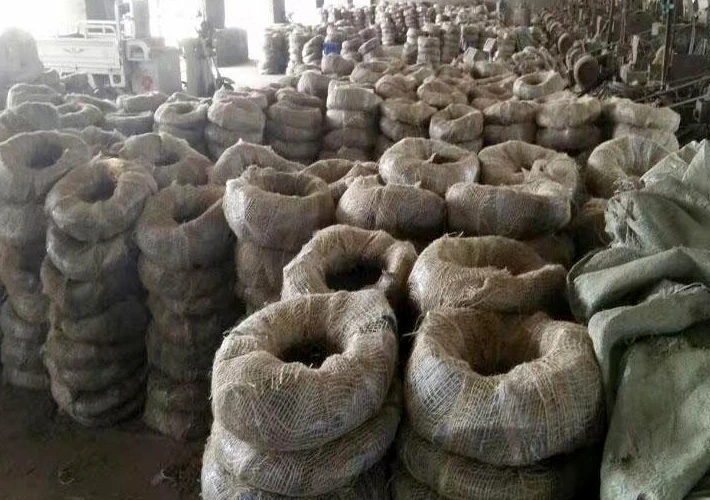
How to Choose a Reliable Black Annealed Iron Wire Wholesale Supplier in China
Selecting a supplier is one of the most important decisions for an importer or distributor.
A competitive quotation is attractive, but it does not necessarily indicate that the manufacturer can provide stable quality, reliable production, and professional export services.
The following factors can help buyers evaluate potential suppliers.
1. Verify the Supplier’s Manufacturing Capabilities
The first step is to determine whether the company is a direct manufacturer, a trading company, or a supplier coordinating production through partner factories.
Both manufacturers and trading companies can participate in international supply chains, but buyers should understand the actual production arrangement.
Questions worth asking include:
- Does the company operate its own wire drawing production line?
- Does it have annealing equipment?
- Can it manufacture different wire diameters?
- Does it support customized coil weights?
- Can it provide factory photographs or live video inspections?
- What is its monthly production capacity?
A direct manufacturer may provide better visibility into production arrangements and customization options.
However, factory ownership alone does not guarantee quality. Production management and inspection standards must also be evaluated.
2. Evaluate Raw Material Quality
Raw material selection has a direct influence on finished-wire performance.
Ask the supplier which steel grades are available and whether material documentation can be provided.
For large-volume procurement, buyers should consider requesting:
- Raw material certificates.
- Chemical composition information.
- Material grade confirmation.
- Production batch identification.
- Relevant mechanical test results.
This information makes it easier to compare different suppliers and investigate any quality problems.
3. Request Samples Before Bulk Purchasing
A product sample is one of the most practical ways to evaluate a potential supplier.
Before placing a large order, buyers should request samples in the actual diameter and condition they intend to purchase.
Sample evaluation can include:
Diameter measurement: Use a suitable measuring instrument to verify that the wire matches the agreed specification.
Bending test: Bend the wire repeatedly to evaluate flexibility and identify obvious cracking or breakage.
Twisting test: Twist the wire manually to assess its suitability for binding operations.
Surface inspection: Check for obvious rust, irregular discoloration, surface damage, and excessive contamination.
Weight verification: Check whether the sample coil weight corresponds to the declared value.
For industrial buyers with strict requirements, laboratory testing may also be appropriate.
4. Check Quality Management and Certifications
International buyers should review the supplier’s quality management system and relevant certifications.
ISO 9001 is a commonly used quality management system standard. However, buyers should verify the certificate’s validity, issuing organization, scope, and covered manufacturing location.
Depending on the destination market and application, other product-specific requirements may apply.
A supplier should also be able to explain its internal inspection procedures.
A practical quality control process may include:
| Inspection stage | Main inspection items |
|---|---|
| Raw material | Steel grade and material condition |
| Wire drawing | Diameter and surface defects |
| Annealing | Softness and mechanical properties |
| Finished product | Diameter, tensile strength, elongation |
| Coiling | Coil shape and weight |
| Packaging | Protection, labeling and quantity |
Not every buyer needs third-party inspection for every shipment. Nevertheless, independent inspection can be valuable for large orders, new suppliers, or high-value purchasing contracts.
5. Compare Packaging and Customization Options
Packaging is an important part of international procurement because it affects handling, storage, transportation, and resale.
Common packaging options include:
- Small coils for hardware retail.
- Standard coils for wholesalers.
- Large coils for industrial customers.
- Spools for selected production applications.
- Plastic-wrapped coils.
- Woven bag packaging.
- Moisture-resistant export packaging.
Buyers should confirm whether the supplier can provide customized coil weights, product labels, private-label packaging, and carton or bundle configurations.
For distributors, customized packaging can also help create a consistent product presentation in the local market.
6. Evaluate Export Experience and Logistics Support
A reliable wholesale supplier should understand the requirements of international shipments.
Export experience is important because even a technically suitable product can create problems if the packaging, documentation, or shipment arrangement is incorrect.
Before signing a contract, clarify:
- Whether the supplier has experience exporting to your destination country.
- Which ports can be used for shipment.
- Whether the supplier can arrange container loading.
- What export documents can be provided.
- How shipment schedules are confirmed.
- Whether cargo inspection is available.
- How product complaints and claims are handled.
Common export documents may include a commercial invoice, packing list, bill of lading, and certificate of origin when required.
Specific documentation depends on the destination market and transaction terms.
7. Compare Total Procurement Costs Instead of Unit Price Alone
The cheapest quotation does not always represent the lowest purchasing cost.
For wholesale buyers, the total landed cost may include:
- Product price.
- Packaging expenses.
- Inland transportation.
- Export handling charges.
- Ocean or other freight costs.
- Insurance, where applicable.
- Customs duties and taxes.
- Destination port and handling charges.
For example, a supplier offering a slightly higher factory price may provide more accurate coil weights, better packaging, and more consistent quality.
These factors can reduce losses and customer complaints after the products arrive.
A good sourcing decision should consider both the initial purchasing price and the long-term commercial value.
Wholesale Pricing Factors and Bulk Purchasing Strategies
Black annealed iron wire prices in China are influenced by several factors. For international wholesalers, understanding these factors can help improve purchasing decisions and reduce unnecessary procurement expenses.
1. Raw Material Prices
Steel wire rod is the primary raw material used in black annealed wire production.
Changes in steel market prices directly influence manufacturing costs. When steel prices increase, wire manufacturers may adjust their quotations accordingly.
Other factors, including raw material availability, transportation costs, and supplier inventory, can also affect pricing.
For importers planning regular purchases, it is useful to monitor steel market trends and maintain communication with suppliers.
2. Wire Diameter and Weight
Wire diameter affects the amount of raw material required to produce each kilogram or coil of finished wire.
Different diameters also require different production settings and drawing processes.
Buyers should provide exact diameter requirements rather than requesting a general quotation for black annealed wire.
Coil weight is another important consideration. Large industrial coils and small retail coils may involve different winding, handling, and packaging costs.
3. Annealing Process and Product Quality
The annealing process requires suitable equipment, energy, production management, and quality control.
A manufacturer that maintains consistent annealing conditions and performs systematic mechanical testing may have different production costs from a supplier with less controlled processing.
Buyers should compare quotations alongside the relevant mechanical specifications.
4. Packaging Requirements
Standard packaging is generally more economical than highly customized packaging.
However, different customers have different requirements.
For example:
- Hardware distributors may prefer smaller coils with retail labels.
- Construction wholesalers may prefer standard coils in bulk packaging.
- Industrial users may require larger coils or specific spool formats.
- Private-label importers may need customized printing and packaging materials.
These requirements should be included in the original quotation request.
5. Order Quantity
Wholesale prices are usually influenced by purchasing volume.
Larger orders may allow manufacturers to optimize production scheduling, raw material purchasing, and packaging operations.
However, buyers should avoid purchasing excessive quantities simply to obtain a lower unit price.
A reasonable procurement plan should consider market demand, inventory turnover, warehouse capacity, and cash flow.
Practical Bulk Purchasing Recommendations
For first-time cooperation with a Chinese black annealed wire supplier, consider the following approach:
- Request quotations from at least three potential suppliers.
- Use identical technical specifications for every quotation.
- Request samples before confirming a large order.
- Verify coil weight and packaging details.
- Confirm the production lead time and shipment schedule.
- Agree on inspection requirements before production.
- Establish clear payment and product claim terms.
A well-prepared purchasing specification reduces misunderstandings and makes supplier comparisons more accurate.
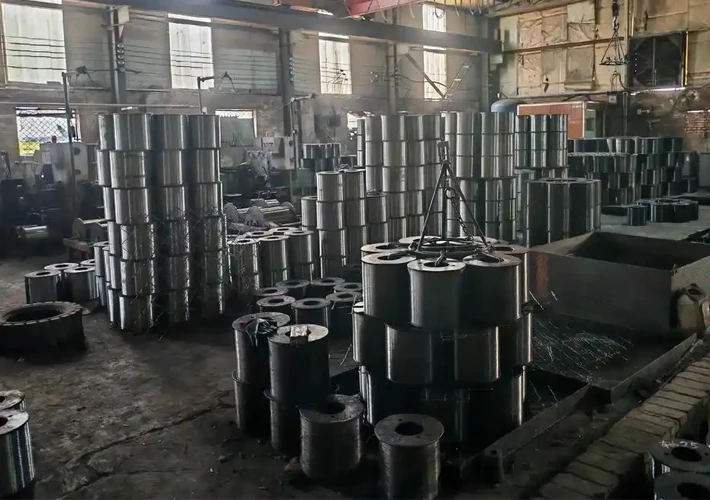
Why Choose RoofGlory as Your Black Annealed Iron Wire Supplier in China?
RoofGlory is a China-based building materials supplier focused on serving international importers, wholesalers, distributors, and construction-related businesses.
For overseas buyers, finding a suitable supplier is not simply about purchasing one shipment. It is about establishing a sourcing relationship that can support consistent product supply, clear communication, and long-term business development.
RoofGlory’s business approach centers on China-based manufacturing and international B2B supply.
China-Based Supply and Manufacturing Resources
China has an established industrial supply chain for steel products, roofing materials, and construction hardware.
RoofGlory operates within this Chinese building materials supply environment, helping international buyers source products for their local distribution and project requirements.
For wholesale customers, working with a China-based supplier provides opportunities to discuss product specifications, packaging, order quantities, and shipping arrangements directly.
Multiple Construction Material Categories
In addition to black annealed wire, RoofGlory’s wider product portfolio includes construction and building materials such as:
- GI and PPGI steel coils and sheets.
- Galvanized and galvalume products.
- Corrugated and color steel roofing sheets.
- IBR and T-type roofing sheets.
- Stone-coated metal roofing tiles.
- UPVC and FRP roofing sheets.
- Metal building panels.
- Steel wire and related products.
This broader product range can be useful for importers and wholesalers who purchase several construction material categories from China.
Instead of managing every purchasing requirement separately, buyers can discuss potential product combinations and sourcing arrangements with one supplier.
B2B-Oriented Product Supply
RoofGlory focuses on commercial buyers rather than individual retail consumers.
Its intended customer groups include:
- Building material importers.
- Wholesale distributors.
- Hardware suppliers.
- Construction material trading companies.
- Infrastructure project procurement teams.
- Regional building material retailers purchasing in bulk.
Different customers have different purchasing requirements. A distributor may prioritize competitive pricing and packaging, while a project contractor may focus more on technical specifications and delivery schedules.
A professional supplier should understand these differences and provide relevant product information before confirming an order.
Support for International Procurement
International procurement involves more than product manufacturing.
Buyers also need accurate quotations, clear order confirmation, suitable packaging, shipment coordination, and export documentation.
RoofGlory aims to support international B2B customers throughout the sourcing process, helping them communicate their requirements and coordinate their purchasing arrangements.
Building Long-Term Wholesale Partnerships
For importers, maintaining a stable supply relationship can be more valuable than finding a temporary low-price supplier.
A long-term partnership can help buyers improve purchasing efficiency, maintain consistent product specifications, and plan inventory more effectively.
RoofGlory welcomes inquiries from international wholesalers, distributors, and project buyers interested in sourcing black annealed iron wire and other construction materials from China.
Looking for a dependable black annealed iron wire supplier in China?
Contact RoofGlory to discuss your product specifications, wholesale requirements, and export purchasing plans.
Frequently Asked Questions About Black Annealed Iron Wire Wholesale
1. What Is the Difference Between Black Annealed Wire and Galvanized Iron Wire?
The main difference is the surface treatment and corrosion resistance.
Black annealed wire is low-carbon steel wire that has undergone annealing to improve softness and flexibility. Its surface is typically dark and may have a light oil coating.
Galvanized iron wire has a zinc coating that provides additional corrosion protection.
Black annealed wire is generally more suitable for applications where flexibility and economical binding performance are priorities. Galvanized wire is often preferred for outdoor applications where exposure to moisture and corrosion is a concern.
2. What Is the Most Common Diameter of Black Annealed Iron Wire?
Common diameters include 0.8 mm, 1.0 mm, 1.2 mm, 1.6 mm, 2.0 mm, and 2.5 mm.
However, the most suitable diameter depends on the application.
Construction tying, agricultural binding, and industrial packaging may require different specifications.
Wholesale buyers should confirm the exact diameter in millimeters when requesting quotations.
3. Which Steel Grade Is Commonly Used for Black Annealed Wire?
Q195 is a commonly used low-carbon steel grade for black annealed wire.
Q235 may also be used depending on the required mechanical properties and manufacturing specifications.
The final wire performance depends on raw material composition, drawing conditions, and annealing quality.
4. Is Black Annealed Iron Wire Suitable for Outdoor Applications?
Black annealed wire can be used in certain outdoor applications, but it does not provide the same corrosion resistance as galvanized or stainless steel wire.
Long-term exposure to rain, moisture, and harsh environmental conditions may cause corrosion.
For outdoor applications requiring extended corrosion protection, buyers should evaluate galvanized wire or another suitable protective coating.
5. What Packaging Is Available for Wholesale Orders?
Common packaging options include:
- 5 kg coils.
- 10 kg coils.
- 25 kg coils.
- 50 kg coils.
- Large industrial coils.
- Spool packaging.
Actual availability depends on the manufacturer’s production capabilities.
Buyers can discuss customized coil weights, plastic wrapping, woven bags, and private-label packaging with the supplier.
6. Can Chinese Manufacturers Provide Customized Black Annealed Wire?
Yes. Many Chinese manufacturers offer customization according to buyer requirements.
Common customization options include:
- Wire diameter.
- Tensile strength.
- Elongation.
- Coil weight.
- Surface treatment.
- Packaging format.
- Product labeling.
For customized orders, buyers should provide a detailed technical specification or physical sample to reduce production misunderstandings.
7. What Should I Check Before Importing Black Annealed Iron Wire from China?
Before placing a bulk order, buyers should check:
- Manufacturer identity and production capabilities.
- Raw material grade.
- Wire diameter and tolerance.
- Tensile strength and elongation.
- Annealing consistency.
- Coil weight and packaging.
- Quality inspection arrangements.
- Export documentation.
- Production lead time.
- Total landed purchasing cost.
Requesting samples and confirming specifications in writing are particularly important for first-time orders.
8. How Can I Get a Wholesale Quotation from RoofGlory?
To receive a more accurate quotation, international buyers should provide the following information:
- Required wire diameter.
- Material grade, if specified.
- Desired tensile strength.
- Total order quantity.
- Coil weight.
- Packaging requirements.
- Destination country and port.
With these details, RoofGlory can better understand your purchasing requirements and discuss an appropriate supply solution.
Conclusion
China remains an important sourcing destination for black annealed iron wire because of its established steel processing industry, diverse manufacturing capabilities, competitive production costs, and extensive export experience.
For international wholesalers and importers, selecting the right supplier requires a comprehensive evaluation of raw materials, wire diameter, mechanical properties, annealing quality, packaging, production capacity, and export services.
Companies such as RoofGlory, Tianjin Meijiahua, Tianjin Huayuan, Huanghua Jinhe, and other Chinese metal wire suppliers provide potential starting points for supplier research. However, buyers should always verify current manufacturing capabilities and product quality before making purchasing decisions.
RoofGlory aims to support global B2B buyers through China-based construction material supply and international sourcing cooperation.
Whether you are a building material importer, hardware wholesaler, industrial distributor, or construction project contractor, choosing a supplier that understands your technical requirements and commercial expectations is essential for long-term success.
RoofGlory, Build With Glory! Contact us today to explore wholesale black annealed iron wire supply from China and develop a reliable sourcing partnership.