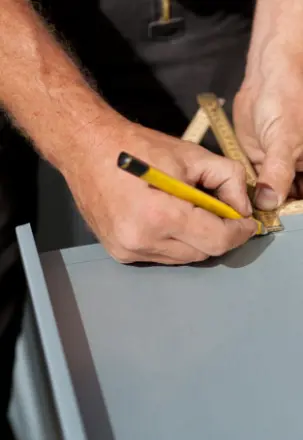
Choosing the right stone coated metal roofing tiles manufacturer in China is an important decision for roofing material importers, wholesalers, distributors, construction contractors, and project developers. As demand for durable, attractive, and cost-effective roofing materials continues to grow in international construction markets, stone coated metal roofing tiles have become an increasingly popular alternative to traditional clay tiles, concrete tiles, and conventional metal roofing sheets.
China has developed a strong manufacturing and export supply chain for metal roofing products. Buyers can find manufacturers offering different tile profiles, colors, steel specifications, surface coatings, accessories, and customized production services. However, not every supplier delivers the same level of product quality, manufacturing consistency, technical support, or export reliability.
For international buyers, choosing a manufacturer should involve more than comparing quotations. A low price may indicate differences in steel thickness, metallic coating weight, stone granule quality, adhesive systems, production technology, or packaging standards. These differences can directly affect the service performance of the finished roofing system and the long-term reputation of distributors.
So, how can buyers identify a reliable stone coated metal roofing tiles manufacturer in China?
This guide explains the essential factors to consider when evaluating Chinese suppliers, including raw material specifications, manufacturing processes, product quality control, customization capabilities, factory strength, certifications, export experience, and purchasing strategies.
As a professional Chinese building materials supplier, RoofGlory understands the importance of stable product quality, competitive factory pricing, and reliable international cooperation. Our goal is to help global B2B buyers make informed sourcing decisions and find roofing solutions suitable for their target markets.
Understand Stone Coated Metal Roofing Tiles Before Choosing a Manufacturer
Before contacting a manufacturer, buyers should understand the product’s construction, performance characteristics, and major specification differences. This knowledge makes it easier to evaluate quotations and determine whether a supplier can meet specific project requirements.
What Are Stone Coated Metal Roofing Tiles?
Stone coated metal roofing tiles are roofing products manufactured using a metal substrate, generally aluminum-zinc-coated steel, combined with protective coatings and decorative stone granules.
Unlike conventional painted metal roofing sheets, these tiles feature a textured stone surface that creates the appearance of traditional roofing materials such as clay tiles, wooden shingles, or natural stone roofing.
A typical stone coated metal roofing tile consists of several functional layers:
- Steel substrate: Provides the structural foundation and mechanical strength.
- Aluminum-zinc metallic coating: Helps protect the steel against corrosion.
- Protective primer: Improves coating adhesion and provides additional surface protection.
- Adhesive or bonding coating: Secures the decorative stone granules to the metal surface.
- Natural or ceramic-coated stone granules: Create the decorative appearance and textured finish.
- Protective overglaze: Helps seal the surface and improve the retention of the stone granules.
The performance of a finished tile depends on the interaction between these materials. A high-quality steel substrate cannot compensate for poor stone adhesion, while an attractive stone finish cannot compensate for an unsuitable metal base.
Therefore, buyers should evaluate the complete product structure rather than focusing on only one specification.
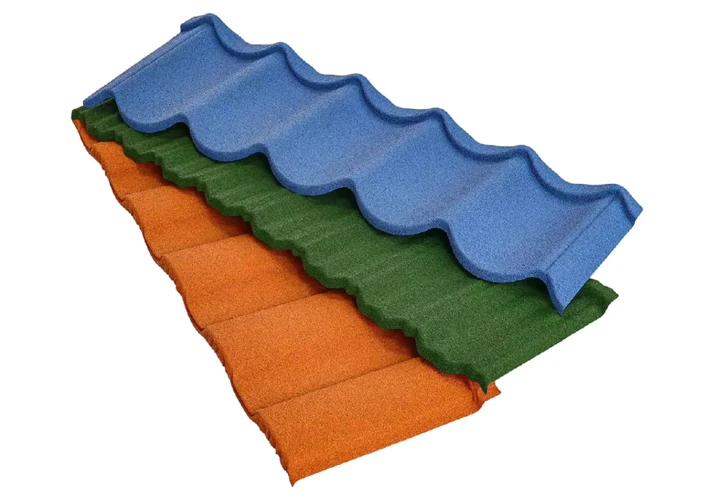
Why Are Stone Coated Metal Roofing Tiles Popular?
Stone coated metal roofing combines the advantages of metal roofing with the traditional appearance of tiled roofs.
Its popularity in international markets comes from several characteristics.
1. Lightweight Roofing Construction
Compared with many traditional clay and concrete roofing materials, stone coated metal tiles are relatively lightweight.
This can reduce the dead load imposed on the roof structure and provide additional flexibility for certain construction and renovation projects.
For contractors, lighter roofing materials may also simplify handling, transportation to the roof, and installation planning.
However, the actual structural requirements must always be evaluated according to the product weight, building design, local regulations, and engineering calculations.
2. Attractive Architectural Appearance
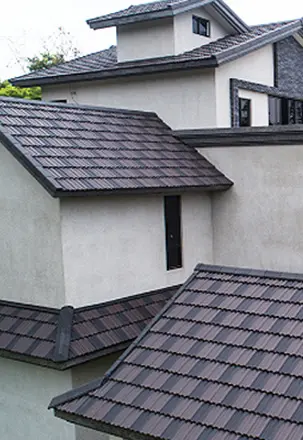
Stone coated metal roofing tiles are available in different profiles, colors, and surface textures.
They can reproduce the appearance of traditional clay tiles, shingles, and other popular roofing styles while retaining the characteristics of a metal roofing system.
This makes them suitable for residential developments, villas, resorts, commercial buildings, and architectural renovation projects.
3. Corrosion Protection
The metallic coating on the steel substrate plays an important role in protecting the base metal against corrosion.
When appropriate steel specifications, coating systems, manufacturing processes, and installation methods are selected, stone coated metal roofing can provide reliable performance in many different environments.
4. Weather Resistance
A properly designed stone coated metal roofing system can withstand various outdoor conditions, including rain, sunlight, and temperature fluctuations.
Its actual performance depends on steel specifications, coating quality, fastening methods, roof design, and installation workmanship.
5. Flexible Design Options
Manufacturers can offer multiple roofing profiles and colors to accommodate different architectural preferences.
For importers and distributors, this creates opportunities to serve different customer groups without relying on a single roofing design.
Typical Applications
Stone coated metal roofing tiles are commonly used in:
- Residential houses and villas.
- Hotels and holiday resorts.
- Commercial buildings.
- Residential communities.
- Agricultural and rural buildings.
- Renovation and roofing replacement projects.
- Low-rise commercial developments.
- Architectural projects requiring decorative roofing materials.
Understanding these applications helps buyers select the appropriate product structure, profile, and material specifications before beginning supplier negotiations.
Evaluate the Raw Materials and Technical Specifications
Raw material quality is one of the most important factors when choosing a stone coated metal roofing tiles manufacturer in China.
Two products may look almost identical in photographs but have significantly different material structures. These differences can influence corrosion resistance, stone adhesion, structural strength, and long-term outdoor performance.
Professional buyers should request a detailed technical specification sheet before comparing prices.
Steel Substrate: The Foundation of Roofing Quality
The steel substrate is the structural foundation of stone coated metal roofing tiles.
Many manufacturers use aluminum-zinc-coated steel because its metallic coating provides corrosion protection and supports long-term outdoor applications.
When evaluating the steel substrate, buyers should focus on the following parameters.
Steel Thickness
Steel thickness affects the mechanical properties, weight, and structural characteristics of the finished roofing tile.
Commonly discussed thickness specifications include:
- 0.30 mm
- 0.35 mm
- 0.40 mm
- 0.45 mm
- 0.50 mm
These are examples of procurement specifications rather than universal requirements. The appropriate thickness depends on the product design, target market, project requirements, and applicable standards.
One important purchasing detail is whether the supplier specifies the base metal thickness or the total thickness including metallic and organic coatings.
Buyers should request clarification to avoid comparing different measurement methods.
Aluminum-Zinc Coating Weight
The metallic coating is another important specification.
Aluminum-zinc-coated steel is widely used in outdoor construction applications because the coating provides a combination of barrier protection and sacrificial corrosion protection.
Different coating designations, such as AZ100 and AZ150, may be available depending on the manufacturer’s material supply chain and product specifications.
Buyers should confirm the actual coating designation rather than accepting general descriptions such as high-quality galvanized steel.
A reliable manufacturer should be able to provide material documentation or supporting mill certificates where applicable.
Steel Grade and Mechanical Properties
Steel grade and mechanical properties influence the forming performance and strength of the roofing substrate.
For buyers sourcing large quantities, it is useful to confirm the applicable steel standard, grade, yield strength, and other relevant mechanical properties.
These details are particularly important for projects exposed to demanding weather conditions or requiring specific engineering calculations.
Stone Granule Quality
Stone granules are responsible for the decorative appearance of stone coated metal roofing tiles.
They also contribute to the surface texture and help protect the underlying coating system.
Manufacturers may use natural stone granules or ceramic-coated stone granules in different colors and particle sizes.
When evaluating stone granules, buyers should consider:
- Particle size distribution.
- Color consistency.
- Surface texture.
- UV exposure performance.
- Resistance to discoloration.
- Compatibility with the bonding system.
- Adhesion to the underlying coating.
Low-quality decorative materials may result in inconsistent colors, premature fading, or excessive granule loss.
For distributors, these problems can create customer complaints and additional replacement costs.
Therefore, it is advisable to request physical samples and evaluate several tiles rather than making a decision based solely on catalog photographs.
Adhesive and Protective Coating Systems
The adhesive system is responsible for bonding the stone granules to the metal substrate.
The primer and protective coatings also contribute to the overall performance of the finished product.
Buyers should ask the manufacturer:
- What type of primer is used?
- What bonding coating is applied?
- What type of stone granules are selected?
- Is a protective overglaze applied?
- How are coating thickness and curing conditions controlled?
- What inspection methods are used to evaluate adhesion?
A supplier should be able to explain the general coating structure and the production controls used to maintain consistency.
The most important point is to evaluate the complete material system instead of treating the stone granules as the only quality indicator.
Request a Complete Product Specification Sheet
Before placing an order, buyers should obtain written specifications covering:
| Specification | What Buyers Should Confirm |
|---|---|
| Steel substrate | Steel type and grade |
| Base metal thickness | Actual substrate thickness |
| Metallic coating | Aluminum-zinc coating designation |
| Tile dimensions | Overall and effective coverage dimensions |
| Tile weight | Weight per piece and per square meter |
| Surface finish | Stone type, color, and coating system |
| Tile profile | Roofing design and profile height |
| Accessories | Ridge caps, valleys, flashing, and other components |
| Packaging | Packaging structure and loading method |
| Warranty | Coverage conditions and exclusions |
This information provides a more accurate basis for supplier comparison and helps prevent misunderstandings during bulk purchasing.
Inspect the Manufacturing Process and Factory Production Capabilities
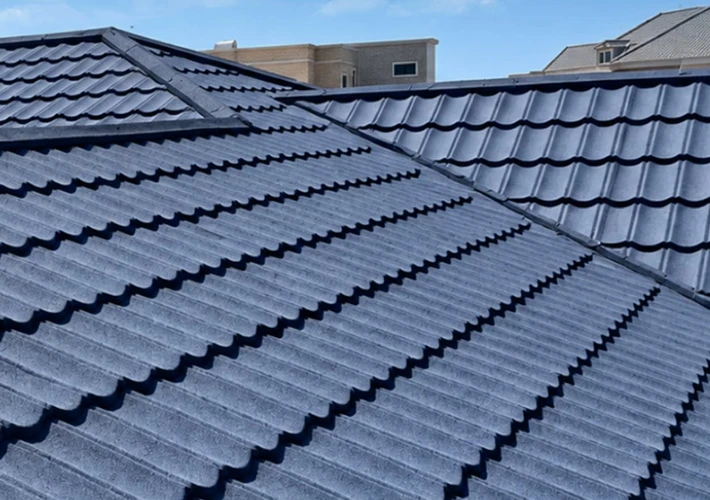
A reliable stone coated metal roofing tiles manufacturer should have a standardized manufacturing process and sufficient production capabilities to maintain consistent quality.
For B2B buyers, understanding the production process is also an effective way to distinguish a genuine manufacturer from a trading company that has limited control over product quality.
Step 1: Steel Coil Preparation and Cutting
The production process begins with the preparation of qualified steel materials.
Steel coils are inspected and processed according to the required specifications.
Important checks may include:
- Steel thickness.
- Metallic coating condition.
- Surface cleanliness.
- Material consistency.
- Coil identification and traceability.
Accurate material preparation helps ensure that subsequent forming and coating operations can proceed consistently.
Step 2: Roll Forming and Tile Shaping
The steel material is processed through forming equipment to create the required roofing tile profiles.
Different designs require different forming molds and production settings.
Common stone coated metal roofing tile profiles include:
- Classic tile.
- Bond tile.
- Milano tile.
- Shingle tile.
- Shake tile.
- Roman-style tile.
The exact profile names and dimensions may vary between manufacturers.
Precision during forming is important because the finished tiles need to fit together correctly during installation.
Incorrect dimensions or inconsistent interlocking structures may increase installation difficulties and create potential water leakage risks.
Buyers should therefore evaluate the accuracy of the forming process and request samples of the actual production profile.
Step 3: Surface Treatment and Primer Application
After forming, the metal surface undergoes the required preparation and coating operations.
Surface preparation helps remove contaminants and creates suitable conditions for subsequent coating applications.
A primer is then applied according to the manufacturer’s coating system.
The purpose is to improve bonding between the substrate and subsequent coating layers while providing additional surface protection.
Consistent application is important because uneven coatings may affect the appearance and performance of the finished roofing tile.
Step 4: Stone Granule Application
The decorative stone granules are applied to the bonding layer.
The application process needs to control the distribution, coverage, and adhesion of the granules.
Uneven granule application can result in visible differences between tiles.
Excessive uncovered areas, poor bonding, or inconsistent particle distribution may indicate problems with raw materials or production controls.
For buyers, inspecting samples from different production batches is useful for assessing the manufacturer’s consistency.
Step 5: Protective Coating and Curing
After the stone granules are applied, the product may receive an additional protective coating according to its manufacturing specification.
The finished tiles then undergo the required curing or drying process.
Curing conditions need to be matched to the selected coating materials.
Inadequate curing may affect coating properties and bonding performance.
A professional manufacturer should maintain defined production parameters and inspection procedures rather than relying entirely on visual judgment.
Step 6: Final Inspection and Packaging
The final production stage includes cooling, inspection, sorting, and packaging.
Finished products should be checked for:
- Dimensional accuracy.
- Surface appearance.
- Stone granule distribution.
- Coating defects.
- Edge condition.
- Profile consistency.
- Packaging integrity.
Only products that meet the agreed purchasing specifications should be approved for shipment.
Why Should Buyers Visit the Factory?
A factory visit provides valuable information that cannot always be obtained through product catalogs.
During a factory audit, buyers can evaluate:
- Production equipment and manufacturing layout.
- Raw material storage.
- Production management.
- Quality inspection procedures.
- Finished product warehouses.
- Packaging operations.
- Loading and export preparation.
If an in-person visit is not possible, buyers can request a live video factory tour.
The objective is to confirm that the supplier has genuine production capabilities and can control the manufacturing process from raw materials to finished roofing products.
For large-volume orders, this verification step can significantly reduce procurement risks.
Check Quality Control, Product Testing, and Relevant Certifications
Quality control is one of the most important differences between a reliable manufacturer and a supplier that focuses mainly on low-cost production.
Stone coated metal roofing tiles are exposed to outdoor environments for extended periods. Their quality cannot be evaluated by appearance alone.
A professional factory should establish inspection procedures covering raw materials, manufacturing operations, and finished products.
Raw Material Inspection
Incoming materials should be checked before entering the production process.
Typical inspection items include:
- Steel thickness and material identification.
- Aluminum-zinc coating specifications.
- Stone granule quality.
- Coating material consistency.
- Packaging material condition.
Where applicable, suppliers should maintain material certificates and purchasing records to support traceability.
Finished Product Inspection
After production, finished tiles should be evaluated against the agreed technical specifications.
Important inspection areas include:
1. Dimensional Accuracy
The dimensions of the roofing tile should match the approved product specifications.
Length, width, profile shape, and effective coverage should be checked.
Consistent dimensions are particularly important when different production batches will be installed on the same roof.
2. Surface Appearance
Inspectors should look for scratches, uneven coatings, missing granules, visible defects, and inconsistent colors.
Color differences can become especially noticeable when large roofing areas are installed.
3. Stone Granule Adhesion
Stone granule retention is an important quality characteristic.
The manufacturer should have an appropriate method for evaluating whether the granules remain properly bonded during handling and normal service conditions.
Testing methods should be selected according to the coating system and relevant requirements.
4. Coating Adhesion
Coating adhesion tests can help evaluate the bonding between specific coating layers and the underlying surface.
For certain coating systems, cross-cut adhesion testing, such as ASTM D3359 where applicable, may be used.
However, buyers should understand that a cross-cut test evaluates a particular coating interface. It does not independently establish the overall durability of the roofing tile or the retention performance of every stone granule.
5. Corrosion Resistance
Corrosion resistance is particularly important for roofing products used in humid, rainy, or coastal environments.
Depending on the product and target market, buyers may request supporting corrosion test reports or relevant material documentation.
Salt spray testing, including ASTM B117 where applicable, can provide information about corrosion behavior under specified laboratory conditions.
Such results should not be interpreted as a direct prediction of the exact service life of a roof.
Certifications and Testing Documents
Different countries and construction markets may require different certifications and performance documentation.
Potentially relevant documents include:
- ISO 9001 quality management certification.
- ISO 14001 environmental management certification.
- Product-specific corrosion resistance test reports.
- Coating adhesion test reports.
- Fire performance documentation.
- Wind resistance or system performance reports.
- Applicable local building code approvals.
The exact documents required depend on the destination country, intended application, and project specifications.
For example, buyers supplying projects in North America may need to investigate relevant roofing system requirements, including ASTM E108 or UL 790 fire classification where applicable.
Importers supplying European markets should confirm the applicable construction product requirements and documentation for the particular product and intended use.
A supplier should not claim that a product is universally certified without providing valid supporting documentation.
Why Third-Party Testing Matters
For large projects and long-term distribution agreements, third-party testing can provide additional confidence.
An independent laboratory can evaluate specific product characteristics according to an agreed testing standard.
Buyers should verify:
- The laboratory’s identity.
- The report number.
- The tested product model.
- The testing date.
- The applicable test standard.
- The reported results.
- Whether the tested sample matches the product being purchased.
A certificate or report is only useful when it genuinely applies to the supplied product.
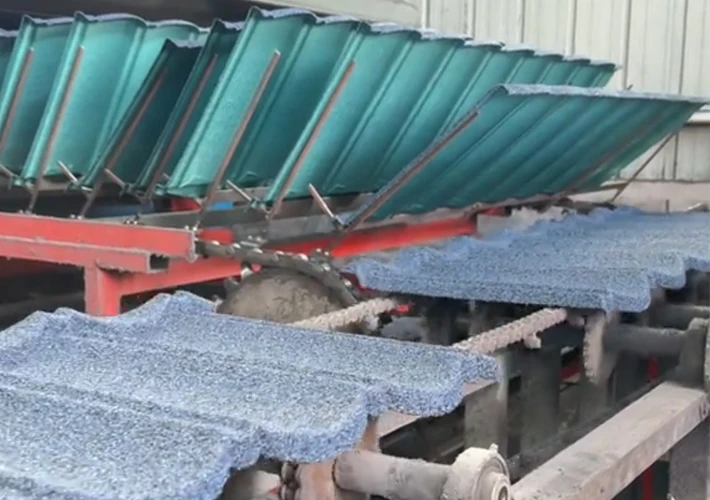
Compare Product Designs, Customization Options, and Complete Roofing Solutions
Product diversity is another important consideration when choosing a stone coated metal roofing tiles manufacturer in China.
For importers and wholesalers, a supplier offering multiple designs and accessories can help simplify procurement and support a wider range of customer requirements.
Different Stone Coated Metal Roofing Tile Profiles
Roofing profiles influence the overall appearance of a building.
Different architectural markets may prefer different tile styles.
Classic Stone Coated Metal Roofing Tiles
Classic profiles are suitable for traditional residential buildings and commercial developments.
They provide a familiar tiled appearance while using a metal substrate.
Bond Stone Coated Roofing Tiles
Bond-style profiles feature a distinctive overlapping pattern.
They are commonly selected for projects requiring a traditional roof tile appearance with a modern metal roofing structure.
Milano Stone Coated Roofing Tiles
Milano-style profiles offer a decorative architectural appearance and can be suitable for villas, residential communities, and resort developments.
Shingle Stone Coated Metal Roofing Tiles
Shingle-style products provide a different visual effect compared with conventional tiled profiles.
They can be considered for projects seeking a more understated roofing appearance.
Shake-Style Roofing Tiles
Shake profiles reproduce some of the visual characteristics of traditional wooden roofing materials.
They may be suitable for architectural projects where a natural or rustic exterior appearance is preferred.
When selecting profiles, buyers should compare not only appearance but also effective coverage, installation details, accessory compatibility, and technical specifications.
Color and Surface Customization
Color selection is important for both project procurement and wholesale distribution.
Popular color options may include:
- Black.
- Charcoal grey.
- Brown.
- Terracotta.
- Red.
- Green.
- Dark blue.
- Mixed-tone natural colors.
Different manufacturers may offer different color combinations depending on the available stone granules and coating materials.
For distributors, maintaining a suitable range of popular colors can help serve multiple customer groups.
For large projects, customized colors may also be considered, subject to minimum order quantities and production feasibility.
Buyers should approve physical color samples before mass production because colors displayed on computer screens may differ from the actual finished product.
Roofing Accessories and Matching Components
A complete roofing system requires more than the main roofing tiles.
Important accessories may include:
- Ridge caps.
- Hip caps.
- Valley flashing.
- Eave flashing.
- Gable flashing.
- Barge boards.
- Roof ventilation components.
- Fasteners.
- Other profile-specific flashing and finishing components.
The exact accessory list depends on the roof structure and selected roofing profile.
For importers, purchasing compatible accessories from the same manufacturer can help improve product matching and simplify container procurement.
It can also reduce the risk of dimensional inconsistencies between roofing tiles and finishing components.
OEM and ODM Manufacturing Services
For distributors and established roofing brands, OEM and ODM services can provide additional commercial opportunities.
OEM services may include manufacturing products according to the buyer’s specifications, approved samples, and branding requirements.
ODM services may involve product design development, profile selection, and customized product solutions.
Before selecting a manufacturer for OEM or ODM cooperation, buyers should confirm:
- Available profile and mold options.
- Custom color development capabilities.
- Branding and packaging requirements.
- Minimum order quantities.
- Sample development time.
- Mass production lead time.
- Ownership and permitted use of customized designs.
A manufacturer with flexible production capabilities can help distributors develop a more differentiated product range in their local markets.
Evaluate Factory Strength, Export Experience, and B2B Cooperation Capabilities
Product specifications are important, but supplier reliability also depends on the manufacturer’s ability to deliver orders consistently.
For overseas importers, the sourcing process involves multiple stages, including communication, sample approval, production, quality inspection, packaging, shipping, and after-sales support.
A professional supplier should be able to coordinate these activities efficiently.
Confirm Whether the Supplier Is a Real Manufacturer
One of the first questions buyers should ask is whether the company operates its own manufacturing facility.
Some Chinese suppliers are trading companies that outsource production to third-party factories.
This is not necessarily a problem, but buyers should understand the actual supply chain and determine who is responsible for quality control.
When evaluating a manufacturer, request:
- Factory photographs and videos.
- Production line information.
- Manufacturing equipment details.
- Raw material storage information.
- Finished product warehouse photographs.
- Production capacity information.
- Business registration details.
A live factory video call can provide additional verification.
Buyers should also confirm whether the supplier has direct control over production scheduling and quality inspection.
Evaluate Production Capacity and Order Management
For wholesalers and project contractors, production capacity can directly affect delivery schedules.
A manufacturer should be able to explain:
- Standard production lead times.
- Monthly production capacity.
- Available production lines.
- Peak-season production arrangements.
- Raw material procurement schedules.
- Custom order processing capabilities.
Production capacity should be evaluated against the actual product specifications and order quantity.
A factory may have sufficient capacity for standard products but require additional time for customized colors or special profiles.
Therefore, buyers should obtain a realistic delivery schedule before signing the purchase agreement.
Check International Export Experience
Export experience is another important selection factor.
A manufacturer familiar with international B2B trade is generally better prepared to handle export documentation, packaging requirements, shipping arrangements, and communication with overseas customers.
Relevant capabilities include:
- Commercial invoice preparation.
- Packing list preparation.
- Certificate of origin coordination where required.
- Export customs documentation.
- Container loading arrangements.
- Shipping coordination.
- Product specification documentation.
Buyers should also ask whether the supplier has experience shipping to their destination country.
Different markets may have different import requirements, product expectations, and packaging preferences.
A manufacturer familiar with the destination market can help buyers identify potential issues before production begins.
Communication and Technical Support
Effective communication is especially important when purchasing construction materials.
Buyers may need technical information about tile dimensions, roof pitch, installation methods, fastening systems, accessories, and packaging.
A reliable supplier should provide clear answers and relevant technical documents.
The supplier should also communicate proactively about:
- Sample confirmation.
- Material changes.
- Production progress.
- Inspection results.
- Shipment schedules.
- Potential delays.
For long-term distributors, technical support can become an important part of the supplier relationship.
After-Sales Service and Warranty Support
After-sales service should be discussed before the first order.
Buyers should clarify:
- Warranty duration.
- Warranty coverage.
- Exclusions and limitations.
- Product storage requirements.
- Installation requirements.
- Procedures for reporting defects.
- Evidence required for quality claims.
- Replacement or compensation procedures.
A warranty should clearly identify the responsible parties and applicable conditions.
It is also important to distinguish between a product warranty and a complete roofing system warranty. Roof performance depends on the substrate, underlayment, fasteners, installation, ventilation, roof design, and environmental conditions.
A professional manufacturer should explain these limitations rather than making unrealistic lifetime performance promises.
Why Long-Term Factory Cooperation Matters
For distributors and wholesalers, supplier selection should be based on long-term business value rather than a single transaction.
Stable manufacturing quality, predictable lead times, consistent product specifications, and responsive technical support can help reduce procurement costs over time.
A reliable Chinese factory can become an important supply chain partner as a distributor expands into new regions and develops additional roofing product categories.
Understand Pricing, MOQ, Packaging, and International Shipping
Price is one of the most important factors in B2B purchasing, but comparing stone coated metal roofing tiles based only on the quoted price per piece can lead to incorrect purchasing decisions.
A professional buyer should evaluate the total procurement cost, including product specifications, accessories, packaging, transportation, and potential quality risks.
What Determines the Price of Stone Coated Metal Roofing Tiles?
Several factors influence the factory quotation.
1. Steel Raw Material Costs
Steel is one of the main components of stone coated metal roofing tiles.
Changes in steel prices can affect manufacturing costs and supplier quotations.
The actual impact depends on purchasing arrangements, inventory, material specifications, and order volume.
2. Steel Thickness and Metallic Coating
Products using different substrate thicknesses and metallic coating specifications should not be compared as identical products.
A thicker substrate or higher metallic coating designation may increase material costs.
Buyers should make sure they are comparing equivalent specifications.
3. Stone Granule and Coating Materials
The type and quality of stone granules, bonding materials, primer, and protective coatings also influence production costs.
Different color combinations and surface treatments may have different pricing structures.
4. Tile Profile and Manufacturing Complexity
Different tile profiles may require different forming molds, production settings, and accessory configurations.
Customized profiles may involve additional development or tooling costs.
5. Order Quantity
Larger orders may provide better opportunities for factory pricing because production, material procurement, and packaging can be organized more efficiently.
However, the actual price advantage depends on the factory’s production arrangements and the specific order requirements.
6. Packaging and Shipping Requirements
Export packaging, pallet specifications, loading methods, and shipping arrangements also contribute to the total procurement cost.
Buyers should request quotations that clearly distinguish product costs from other charges.
How to Compare Manufacturer Quotations
A useful quotation comparison should include the following information:
| Comparison Item | Supplier A | Supplier B |
|---|---|---|
| Steel thickness | Confirmed specification | Confirmed specification |
| Aluminum-zinc coating | Confirmed designation | Confirmed designation |
| Tile profile | Same model | Same model |
| Effective coverage | Confirmed dimensions | Confirmed dimensions |
| Tile weight | Confirmed weight | Confirmed weight |
| Stone granules | Material details | Material details |
| Accessories | Included or excluded | Included or excluded |
| Packaging | Detailed method | Detailed method |
| MOQ | Confirmed quantity | Confirmed quantity |
| Production lead time | Confirmed schedule | Confirmed schedule |
| Warranty | Written conditions | Written conditions |
| Price terms | EXW/FOB/CIF | EXW/FOB/CIF |
This approach makes it easier to identify whether a price difference comes from material quality, product configuration, or commercial terms.
Minimum Order Quantity
Minimum order quantity is an important consideration for new importers and smaller distributors.
Different manufacturers may establish different MOQs depending on the roofing profile, color, production arrangement, and customization requirements.
Before requesting a quotation, buyers should explain:
- Expected order quantity.
- Required roofing profiles.
- Preferred colors.
- Whether accessories are required.
- Whether private-label packaging is needed.
- Whether the order is for samples, distribution, or a specific construction project.
For customized orders, MOQ may be higher because of material procurement and production preparation.
Buyers should also confirm whether different colors or profiles can be combined in one container.
Export Packaging Requirements
Packaging is particularly important for international roofing material shipments.
Even well-manufactured products can be damaged during transportation if packaging is inadequate.
Professional export packaging should consider:
- Suitable stacking arrangements.
- Surface protection.
- Edge protection.
- Moisture protection.
- Pallet strength.
- Forklift handling.
- Container loading efficiency.
Buyers should request packaging photographs before placing a large order.
For long-distance shipments, the supplier should also consider the potential risks associated with repeated handling, loading, unloading, and storage.
Container Loading and Shipping Coordination
Stone coated metal roofing tiles are commonly shipped in containers for international wholesale orders.
The loading plan should be based on product dimensions, package weight, container type, and shipping requirements.
Buyers should confirm:
- Estimated pieces per container.
- Total gross and net weight.
- Packaging dimensions.
- Loading photographs.
- Container sealing arrangements.
- Estimated production and shipping schedules.
The supplier should also clarify the applicable Incoterms, such as EXW, FOB, or CIF, according to the buyer’s preferred purchasing arrangement.
A transparent shipping arrangement helps importers calculate landed costs and plan inventory more accurately.
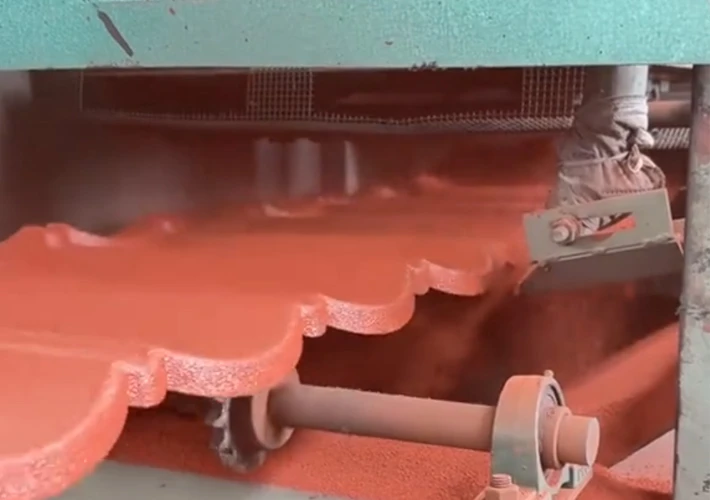
Why Choose RoofGlory as Your Stone Coated Metal Roofing Tiles Supplier in China?
Finding a reliable manufacturer is not simply about purchasing roofing tiles at the lowest possible price. It is about establishing a supply relationship that supports consistent product quality, efficient procurement, and sustainable business development.
RoofGlory is a Chinese building materials supplier with a manufacturing and supply chain background dating back to 2005.
With experience in the international building materials industry, RoofGlory focuses on supplying roofing and construction material solutions for overseas importers, wholesalers, distributors, contractors, and project buyers.
Our approach is based on understanding the practical requirements of B2B customers and providing products and services that support their purchasing and project needs.
A Professional Chinese Building Materials Supply Partner
RoofGlory operates within China’s building materials manufacturing and supply chain.
Our product portfolio covers multiple roofing and construction material categories, including:
- Stone coated metal roofing tiles.
- Galvanized steel roofing sheets.
- Galvalume steel roofing sheets.
- Color-coated steel roofing sheets.
- IBR roofing sheets.
- Corrugated roofing sheets.
- T-type roofing sheets.
- UPVC roofing sheets.
- FRP roofing sheets.
- Color-coated aluminum coils.
- Galvanized and galvalume steel coils.
- Other related building materials.
This product range creates opportunities for overseas buyers to coordinate multiple construction material purchasing requirements through one supplier.
For importers managing different product categories, integrated procurement can simplify supplier communication and sourcing arrangements.
Focus on Product Specifications and Quality Requirements
We understand that different markets require different roofing solutions.
A product suitable for one region may not necessarily be appropriate for another.
For this reason, buyers should communicate their target market, project conditions, technical specifications, and preferred product designs before confirming an order.
Important considerations include:
- Steel thickness.
- Aluminum-zinc coating requirements.
- Roofing tile profiles.
- Stone granule colors.
- Surface coating systems.
- Product dimensions.
- Accessory requirements.
- Export packaging.
By confirming these details before production, buyers and suppliers can reduce misunderstandings and improve order accuracy.
Factory Pricing and B2B Procurement Support
As a Chinese building materials supplier, RoofGlory aims to provide competitive sourcing solutions for international customers.
Our B2B cooperation model is designed for:
- Roofing material importers.
- Building material wholesalers.
- Regional distributors.
- Construction contractors.
- Roofing project developers.
- Building material trading companies.
- Private-label brands.
We understand that different buyers have different procurement priorities.
Importers may focus on container pricing and product consistency, while contractors may prioritize technical specifications, delivery schedules, and accessory compatibility.
Our goal is to understand these requirements and provide appropriate product information and quotations.
Support for International Customers
Successful international cooperation requires more than supplying products.
It also involves communication, specification confirmation, order coordination, packaging arrangements, and shipping support.
RoofGlory works with overseas buyers to discuss product requirements and coordinate the relevant purchasing process.
For customers developing new product lines, we can also discuss available material options and related roofing products within our building materials portfolio.
How to Start Cooperation with RoofGlory
For overseas buyers interested in stone coated metal roofing tiles or other roofing materials, the sourcing process can begin with a simple inquiry.
Step 1: Share Your Product Requirements
Tell us which roofing profile, color, material specification, and quantity you require.
Step 2: Confirm Technical Specifications
Our team can discuss relevant product details, dimensions, materials, and available options.
Step 3: Request Samples or Product Information
Physical samples, product photographs, and technical information can help buyers evaluate the products before placing a bulk order.
Step 4: Receive a Factory Quotation
Provide your expected quantity and destination port so that the commercial terms and shipping arrangements can be discussed.
Step 5: Confirm the Order and Production Schedule
After specifications, samples, pricing, and order conditions are approved, the purchasing agreement and production arrangements can be confirmed.
Step 6: Arrange Inspection and Shipment
The products are prepared according to the agreed specifications and export arrangements.
For long-term cooperation, buyers can also discuss repeat orders, additional product categories, and customized sourcing requirements.
Final Thoughts: Choose a Manufacturer That Supports Your Long-Term Business
Choosing the right stone coated metal roofing tiles manufacturer in China requires a comprehensive evaluation of materials, manufacturing technology, product quality, factory capabilities, export experience, and commercial terms.
A low quotation does not always represent the best purchasing decision. Differences in steel thickness, metallic coating weight, stone granule quality, coating adhesion, production consistency, and packaging can have a significant impact on the final value of a roofing product.
For importers and wholesalers, the ideal manufacturer should offer transparent technical specifications, consistent manufacturing quality, flexible product options, reliable communication, and professional export support.
Before placing a bulk order, buyers should request product samples, compare detailed specifications, verify factory capabilities, and establish clear quality and delivery requirements.
As a Chinese building materials supplier, RoofGlory is committed to supporting international B2B customers with roofing materials and professional sourcing cooperation.
Whether you are developing a new roofing product line, expanding your distribution network, or sourcing materials for a construction project, choosing a dependable Chinese supplier is an important step toward building a more competitive business.
Looking for a reliable stone coated metal roofing tiles manufacturer in China?
Contact RoofGlory to discuss your product requirements, request specifications, and receive a competitive factory quotation.