Translucent FRP roofing sheets are a practical roofing solution for industrial buildings, warehouses, workshops, logistics centers, agricultural storage facilities, and other large-span structures that require natural daylight. By allowing sunlight to enter through the roof, these sheets can reduce dependence on artificial lighting during daylight hours while maintaining a lightweight and versatile roofing design.
For industrial developers, building contractors, roofing distributors, and construction material importers, selecting the right translucent roofing material involves more than comparing transparency or price per square meter. Buyers must also consider light transmission, mechanical strength, weather resistance, panel dimensions, compatibility with metal roofing systems, installation requirements, and long-term maintenance costs.
As a China-based building materials supplier, RoofGlory provides roofing material solutions for international construction projects and wholesale markets. When sourcing translucent FRP roofing sheets from a Chinese factory, buyers can evaluate product specifications, customization options, production consistency, packaging, and container loading arrangements to determine whether a supplier meets their project requirements.
This guide explains how translucent FRP roofing sheets work, where they are used, how to select suitable specifications, and what international buyers should check before placing a bulk order.
What Are Translucent FRP Roofing Sheets?
FRP stands for fiber-reinforced plastic. Translucent FRP roofing sheets are composite panels made from a resin matrix reinforced with glass fibers. The resin provides the basic shape and binds the reinforcing fibers, while the glass fibers contribute to the material’s mechanical strength.
Unlike opaque metal roofing sheets, translucent FRP panels allow a portion of natural light to pass through the roof. They are often installed alongside galvanized steel, galvalume, pre-painted steel, or other roofing materials to create daylighting zones without making the entire roof transparent.
FRP roofing sheets are available in different profiles, thicknesses, colors, widths, lengths, and light-transmission levels. The appropriate configuration depends on the building’s roof design, local weather conditions, structural support spacing, and daylighting requirements.
How Are FRP Roofing Sheets Manufactured?
The manufacturing process generally involves preparing the resin system, incorporating glass-fiber reinforcement, forming the sheet, curing the composite, and cutting the finished product to the required dimensions. Depending on the production technology and product design, manufacturers may also apply surface treatments or protective layers.
The exact formulation affects the performance of the finished sheet. Resin selection influences chemical resistance, weathering behavior, and temperature performance. Glass-fiber content and distribution affect mechanical properties, while surface protection can influence resistance to outdoor exposure and degradation.
For commercial procurement, buyers should request the manufacturer’s technical data rather than judging quality only by appearance. Two sheets may look similar but differ considerably in resin formulation, reinforcement structure, thickness consistency, and outdoor durability.
Common Types of Translucent FRP Roofing Sheets
Several product configurations are available for industrial roofing projects.
1. Corrugated FRP roofing sheets
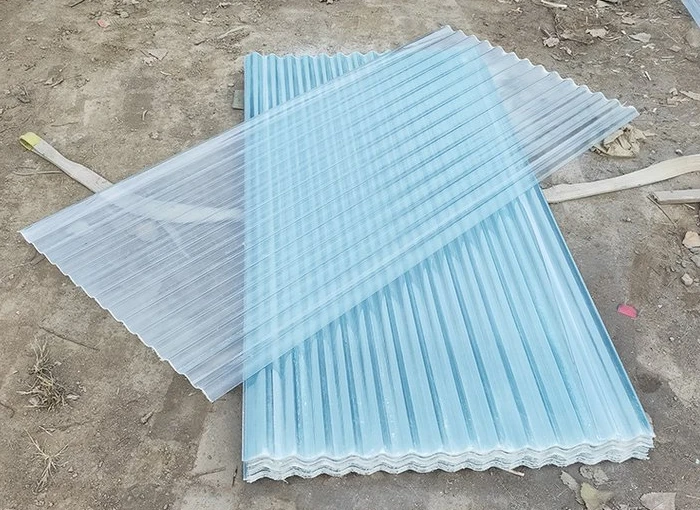
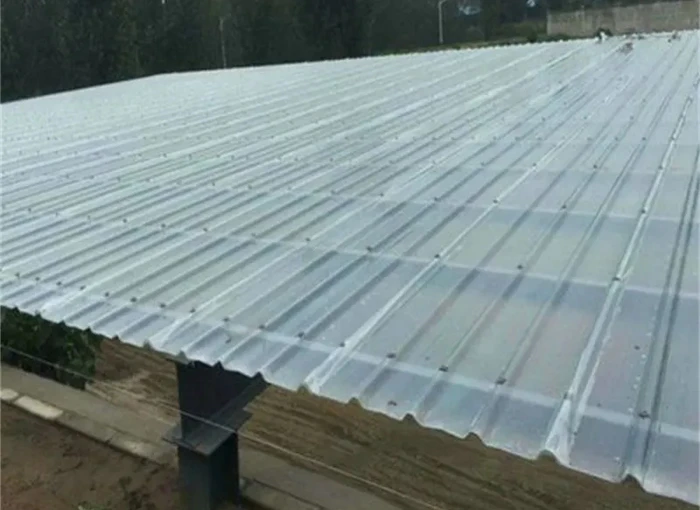
Corrugated FRP sheets feature repeating ridges and valleys. They are commonly used alongside corrugated steel roofing because the matching profile helps create a continuous roof surface. Profile compatibility must be verified against the specific metal sheet design.
2. Trapezoidal or ribbed FRP roofing sheets
These sheets are designed to match certain trapezoidal metal roofing profiles. They can be suitable for factories, distribution centers, and warehouses using ribbed steel roofing systems. Buyers should confirm the rib height, pitch, effective cover width, and fixing locations before ordering.
3. Flat or low-profile FRP panels
Flat or relatively low-profile translucent panels may be used in selected roof systems, skylight assemblies, and architectural daylighting applications. Their suitability depends on the supporting structure, drainage design, and the manufacturer’s installation instructions.
4. Customized translucent roofing panels
Some industrial projects require non-standard lengths, specific colors, special profiles, or particular light-transmission characteristics. Custom production may be available, subject to factory capabilities, minimum order quantities, tooling requirements, and technical feasibility.
For RoofGlory buyers, the first step is to identify the existing roofing profile or provide the project drawings. This helps establish whether a standard panel is suitable or whether a customized solution is needed.
FRP Roofing Sheets vs. Other Translucent Roofing Materials
FRP is one of several materials used to introduce daylight into industrial buildings. Polycarbonate and acrylic are other common options, while glass is used in selected architectural and daylighting systems.
| Material | Main characteristics | Typical purchasing considerations |
|---|---|---|
| Translucent FRP | Glass-fiber-reinforced composite; available in corrugated and ribbed profiles | Profile matching, resin quality, fiber reinforcement, weathering performance |
| Polycarbonate | Lightweight thermoplastic with high impact resistance in suitable grades | UV protection, thermal expansion, fire performance, cost |
| Acrylic | Good optical clarity in suitable grades | Brittleness, impact resistance, weathering, panel design |
| Glass | High optical clarity and rigidity | Weight, support requirements, safety glazing, installation cost |
| Opaque metal roofing | Provides a conventional weather-resistant roof covering without daylight transmission | Corrosion protection, coating, insulation, roof profile |
There is no universally best material for every industrial building. FRP can be a useful choice when a project requires translucent panels that integrate with a profiled metal roof. Polycarbonate may be preferable for some applications requiring higher impact resistance or specific optical properties. The final decision should be based on the complete roofing system rather than a single material characteristic.
Key Benefits of Translucent FRP Roofing Sheets for Industrial Buildings
Industrial buildings frequently have large roof areas and deep interior spaces. Without carefully designed daylighting, workers may depend heavily on artificial lighting during operating hours. Translucent FRP roofing sheets provide an alternative by allowing daylight to enter selected parts of the building envelope.
Natural Daylighting and Potential Energy Savings
The primary advantage of translucent FRP roofing sheets is their ability to transmit natural light into a building.
Warehouses, production workshops, and distribution centers often have high ceilings and extensive floor areas. Strategically positioned translucent roof panels can distribute daylight across parts of these interiors, helping reduce the need for electric lighting when outdoor conditions provide sufficient illumination.
Actual energy savings depend on several variables:
- The percentage of the roof area covered by translucent panels.
- The panel’s measured light-transmission performance.
- Roof height and the geometry of the building.
- Local daylight availability and seasonal weather.
- The type and operating schedule of the lighting system.
- The presence of daylight sensors, dimming controls, and zoning.
- Dirt accumulation, panel aging, and maintenance practices.
For example, a warehouse operating primarily during daylight hours may benefit from daylighting more than a facility running continuously at night. A project with effective lighting controls may also convert available daylight into greater electricity savings.
Buyers should avoid assuming that a higher percentage of translucent roof area always produces a better result. Excessive daylight openings can introduce glare, uneven illumination, and additional solar heat. A balanced daylighting design is usually more effective than maximizing transparency alone.
Lightweight Construction
FRP roofing sheets are generally lighter than glass daylighting systems and can be integrated into many lightweight roof assemblies. Their relatively low weight can simplify handling and reduce the burden associated with the translucent portions of a roof.
However, the completed roof system still requires suitable structural support. Wind pressure, wind uplift, snow loads, maintenance access, and local building codes must be considered during design.
The fact that a sheet is lightweight does not mean that it can span any distance without support. Maximum support spacing and allowable loading must be confirmed using the manufacturer’s technical specifications and engineering calculations.
Compatibility with Metal Roofing Systems
One reason FRP panels are used in industrial construction is their availability in profiles intended to complement metal roofing systems.
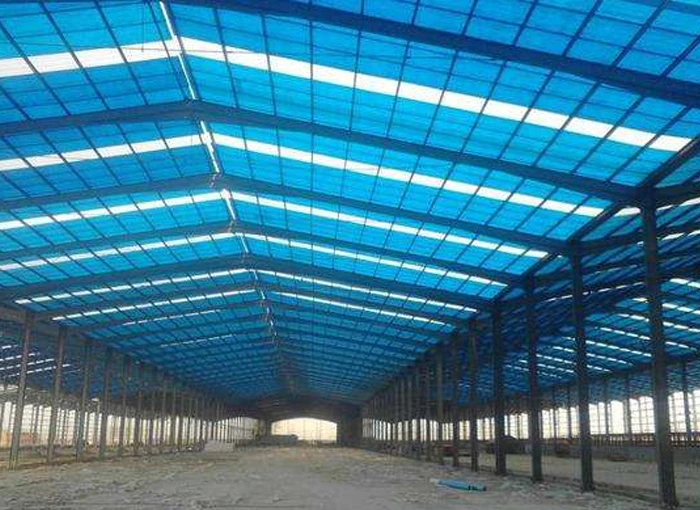
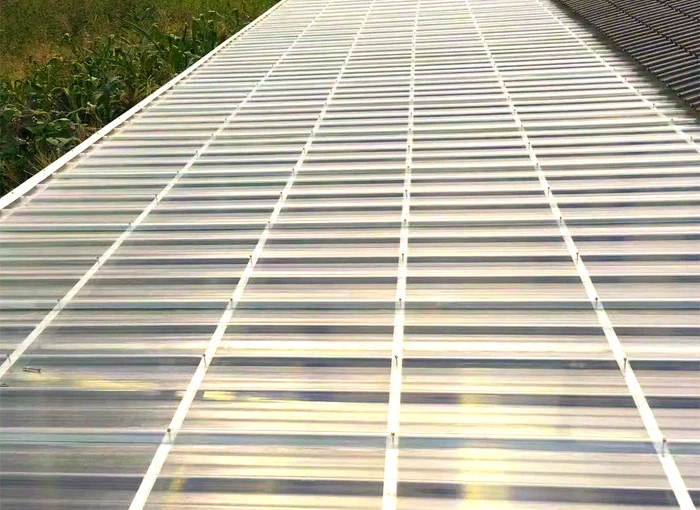
For a warehouse with a galvanized steel or color-coated steel roof, translucent panels can be installed in selected sections to provide daylight without replacing the entire roof covering. This can create a consistent roof layout while allowing daylight to enter at predetermined locations.
Profile matching is essential. If the corrugation pitch, rib height, cover width, or fixing geometry differs from the metal roof, the installation may require additional detailing and can create leakage risks.
Before bulk production, project teams should confirm the exact metal roofing profile, panel orientation, overlap requirements, and fastening details.
Weather Resistance and Outdoor Durability
The outdoor performance of FRP roofing sheets depends on the resin system, glass-fiber reinforcement, surface treatment, sheet thickness, manufacturing quality, and environmental exposure.
Suitable products can provide practical service in outdoor roofing applications, but performance varies between formulations. Long-term exposure to ultraviolet radiation, temperature changes, moisture, pollutants, and mechanical stress can affect appearance and physical properties.
For projects in hot climates, coastal regions, or areas with high UV exposure, buyers should request relevant weathering data and confirm the intended service environment with the manufacturer.
Important questions include:
- Is the product designed for prolonged outdoor exposure?
- What type of UV protection or weather-resistant surface treatment is used?
- Is there test data for the specified product formulation?
- What cleaning and maintenance practices are recommended?
- What warranty conditions apply, and which environmental factors are excluded?
These questions are particularly important for warehouses where roof replacement or repairs could interrupt operations.
Flexible Design for Different Building Types
Translucent FRP panels are not limited to large industrial factories. They can be used in distribution facilities, maintenance workshops, agricultural buildings, storage sheds, loading areas, and selected commercial structures.
Their availability in different profiles and dimensions allows daylighting to be incorporated into many roofing layouts. Designers can use translucent panels in continuous roof strips, spaced daylighting bands, or selected areas above working zones.
The final configuration should reflect the building’s functional requirements. A packing station may need consistent daylight for visual inspection, while a general storage zone may require only moderate illumination. Areas containing light-sensitive goods may need lower light transmission or a different daylighting strategy.
Potential to Reduce Lighting Costs Without Major Roof Changes
For a new construction project, daylighting can be integrated into the original roof design. For an existing warehouse, compatible translucent FRP panels may offer a way to introduce daylight during roof renovation or partial replacement.
Retrofitting is not always straightforward. Existing panel dimensions, roof age, corrosion, structural condition, and local safety requirements must be assessed before work begins.
A professional installer should verify whether the existing roof can accommodate the proposed panels and whether any additional support, waterproofing, or safety measures are required.
The potential financial benefit should be calculated against the complete installed cost, expected lighting savings, maintenance needs, and the building’s remaining service life.
Industrial and Warehouse Applications of Translucent FRP Roofing Sheets
Translucent FRP roofing sheets can support daylighting in different industrial environments. Their suitability depends on the operating conditions, roof structure, indoor temperature requirements, and activities carried out beneath the roof.
Warehouses and Distribution Centers
Warehouses are among the most relevant applications for translucent roofing sheets because they often have extensive roof areas and large interior volumes.
Natural daylight can help illuminate aisles, packing stations, inspection areas, and selected workspaces during daytime operations. This can improve visibility and support a more comfortable working environment when the daylighting system is designed correctly.
For distribution centers, the location of translucent panels should be coordinated with racking layouts, conveyor systems, loading zones, and workstations. Poor placement may create bright patches in areas that are not useful while leaving operational zones too dark.
Procurement teams should also consider the effect of daylight on stored goods. Certain products, packaging materials, chemicals, and temperature-sensitive items may require protection from direct sunlight or additional environmental controls.
Manufacturing Plants and Production Workshops
Manufacturing buildings may require different lighting conditions depending on the process.
General assembly, packaging, equipment inspection, and maintenance operations can often benefit from natural daylight. However, precision manufacturing, color inspection, and processes requiring stable lighting conditions may need supplemental controlled lighting.
A translucent roof does not replace task lighting or emergency lighting. It should be treated as one component of the overall lighting design.
Industrial facilities should also consider heat-generating equipment, process emissions, and ventilation requirements. Where internal heat loads are high, the solar heat gain associated with translucent panels must be evaluated alongside their daylighting benefits.
Agricultural Storage and Processing Buildings
FRP daylighting panels may be used in selected agricultural structures, including storage sheds, machinery shelters, and certain processing buildings.
In these applications, buyers should consider humidity, cleaning requirements, exposure to agricultural chemicals, and the type of goods being stored. Not every resin formulation is suitable for every chemical or cleaning agent.
For facilities storing grain, animal feed, fertilizers, or other sensitive materials, the roof system should be evaluated as part of a broader moisture-control and ventilation strategy.
Logistics Hubs and Loading Areas
Loading docks, cross-docking facilities, and covered logistics areas can benefit from additional daylight, particularly where workers move between indoor and outdoor environments.
Translucent panels can be placed over selected operational zones to reduce reliance on artificial lighting during suitable daylight conditions. However, roof layouts should avoid creating glare that affects vehicle operators or workers using visual scanning equipment.
The design must also consider wind exposure, impact risks, drainage, and the roof’s structural support system.
Commercial and Public Buildings
Selected commercial workshops, equipment shelters, covered walkways, and service buildings may also use translucent FRP roofing sheets.
Where appearance is important, buyers should compare available colors, surface finishes, light transmission, and visible fiber patterns. A product suitable for a functional warehouse may not meet the visual requirements of a public-facing architectural project.
For projects with strict fire, smoke, or building-envelope requirements, confirm that the proposed panel has the necessary documentation for the intended application and jurisdiction.
How to Plan the Translucent Roof Area
The ideal percentage of translucent roofing depends on the project. There is no single percentage that works for all warehouses.
A daylighting study should consider building orientation, roof geometry, panel performance, local climate, internal obstructions, and the required illuminance levels. Computer simulation or a qualified lighting designer can help assess the expected distribution of daylight before the roof is finalized.
A practical planning process includes:
- Identify the zones that require daytime illumination.
- Establish target lighting levels for each work area.
- Evaluate roof orientation and the local daylight climate.
- Select a suitable translucent panel specification.
- Estimate solar heat gain, glare, and thermal performance.
- Coordinate panel positions with roof supports and metal roofing profiles.
- Verify compliance with structural, fire, and building-envelope requirements.
For large industrial projects, this approach is more reliable than selecting translucent panels solely by their price per square meter.
How to Choose the Right FRP Roofing Sheet Specifications
Selecting the correct specification is one of the most important steps when purchasing translucent FRP roofing sheets in bulk. Buyers should establish the technical requirements before requesting quotations from factories.
Light Transmission
Light transmission describes the proportion of incident light that passes through a material under specified test conditions. Higher transmission can increase the amount of daylight entering the building, but it does not automatically guarantee better indoor lighting.
The result also depends on the distribution of light, roof design, panel cleanliness, weather conditions, and the surrounding structure.
Buyers should request the measured light-transmission value and the relevant test method. They should also clarify whether the stated value applies to the finished sheet or to a particular resin or surface configuration.
Clear, translucent, and colored FRP sheets can provide different optical effects. A clear sheet may admit more direct light, while a diffusing or colored sheet may change glare and light distribution. The appropriate choice depends on the intended use.
Thickness and Mechanical Strength
Thickness affects the physical characteristics of the panel, but it should not be used as the only indicator of strength.
Two FRP sheets with the same nominal thickness may perform differently because of differences in resin formulation, glass-fiber content, reinforcement arrangement, profile geometry, and manufacturing quality.
When specifying a product, buyers should request information about:
- Nominal and measured thickness.
- Tensile and flexural properties where relevant.
- Impact resistance or other applicable mechanical test results.
- Maximum permitted support spacing.
- Allowable loading and relevant design conditions.
- Recommended fastening method and installation details.
For large roofs exposed to strong wind or snow, engineering requirements should determine the appropriate specification. A factory quotation alone is not a substitute for structural verification.
Profile, Width, and Length
The profile must be compatible with the roof system.
Important dimensions include overall width, effective cover width, corrugation pitch, rib height, sheet length, and overlap geometry. The overall width is not necessarily the width covered after installation, so buyers should confirm both measurements.
Custom lengths may reduce the number of end joints in certain roof layouts, but transportation, lifting, handling, thermal movement, and installation conditions can limit practical sheet length.
Before ordering, provide the metal roofing profile drawing or a sample where possible. Confirm whether the translucent panels will overlap existing sheets or be installed as part of a new roof assembly.
Color and Transparency
Color affects both appearance and light transmission. Clear or lightly tinted panels may provide more daylight, while other colors may be selected for visual consistency or a specific lighting effect.
The relationship between color and performance is product-specific. Buyers should compare measured optical data rather than assume that all sheets of a particular color have identical transmission values.
For industrial buildings, the choice should balance daylight, glare, solar heat gain, and the requirements of stored materials.
UV Protection and Weathering Performance
Outdoor roofing panels face prolonged exposure to sunlight, rain, temperature changes, and airborne contaminants. UV protection and weathering resistance are therefore important selection criteria.
Ask the manufacturer to identify the UV protection method, describe the intended outdoor exposure conditions, and provide available test reports for the actual product.
Where long service life is a priority, also clarify the warranty period, maintenance requirements, and conditions that could invalidate the warranty. A warranty should be assessed alongside the technical evidence rather than treated as a complete measure of durability.
Fire Performance and Building Regulations
Fire performance requirements vary by country, building type, roof assembly, occupancy, and applicable regulations.
FRP is a broad material category rather than a single standardized formulation. Fire behavior can differ depending on resin chemistry, additives, thickness, reinforcement, and the complete roof assembly.
If the project has specific fire classification or smoke-performance requirements, request valid test reports and confirm that they apply to the exact product being offered. Do not assume that a generic FRP sheet meets the requirements of every industrial building.
The architect, fire consultant, or local building authority should confirm whether the product is acceptable for the intended application.
Thermal Expansion, Condensation, and Insulation
Translucent FRP roofing sheets are not automatically equivalent to insulated roof panels. Their thermal performance depends on the panel structure and the overall roof design.
Single-layer translucent sheets can create different thermal conditions from insulated metal sandwich panels. They may also influence condensation risk depending on indoor humidity, outdoor temperature, ventilation, and the roof assembly.
For climate-controlled warehouses, cold storage, or facilities with strict temperature requirements, translucent panels should be evaluated carefully. A daylighting design may need to limit the translucent area or use a system designed for the relevant thermal conditions.
Recommended Specification Checklist
| Specification | What buyers should confirm | Why it matters |
|---|---|---|
| Material | Resin type and reinforcement construction | Helps assess product suitability |
| Thickness | Nominal thickness and tolerance | Supports consistent procurement |
| Light transmission | Measured value and test method | Helps plan daylight levels |
| Profile | Corrugation pitch, rib height, cover width | Ensures roof compatibility |
| Dimensions | Length, width, tolerances | Reduces cutting and installation issues |
| UV protection | Surface treatment and supporting data | Helps assess outdoor durability |
| Mechanical properties | Relevant test results and load guidance | Supports structural design |
| Fire performance | Applicable classification and reports | Supports code compliance |
| Packaging | Protective packaging and loading plan | Reduces transportation damage |
| Warranty | Coverage, exclusions, and maintenance conditions | Clarifies long-term responsibilities |
When requesting a quotation from RoofGlory or another Chinese manufacturer, buyers can use this checklist to create a clear and comparable technical inquiry.
Installation, Waterproofing, and Maintenance Requirements
Even a well-manufactured FRP roofing sheet can underperform if it is installed incorrectly. Proper installation is essential for preventing leakage, accommodating movement, maintaining panel stability, and protecting the roof against weather exposure.
Confirm the Roof Layout Before Installation
The installation team should confirm the roof slope, purlin spacing, panel orientation, fixing locations, and overlap requirements before work begins.
Translucent sheets should be coordinated with the adjacent metal roofing sheets to ensure that the profiles align correctly. The layout should also account for drainage paths, roof penetrations, gutters, and flashing details.
Where the roof includes different materials, the designer should consider the compatibility of fasteners, washers, sealants, and adjacent components.
Use Appropriate Fasteners and Sealing Components
Fasteners should be suitable for the roofing material, supporting structure, and exposure conditions. In many roof systems, sealing washers or other approved components are used to help maintain weather resistance at fixing points.
The exact fastening method depends on the profile and manufacturer’s instructions. Excessive tightening can damage the sheet or compromise the sealing arrangement, while insufficient fastening can increase the risk of movement or water ingress.
Do not assume that the fixing method used for a metal roofing sheet is automatically suitable for an FRP panel.
Allow for Thermal Movement
Roofing materials can expand and contract as temperatures change. The installation design should accommodate the movement characteristics of the FRP panel and the surrounding roof system.
Hole dimensions, fastening details, panel length, and installation temperature may influence the required allowance. Follow the product-specific instructions rather than applying a universal fixing rule.
Long sheets require particular attention because thermal movement accumulates over their length. Poor detailing can contribute to stress around fasteners, distortion, or leakage.
Protect Panels During Handling and Installation
FRP sheets should be stored and handled according to the manufacturer’s guidance. Panels should be protected from impact, excessive bending, abrasion, and unsuitable storage conditions.
Installers should avoid stepping directly on unsupported translucent sheets. Safe access requires appropriate walkways, platforms, or other approved load-distribution measures.
Roof work must follow local working-at-height requirements, including suitable fall protection and access controls. Translucent panels should not be assumed to support a person’s weight merely because they appear rigid.
Inspect Waterproofing and Roof Joints
Waterproofing depends on the complete roof assembly, not just the sheet itself.
Potential leakage points include side laps, end laps, fasteners, penetrations, roof edges, and transitions between translucent and metal roofing. These details should be checked during installation and again during the commissioning inspection.
Where a project has complex geometry or severe weather exposure, the installation contractor should follow a documented detailing procedure and any applicable roof-system testing requirements.
Establish a Maintenance Schedule
Regular inspection can help identify problems before they lead to major repairs. The inspection frequency should reflect the building’s environment, local weather, roof design, and manufacturer’s recommendations.
Maintenance may include:
- Checking for cracks, impact damage, loose fasteners, and displaced seals.
- Removing leaves, dust, and other debris that blocks drainage or reduces light transmission.
- Inspecting flashing, laps, gutters, and roof penetrations.
- Checking for changes in panel appearance or signs of material degradation.
- Reviewing the condition of adjacent metal roofing and support components.
Use cleaning products and methods approved for the specific FRP formulation. Abrasive tools, aggressive chemicals, or incompatible solvents may damage the surface.
If damage is discovered, the responsible roofing professional should assess whether the panel can be repaired or needs replacement. The repair method must maintain the required weather resistance and structural performance.
Bulk Purchasing Translucent FRP Roofing Sheets from a China Factory
For importers, roofing distributors, construction contractors, and industrial project procurement teams, sourcing translucent FRP roofing sheets from China can provide access to manufacturing capacity, product customization, and coordinated shipment planning.
However, a competitive factory price is only one element of a successful purchase. Buyers should evaluate technical consistency, production communication, quality control, packaging, lead time, and the supplier’s ability to meet project specifications.
Why Source Directly from a Chinese Manufacturer?
Working directly with a factory can help buyers communicate specifications more efficiently and evaluate customization options before mass production.
Depending on the manufacturer’s capabilities, buyers may be able to discuss panel profiles, dimensions, thicknesses, colors, packaging, and order quantities directly with the production team.
Direct sourcing may also support repeat purchasing for distributors and contractors who need consistent specifications across multiple projects. Nevertheless, buyers should compare the full commercial offer, including quality documentation, shipping terms, and after-sales responsibilities, rather than assuming that every factory quotation is equivalent.
What Should Be Included in a Factory Quotation?
A useful quotation should identify the product clearly enough to avoid misunderstandings between the buyer and supplier.
Request the following information:
- Product type, material description, and profile drawing.
- Nominal thickness, width, length, and relevant tolerances.
- Light-transmission data and available technical reports.
- UV protection details and applicable outdoor-use guidance.
- Applicable mechanical, fire, and weathering documentation.
- Unit price, quotation currency, and pricing basis.
- Minimum order quantity and any customization charges.
- Production lead time and estimated packing arrangements.
- Packaging method, loading quantity, and shipping dimensions.
- Inspection procedures, warranty terms, and payment conditions.
Buyers should specify whether the quotation is based on the overall sheet width or the effective cover width. This distinction can materially affect the calculated roof area and the number of sheets required.
Samples and Pre-Production Confirmation
For a new supplier or a customized profile, sample evaluation can help verify appearance, dimensions, and basic compatibility.
Where possible, request a sample that represents the intended production specification. A sample made with a different resin system, thickness, or surface treatment may not accurately represent the final order.
For larger projects, consider agreeing on a reference sample, approved technical drawing, inspection criteria, and documented acceptance requirements before production begins.
Sample inspection does not replace structural calculations or accredited testing where these are required. It is one part of the procurement process.
Quality Control for Bulk Orders
A reliable procurement process should define how product conformity will be checked.
Depending on the order, inspection may cover dimensions, thickness, surface condition, profile consistency, color, visible defects, packaging, and the identification of production batches.
Where performance-critical properties are specified, buyers should request the relevant test documentation and clarify whether testing is conducted internally or by an independent laboratory.
For international projects, the inspection plan should distinguish between visual checks and tests that require specialized equipment. Acceptance criteria should be agreed upon in advance instead of being decided after the goods arrive.
Packaging, Container Loading, and Transportation
Translucent FRP sheets require suitable protection during storage and transportation. The packaging method should reflect panel dimensions, sheet rigidity, expected handling, and the route to the destination.
Buyers should discuss how the panels will be stacked, separated, protected from abrasion, and secured against movement. Long or unusually shaped sheets may require special loading arrangements.
Container loading quantities depend on sheet dimensions, packaging volume, weight restrictions, container type, and the need to avoid deformation or damage. A supplier should calculate loading capacity using the actual order specifications rather than provide a generic quantity.
The purchase agreement should also clarify the shipping term, port of loading, destination arrangements, export documentation, and responsibilities for cargo insurance where applicable.
How to Evaluate RoofGlory as a Supplier
RoofGlory is positioned as a China-based building materials supplier serving international buyers. For translucent FRP roofing sheet inquiries, buyers should provide their target market, project application, required profile, panel dimensions, expected order quantity, and relevant performance requirements.
Before confirming an order, buyers should verify the specific product range available for the project and request the corresponding technical documents. If the application requires special UV resistance, a particular fire classification, or project-specific load performance, those requirements should be stated explicitly.
The most useful supplier relationship is one in which technical requirements, commercial terms, production details, and acceptance criteria are agreed upon before mass production.
Cost Factors, Common Buying Mistakes, and Frequently Asked Questions
What Determines the Price of Translucent FRP Roofing Sheets?
The price of translucent FRP roofing sheets varies according to product specifications, raw material costs, production requirements, order quantity, packaging, and shipping arrangements.
Material formulation: Resin type, glass-fiber reinforcement, and protective treatments can influence production costs and product performance.
Thickness and profile: Thicker sheets or profiles requiring specific tooling and forming processes may have different prices from standard products.
Dimensions and customization: Non-standard widths, lengths, colors, or profiles may affect material usage, production efficiency, and minimum order quantities.
Order volume: Larger orders may improve production efficiency or spread setup costs across more units, although actual discounts depend on the supplier and order requirements.
Testing and documentation: Special testing, third-party inspection, or project-specific documentation may add to procurement costs.
Packaging and logistics: Export packaging, container utilization, inland transport, ocean freight, insurance, and destination charges all contribute to the delivered cost.
For meaningful comparisons, buyers should evaluate the cost per usable roof area rather than only the price per sheet.
A practical calculation is:
Material cost per square meter = total material purchase cost ÷ total effective roof coverage area
Effective coverage area should account for side laps, end laps, cutting waste, and any unusable portions. For a full project budget, installation labor, fasteners, flashing, access equipment, and maintenance should also be considered.
Common Mistakes Buyers Should Avoid
Choosing only by the lowest price. A lower quotation may reflect differences in thickness, reinforcement, UV protection, testing, packaging, or warranty coverage. Compare equivalent specifications.
Ignoring roof profile compatibility. A panel that looks similar to the existing metal roof may not match the rib geometry or effective cover width. Confirm the profile before ordering.
Assuming all FRP sheets have the same durability. FRP products use different formulations and manufacturing methods. Request documentation for the specific product.
Overlooking structural design. Sheet selection must account for support spacing, wind loads, snow loads where relevant, and applicable codes.
Selecting excessive transparency. Too much direct sunlight may increase glare or solar heat gain. Balance daylighting with thermal comfort and building operations.
Neglecting fire requirements. Confirm the required classification for the exact product and roof assembly in the destination market.
Failing to define inspection criteria. Agree on dimensions, appearance, documentation, and acceptance procedures before production.
Underestimating installation and maintenance. Incorrect fastening, poor sealing, unsafe access, and unsuitable cleaning can shorten the useful life of the roof system.
Frequently Asked Questions
1. What are translucent FRP roofing sheets used for?
They are used to introduce natural daylight into industrial buildings, warehouses, factories, workshops, distribution centers, agricultural structures, and selected commercial buildings. They are commonly installed in combination with metal roofing sheets.
2. Are FRP roofing sheets suitable for large warehouses?
They can be suitable when the product specification, roof profile, structural support, loading conditions, and building-code requirements are properly addressed. Large warehouses require project-specific daylighting and structural design rather than a one-size-fits-all specification.
3. Do translucent FRP sheets reduce electricity consumption?
They can reduce the need for artificial lighting during daylight hours if sufficient natural light reaches occupied areas. Actual savings depend on local daylight availability, the translucent roof area, lighting controls, operating hours, and the building’s layout.
4. Are translucent FRP roofing sheets waterproof?
FRP sheets can be used as part of a weather-resistant roof system. However, overall waterproofing depends on the product, profile compatibility, installation quality, fasteners, overlaps, flashing, and roof detailing. Follow the manufacturer’s installation instructions and the roof designer’s requirements.
5. How long do FRP roofing sheets last?
Service life varies by resin formulation, UV protection, manufacturing quality, climate, installation, and maintenance. Buyers should request product-specific durability data and warranty terms rather than rely on a universal lifespan estimate.
6. Can FRP roofing sheets be used in high-UV regions?
Some products are designed for prolonged outdoor exposure, but suitability must be confirmed for the exact formulation. Buyers in regions with intense sunlight should request UV protection details, relevant weathering data, and guidance on expected maintenance.
7. Can translucent FRP sheets match existing metal roofing?
Many products are available in corrugated or ribbed profiles intended to match selected metal roofing systems. The buyer must confirm the exact rib geometry, pitch, width, fixing positions, and overlap details before production.
8. Are FRP roofing sheets suitable for hot climates?
They can be suitable for some hot-climate applications, but daylight transmission may increase solar heat gain. The design should balance natural lighting, indoor temperature requirements, ventilation, and any cooling-system capacity.
9. What information is needed to request a factory quotation?
Provide the project location, intended application, roof profile, required sheet thickness, width, length, color, light-transmission requirements, expected quantity, and any relevant fire, structural, or weathering standards. Drawings or a physical profile sample can help confirm compatibility.
10. Can RoofGlory support customized bulk orders?
Customization depends on the specific product range, production capabilities, tooling requirements, and order quantity. Contact RoofGlory with your drawings, dimensions, target market, and technical requirements to confirm available options, MOQ, pricing, and lead time.
Conclusion: Choose the Right Translucent FRP Roofing Sheets for Your Project
Translucent FRP roofing sheets provide a practical way to introduce natural daylight into industrial buildings and warehouses. Their lightweight composite construction, availability in different profiles, and compatibility with selected metal roofing systems make them a useful option for factories, distribution centers, workshops, and other large-span buildings.
Successful procurement depends on more than transparency or price. Buyers should evaluate the complete specification, including resin formulation, glass-fiber reinforcement, light transmission, thickness, profile compatibility, UV protection, mechanical performance, fire requirements, installation details, and long-term maintenance.
For importers, wholesalers, and project contractors sourcing roofing materials from China, a clear technical inquiry and a documented quality-control process can help reduce specification errors and improve purchasing consistency.
RoofGlory welcomes inquiries from international roofing distributors, importers, construction contractors, and industrial project buyers. Share your required profile, sheet dimensions, order quantity, project location, and technical specifications to discuss suitable translucent FRP roofing sheet options, customization possibilities, and factory quotations.
Choose roofing materials according to your project’s performance requirements, and build a daylighting system that supports the long-term needs of your industrial facility.