Stone coated metal roofing tiles are increasingly used in residential, commercial, hospitality, and low-rise construction projects because they combine the strength of steel with the visual appearance of traditional roofing materials. For importers, distributors, contractors, and project buyers, however, one of the first questions is usually simple: How much do stone coated metal roofing tiles cost?
The answer depends on several factors, including the steel substrate, coating system, tile profile, thickness, surface finish, dimensions, order quantity, packaging, destination market, and shipping method. The price quoted by a manufacturer can also be very different from the final landed cost paid by an importer.
For B2B buyers, it is therefore more useful to understand the complete cost structure instead of looking for one fixed price per tile.
As a China-based roofing materials manufacturer, RoofGlory supplies stone coated metal roofing tiles for importers, wholesalers, distributors, contractors, and construction projects. Our factory focuses on supplying roofing products with different profiles, colors, coating specifications, and packaging requirements for international markets.
This guide explains the main factors that determine the price of stone coated metal roofing tiles and how buyers can evaluate quotations more effectively.
What Is the Typical Cost of Stone Coated Metal Roofing Tiles?
Stone coated metal roofing tile prices are normally calculated according to the product specification and purchasing quantity rather than simply by the number of individual tiles.
For international B2B purchasing, a quotation may be based on:
- Price per piece
- Price per square meter
- Price per square foot
- Price per bundle
- Price per container
- FOB price
- CIF or CFR price
- Other agreed Incoterms
The ex-factory or FOB price of a stone coated metal roofing tile can vary significantly between suppliers. A basic product using standard galvanized steel and a standard coating system will generally have a different price from a premium product using thicker steel, higher-grade protective coatings, or customized finishes.
As a general purchasing principle, buyers should not compare two quotations only by the number shown beside “USD/pc.” The actual coverage area, steel thickness, coating specification, accessory package, packaging method, and quantity should also be compared.
For example, two suppliers may offer similar-looking roofing tiles at different prices, but one product may use a thicker steel substrate and have a different coating weight. One tile may also cover a larger effective roof area.
This is why professional buyers usually compare cost per effective roofing area rather than only cost per individual tile.
For a preliminary budget, buyers can think about the cost in four levels:
- Product cost – the manufacturer’s price for the roofing tiles.
- Packaging and accessory cost – pallets, cartons, fasteners, flashing, ridge caps, and other components.
- Logistics cost – inland transportation, port charges, ocean freight, insurance, and related expenses.
- Import and project costs – duties, taxes, local delivery, installation, and other market-specific expenses.
The final project cost is therefore much higher than the factory quotation alone.
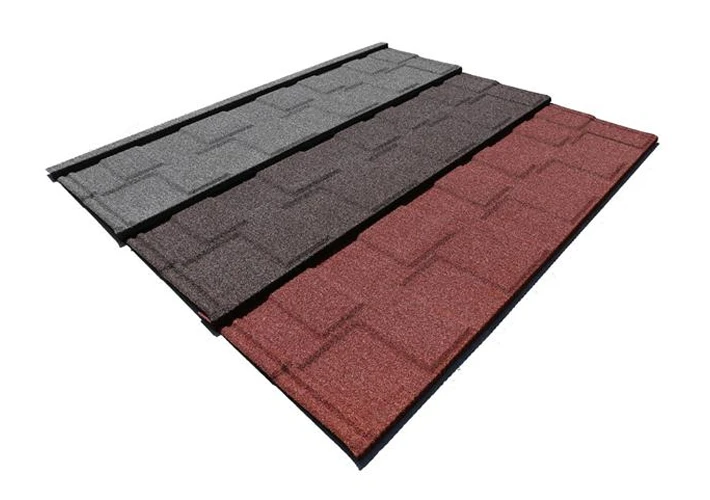
What Factors Affect Stone Coated Metal Roofing Tile Prices?
Several technical and commercial factors influence the cost of stone coated metal roofing tiles.
1. Steel Thickness
The steel substrate is one of the most important components of the product cost.
Stone coated metal roofing tiles are commonly manufactured using coated steel sheets. Depending on the target market and project requirements, buyers may specify different steel thicknesses.
A thicker steel substrate normally increases material consumption and manufacturing cost. It can also provide a different level of structural performance and handling characteristics.
When comparing quotations, buyers should therefore confirm:
- Steel thickness
- Steel grade
- Base coating
- Coating weight
- Tolerance requirements
- Applicable production standard
A supplier offering a lower price may simply be using a thinner substrate or a different material specification.
2. Base Metal and Corrosion Protection
The steel substrate requires protective treatment because roofing products are exposed to rain, humidity, temperature changes, and other environmental conditions.
The type and amount of protective coating can influence the cost.
Buyers may encounter specifications involving galvanized steel or other coated steel substrates. The coating system should be considered together with the intended application and local environmental conditions.
For coastal, tropical, or high-humidity markets, corrosion protection can become particularly important.
Instead of asking only “How much is the tile?”, a professional importer should ask the manufacturer:
What steel substrate and coating specification are included in the quoted price?
This question can prevent significant differences between apparently similar quotations.
3. Stone Granule Quality
Stone granules are a visible part of the roofing tile surface and contribute to the product’s appearance and protective surface system.
The type, quality, particle size, color, and bonding process of the granules can influence the manufacturing cost.
Standard colors and common granule specifications are usually easier to produce economically. Customized colors may require additional material preparation, production arrangements, or minimum order quantities.
For large projects, developers and contractors may request a specific color to match the architectural design. In these cases, the supplier should confirm whether the requested color is a standard option or a custom production item.
4. Tile Profile and Design
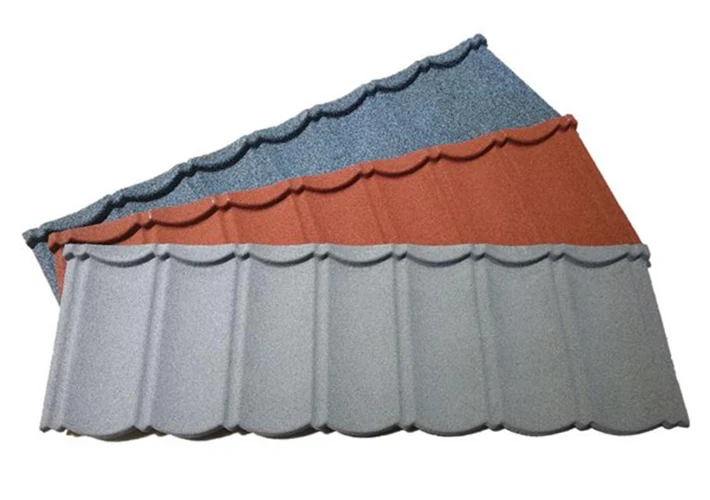
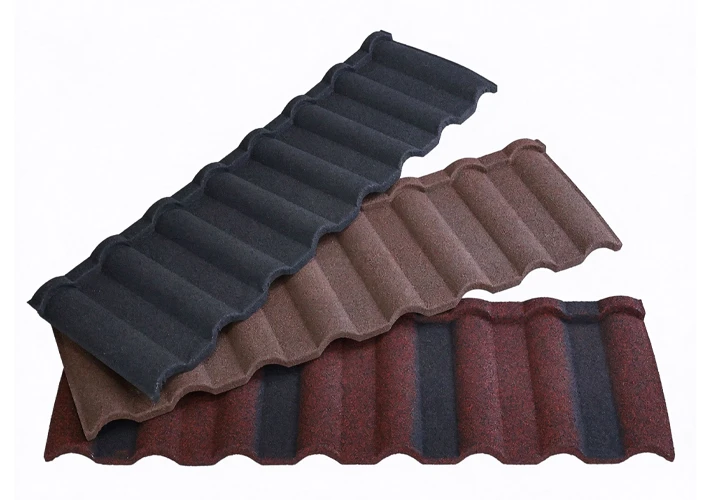
Stone coated metal roofing tiles are available in various profiles, including designs that imitate traditional roof tiles, shingles, or other architectural roofing styles.
The tooling, production process, dimensions, and material consumption can differ between profiles.
Some profiles are designed for a more traditional appearance, while others focus on modern architectural applications.
A more complicated profile may require additional production processes and tooling. Customized profiles can also increase initial development costs.
For this reason, buyers should provide the exact profile or product drawing when requesting a quotation.
5. Coating and Surface Finish
The surface coating system also affects the price.
Depending on the product specification, stone coated metal roofing tiles can include multiple layers designed to protect the steel substrate and provide the required appearance.
The final price may therefore depend on:
- Primer system
- Adhesive layer
- Stone granules
- Protective top coating
- Coating thickness
- Color
- Surface finish
A premium coating system may cost more initially but can be appropriate for markets where long-term weather resistance and appearance retention are important purchasing considerations.
6. Order Quantity
Order quantity has a direct impact on B2B pricing.
A small sample order and a full-container order have very different production economics.
For larger orders, the factory can spread setup, packaging, production planning, and logistics costs across a larger volume. This can reduce the average product cost.
For importers and wholesalers, container-level purchasing is therefore usually more economical than purchasing small quantities.
RoofGlory can discuss different order quantities with B2B customers and provide quotations according to product specification, packaging requirements, and shipment volume.
How Does Order Quantity Affect the Price?
For a B2B buyer, the relationship between quantity and price is especially important.
A roofing manufacturer may quote different prices for:
- Sample quantity
- Small trial order
- Partial container
- Full container
- Multiple containers
- Long-term contract orders
The lowest unit price is generally associated with larger and more stable purchasing volumes, but the buyer should also consider inventory costs and market demand.
For example, a distributor entering a new market may not want to purchase a large quantity before testing customer demand. A trial order can be useful for checking:
- Product quality
- Installation performance
- Packaging
- Customer response
- Color acceptance
- Local building requirements
- Transportation damage
After the product has been validated, larger container orders can help improve purchasing economics.
For professional importers, it is useful to ask the supplier for a tiered quotation such as:
| Order Level | Main Purpose | Pricing Consideration |
|---|---|---|
| Samples | Product evaluation | Highest unit cost |
| Trial order | Market testing | Moderate |
| Container order | Regular distribution | More competitive |
| Multiple containers | Large-scale distribution | Better volume pricing |
| Long-term cooperation | Stable supply | Negotiated based on volume |
The exact pricing structure varies by manufacturer and specification.
What Is Included in a Stone Coated Roofing Tile Quotation?
One common mistake when comparing Chinese roofing suppliers is assuming that every quotation includes the same items.
A professional quotation should clearly identify what is included.
A typical stone coated metal roofing tile quotation may specify:
Product specification
- Tile profile
- Tile dimensions
- Effective coverage
- Steel thickness
- Steel grade
- Surface coating
- Stone granule type
- Color
- Weight per piece
Commercial information
- Unit price
- MOQ
- Production lead time
- Payment terms
- Packaging
- Loading quantity
- Incoterm
Optional accessories
- Ridge caps
- Valley flashing
- Eaves flashing
- Barge boards
- Fasteners
- Nails or screws
- Underlayment
- Other roofing accessories
These accessories may or may not be included in the initial roofing tile quotation.
For a complete project budget, buyers should request an accessory list together with the main roofing product quotation.
How Much Does Shipping Add to the Cost?
For international buyers, shipping can significantly affect the final landed cost.
A factory quotation is usually only one part of the purchasing calculation.
The final cost may include:
Factory product price + inland transportation + export charges + ocean freight + insurance + import duties + taxes + local transportation
The actual logistics cost depends on:
- Destination port
- Container type
- Shipment volume
- Freight market conditions
- Loading method
- Port charges
- Customs requirements
- Final delivery location
Because freight rates change over time, buyers should request a current freight quotation when calculating the landed cost.
The loading efficiency of the roofing tiles also matters. A product that can be packed efficiently may allow more usable roofing material to be shipped within a container.
This is especially important for wholesalers because transportation cost is distributed across the total quantity of products.
RoofGlory can work with international buyers to discuss packaging and container loading requirements so that the purchasing plan is based on realistic shipment quantities.
How to Compare Stone Coated Metal Roofing Tile Suppliers in China
China is one of the major manufacturing bases for metal roofing products, and buyers can find a wide range of suppliers.
However, the cheapest quotation is not necessarily the most suitable quotation for a long-term B2B supply relationship.
When comparing suppliers, buyers should evaluate at least the following areas.
Product Specification
Confirm the exact steel thickness, dimensions, coating system, profile, color, and weight.
Manufacturing Capability
Check whether the supplier operates its own production facility or mainly acts as a trading intermediary.
A factory with direct production capability may provide better communication regarding customized specifications, production scheduling, and quality control.
Quality Control
Ask how the manufacturer controls raw materials, production processes, dimensions, coating quality, granule adhesion, and final packaging.
Production Capacity
For distributors and large projects, consistent production capacity is important.
A supplier should be able to provide a realistic production lead time rather than simply offering an attractive quotation.
Packaging
Roofing tiles need suitable packaging for international transportation. Poor packaging can increase the risk of surface damage during loading, unloading, and ocean transportation.
Export Experience
International export experience can help reduce communication problems related to documents, packaging requirements, shipping arrangements, and destination-market specifications.
Customization
For distributors, customized colors, profiles, packaging, and labels may be important.
A supplier that can support OEM or customized requirements can be useful when developing a private-label roofing product.
Why Buying Directly From a China Factory Can Reduce Cost
For importers and wholesalers, purchasing directly from a China factory can reduce the number of intermediaries involved in the supply chain.
A direct factory relationship can provide several potential commercial advantages:
- Direct manufacturer pricing
- More flexible product specifications
- OEM/private-label possibilities
- Direct communication with production teams
- Better control of packaging
- Container-level purchasing
- Faster quotation for customized products
- Easier coordination of repeat orders
However, the buyer should still evaluate the factory based on product quality, consistency, service, documentation, and delivery performance rather than focusing exclusively on the lowest quotation.
For roofing distributors, the objective is usually not simply to obtain the cheapest tile. The objective is to establish a reliable supply chain that can support consistent product quality and predictable margins.
RoofGlory: China Manufacturer of Stone Coated Metal Roofing Tiles
RoofGlory is a China-based roofing materials manufacturer serving international B2B customers.
Our product range includes stone coated metal roofing tiles and other roofing-related products for importers, wholesalers, distributors, contractors, and construction projects.
For stone coated metal roofing tiles, we can discuss specifications including:
- Different roofing profiles
- Multiple colors
- Different steel thicknesses
- Customized product requirements
- OEM packaging
- Bulk orders
- Container loading
- Roofing accessories
- Project-based supply
For distributors, the ability to maintain consistent specifications across repeat orders is particularly important. A roofing product may be sold over many years, so changes in dimensions, colors, coating, or packaging can create problems for downstream customers.
RoofGlory focuses on factory-based production and B2B supply, allowing buyers to communicate product requirements directly with the manufacturer.
When requesting a quotation, buyers can provide the following information:
- Target roofing tile profile
- Required steel thickness
- Preferred color
- Estimated order quantity
- Destination country or port
- Packaging requirements
- Required accessories
- OEM or private-label requirements
The more complete the specification, the more accurate the quotation can be.
Frequently Asked Questions About Stone Coated Metal Roofing Tile Costs
Are stone coated metal roofing tiles expensive?
The price depends on the specification and purchasing volume. Compared with some basic roofing materials, stone coated metal roofing tiles may have a higher initial product cost, but they provide a combination of metal strength, architectural appearance, and protective surface layers.
For B2B buyers, the more useful comparison is total cost over the expected service period rather than only the initial unit price.
Is it cheaper to buy stone coated metal roofing tiles directly from China?
Direct purchasing from a Chinese manufacturer can reduce intermediary costs, especially for container-level orders. However, the final landed cost also depends on freight, duties, taxes, local delivery, and other expenses.
Buyers should compare complete landed costs rather than factory prices alone.
What is the MOQ for stone coated metal roofing tiles?
MOQ varies according to the manufacturer, product profile, color, packaging, and customization requirements.
Standard products may have different MOQs from customized OEM products. Buyers should confirm the MOQ when requesting a quotation.
Does steel thickness affect the price?
Yes. Steel thickness affects material consumption and therefore has a direct impact on manufacturing cost.
Buyers should always compare quotations using the same steel thickness and material specification.
Are accessories included in the tile price?
Not necessarily. Ridge caps, flashing, fasteners, and other accessories may be quoted separately.
A complete roofing project quotation should clearly distinguish the main roofing tiles from additional components.
Can stone coated metal roofing tiles be customized?
Many manufacturers can support customization of colors, profiles, packaging, labels, and other specifications, depending on production capability and order quantity.
For OEM projects, buyers should discuss customization requirements before confirming the order.
How can I get an accurate quotation?
The most effective approach is to send the supplier a complete specification, including product profile, dimensions, steel thickness, color, quantity, packaging requirements, and destination port.
RoofGlory can then evaluate the requirements and provide a quotation based on the specific product configuration.
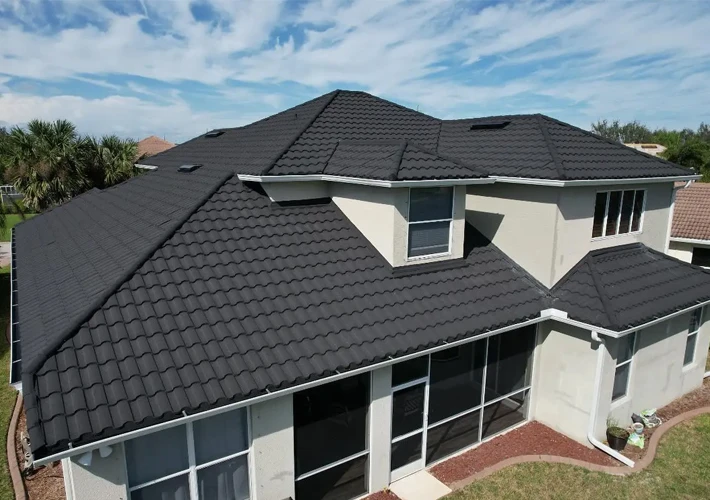
Conclusion: Focus on Total Roofing Cost, Not Just Tile Price
The cost of stone coated metal roofing tiles depends on much more than the appearance of the finished product.
Steel thickness, coating specification, stone granules, profile, dimensions, color, order quantity, packaging, shipping, and accessories can all influence the final purchasing cost.
For B2B buyers, the best way to compare suppliers is to standardize the specifications first and then compare the cost per effective roofing area and total landed cost.
Buying directly from a China factory can provide opportunities for competitive pricing, OEM customization, and stable bulk supply. However, buyers should also evaluate quality control, production capacity, packaging, export experience, and consistency between orders.
RoofGlory supplies stone coated metal roofing tiles from China for importers, wholesalers, distributors, contractors, and project buyers. Whether you need standard roofing products, customized colors, OEM packaging, or container-level supply, our team can provide a quotation based on your specific requirements.
If you are sourcing stone coated metal roofing tiles for your market, send RoofGlory your required profile, steel thickness, color, quantity, and destination port. We can help you calculate the appropriate product configuration and provide a factory quotation for your project.