Frame construction depends on many small components, but nails remain one of the most important fastening materials for structural and general building work. Choosing the correct common nail size for frame construction affects connection strength, installation efficiency, material compatibility, and overall project cost.
For builders, contractors, hardware importers, distributors, and construction-material buyers, nail selection is not simply a matter of choosing the longest nail available. Nail diameter, length, head size, steel grade, surface finish, and the materials being joined all need to be considered.
In many framing applications, common nails are selected because they provide a good balance between strength, availability, cost, and ease of installation. Typical sizes include 8d, 10d, 12d, and 16d, although the appropriate size depends on the framing application and local building requirements.
As a professional China building-material manufacturer, RoofGlory supplies construction hardware and roofing-related products for international B2B customers. This article explains the most commonly used common nail sizes in frame construction and provides a practical reference for buyers choosing nails for residential, commercial, and structural projects.
What Are Common Nails Used for in Frame Construction?
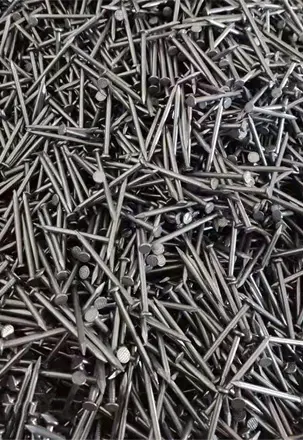
A common nail is a general-purpose steel nail traditionally characterized by a relatively thick shank and a larger flat head. Compared with finishing nails, common nails are designed to provide stronger mechanical fastening rather than a concealed or decorative appearance.
In frame construction, common nails are frequently used for fastening timber components such as:
- Wall studs
- Floor joists
- Roof rafters
- Roof trusses
- Wall plates
- Blocking
- Timber framing
- Sheathing
- General structural wood connections
- Temporary construction framing
- Wood-to-wood connections
The relatively large shank provides good withdrawal resistance, while the head helps prevent the nail from pulling through the surface of the timber.
For B2B buyers, the most important point is that nail size should be selected according to the connection rather than simply according to timber thickness. A nail that is too short may not provide sufficient penetration, while an excessively long nail can increase the risk of splitting, over-penetration, or interference with other building components.
Common nails are also available in different finishes. Depending on the application, buyers may choose bright steel, galvanized, electro-galvanized, hot-dip galvanized, or other corrosion-resistant options.
For interior framing in dry conditions, bright common nails may be sufficient in some applications. For outdoor construction or environments where moisture exposure is expected, galvanized nails are generally more appropriate.
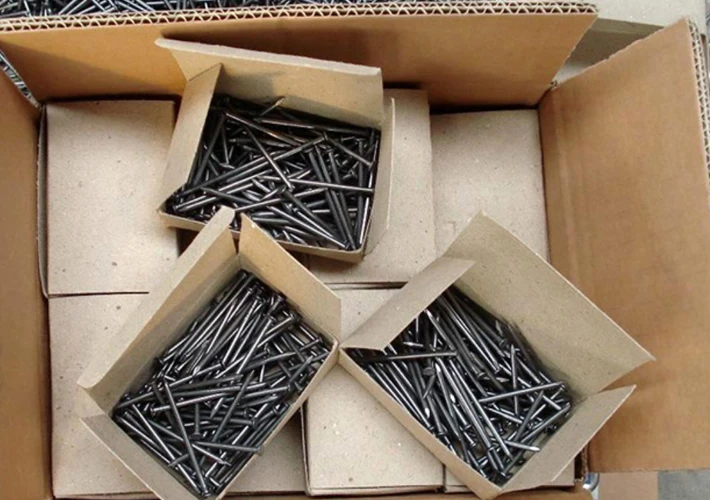
What Are the Most Common Common Nail Sizes for Framing?
The 8d, 10d, 12d, and 16d nail sizes are among the most frequently referenced common nail sizes in wood-frame construction. The letter “d” is a traditional nail-size designation, with the number historically associated with the nail’s price per hundred in an old British measurement system.
Today, the “d” designation is primarily used as a standard size reference.
The following table provides a general reference:
| Nail Size | Approx. Length | Typical Framing Application |
|---|---|---|
| 6d | 2 in / 50.8 mm | Light framing and smaller wood components |
| 8d | 2.5 in / 63.5 mm | Sheathing, light framing |
| 10d | 3 in / 76.2 mm | General framing |
| 12d | 3.25 in / 82.6 mm | Medium structural connections |
| 16d | 3.5 in / 88.9 mm | Heavy-duty framing |
| 20d | 4 in / 101.6 mm | Heavy timber connections |
| 30d | 4.5 in / 114.3 mm | Heavy construction applications |
These dimensions are commonly used as general references, but actual nail dimensions can vary according to the applicable standard and nail type.
For many conventional wood-frame applications, 10d and 16d common nails are especially important sizes.
A 10d nail is often selected where a medium-length fastening is required, while a 16d nail is commonly associated with heavier framing connections.
However, a professional buyer should always confirm the required nail diameter, length, coating, and mechanical properties against the applicable construction standard and project specification.
How to Choose Between 8d, 10d, 12d and 16d Nails
Choosing the correct nail size requires consideration of several factors.
8d Common Nails
An 8d common nail is approximately 2.5 inches long under common dimensional references.
It can be suitable for applications where a shorter fastening length is required, including certain sheathing and light framing applications.
The relatively short length can reduce the risk of excessive penetration through thinner timber.
For manufacturers and distributors, 8d nails are often included in mixed construction-hardware product ranges because they cover many general-purpose applications.
10d Common Nails
10d common nails are approximately 3 inches long.
They are widely used for general construction and framing where more penetration is needed than an 8d nail provides.
Typical applications may include:
- General timber framing
- Wood-to-wood fastening
- Structural sheathing
- Framing connections
- Construction of timber structures
The 10d size provides a useful middle ground between shorter fastening nails and heavier 16d nails.
12d Common Nails
12d common nails are approximately 3.25 inches long.
They are useful where a connection requires greater penetration than a 10d nail but does not necessarily require the length associated with a 16d nail.
For projects involving thicker timber components, the additional length can help create an appropriate fastening depth.
16d Common Nails
16d common nails are approximately 3.5 inches long and are among the most recognizable sizes in conventional wood framing.
They are commonly associated with:
- Structural framing
- Stud-to-plate connections
- Joist and beam connections
- Heavy timber fastening
- Roof framing
- General structural carpentry
However, the use of 16d nails should not be interpreted as a universal requirement for structural framing. Actual requirements depend on the building code, connection design, timber dimensions, nail diameter, spacing, and load requirements.
Nail Length vs. Nail Diameter: Which Is More Important?
When discussing common nail sizes, buyers sometimes focus exclusively on nail length.
However, length and diameter perform different functions.
Nail length determines how deeply the nail can penetrate the receiving material. Diameter affects the nail’s cross-sectional strength, bending resistance, and interaction with the timber.
For example, two nails may have the same length but different diameters. Their performance in a structural connection can therefore be different.
Similarly, a very long nail is not automatically stronger than a shorter nail if the nail diameter and connection design are inappropriate.
When specifying construction nails, B2B buyers should therefore consider at least:
- Nail length
- Shank diameter
- Head diameter
- Nail material
- Surface treatment
- Tensile and bending properties
- Corrosion resistance
- Applicable standard
- Packaging requirements
- Intended application
For large-volume purchasing, these details should be included in the purchase specification rather than relying only on terms such as “common nail” or “framing nail.”
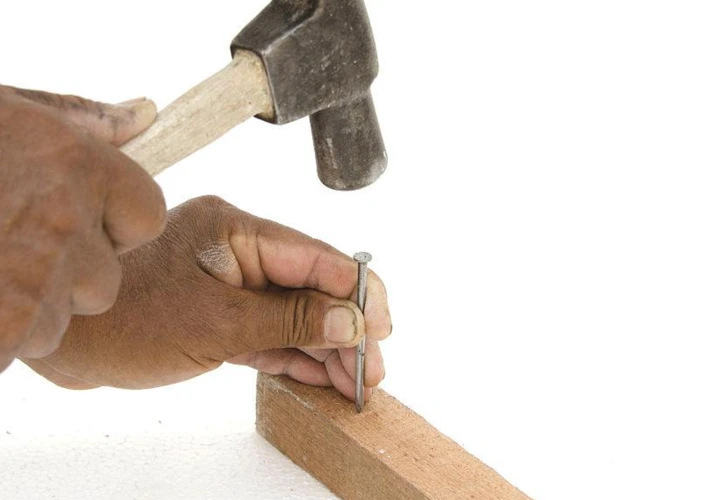
What Nail Size Should Be Used for Different Framing Applications?
Different framing components can require different fastening approaches.
Wall Framing
Wall framing commonly involves fastening studs to plates and connecting framing members at corners and intersections.
Depending on the design and applicable code, nails in the 10d to 16d range may be used for different connections.
The required size should be determined by the connection specification rather than simply by stud thickness.
Roof Framing
Roof construction includes rafters, trusses, roof sheathing, and other components.
Roof framing can require different nail types and sizes depending on whether the connection is structural framing or roofing-related.
It is important to distinguish framing nails from roofing nails.
Roofing nails typically have features such as larger heads and corrosion-resistant coatings because they are used to secure roofing materials and are exposed to weather.
Framing nails, on the other hand, are primarily designed for structural wood connections.
Floor Framing
Floor joists and supporting timber members often require strong wood-to-wood connections.
Depending on the engineering requirements, longer and heavier nails such as 16d common nails may be used for certain framing connections.
Again, exact requirements depend on the project design.
Sheathing
Wood sheathing can require shorter nails than heavy structural connections.
8d and 10d nails are commonly encountered in sheathing-related applications, although the correct nail size, spacing, and fastening pattern should always follow the relevant construction requirements.
This is particularly important because sheathing performance depends not only on nail size but also on nail spacing and edge distance.
How Nail Material and Finish Affect Framing Performance
Nail size is only one part of product selection.
The material and finish can be equally important, especially for international construction projects.
Bright Steel Nails
Bright nails have no significant protective coating and are generally intended for relatively dry interior environments.
They are often selected where corrosion exposure is limited and cost efficiency is important.
Electro-Galvanized Nails
Electro-galvanized nails have a zinc coating that provides improved corrosion resistance compared with untreated steel.
They can be suitable for applications requiring moderate corrosion protection.
Hot-Dip Galvanized Nails
Hot-dip galvanized nails generally provide a thicker zinc coating and improved resistance to moisture and atmospheric corrosion.
They are often considered for outdoor construction and applications exposed to humid conditions.
The exact corrosion resistance depends on the coating specification and manufacturing standard.
Stainless Steel Nails
Stainless steel nails offer significantly higher corrosion resistance and may be used in particularly demanding environments.
However, their cost is generally much higher than conventional carbon-steel nails.
For B2B buyers, the correct coating should be selected based on the actual environment rather than automatically choosing the most expensive material.
Why Nail Diameter and Holding Power Matter in Structural Framing
A nail’s holding power depends on more than its length.
When a nail is driven into wood, friction between the nail shank and surrounding wood contributes significantly to withdrawal resistance. The nail’s diameter, surface characteristics, wood species, moisture content, and penetration depth can all affect performance.
A larger-diameter nail can provide greater mechanical capacity in certain connections, but increasing diameter can also increase the possibility of splitting, particularly near timber edges.
This creates an important balance:
Longer does not always mean better, and thicker does not always mean better.
The correct nail should provide the required connection performance while remaining compatible with the timber dimensions and installation method.
For engineered structural connections, nail selection should be based on the applicable engineering data and building code.
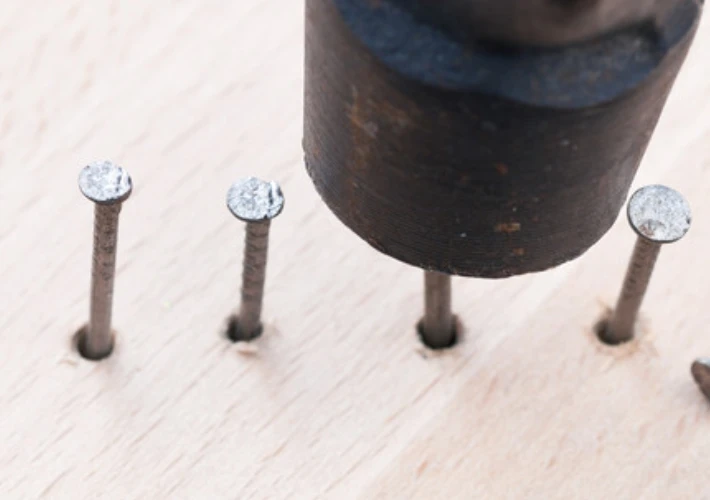
Common Nail Size Standards for International Buyers
For international buyers, terminology can create confusion.
A supplier may list nails according to:
- d-size
- Imperial length
- Metric length
- Shank diameter
- Product standard
- Gauge
- Weight
- Pieces per box
- Pieces per carton
For example, a buyer may request “16d common nails,” while a factory may quote a product according to its metric dimensions.
To avoid misunderstandings, a purchase order should ideally specify both the traditional nail designation and the actual dimensions.
For example:
16d common nail — approximately 3.5 in / 88.9 mm length — specify shank diameter and applicable standard.
This is especially important for container orders because different markets may use different dimensional conventions.
RoofGlory works with international B2B customers and can provide construction hardware according to customer specifications, packaging requirements, and target-market requirements.
Common Nails vs. Roofing Nails: What Is the Difference?
Common nails and roofing nails should not be treated as interchangeable products.
Common nails are primarily used for general wood construction and framing.
Roofing nails are designed specifically for roofing applications. They commonly feature larger heads to help secure roofing materials and are often manufactured with protective coatings suitable for outdoor exposure.
For example, an importer purchasing nails for asphalt shingles should generally specify roofing nails rather than simply ordering common framing nails.
Similarly, a contractor building timber walls or roof frames should select a fastening product appropriate for the structural wood connection.
The correct nail depends on:
- Material being fastened
- Connection type
- Environmental exposure
- Required holding strength
- Installation method
- Local building regulations
For a B2B buyer, separating these product categories in the purchasing specification can help prevent costly product-matching errors.
What Should B2B Buyers Check When Purchasing Common Nails?
When importing common nails from a China factory, buyers should look beyond the basic nail size.
1. Dimensions
Confirm:
- Length
- Shank diameter
- Head diameter
- Point configuration
Do not rely exclusively on “8d,” “10d,” or “16d.”
2. Raw Material
Ask whether the nails are manufactured from low-carbon steel, high-carbon steel, or another specified material.
The appropriate material depends on the required mechanical performance.
3. Surface Treatment
Specify whether you need:
- Bright finish
- Electro-galvanized
- Hot-dip galvanized
- Other protective coating
4. Packaging
For wholesale orders, packaging can be customized according to the distribution market.
Common packaging formats include:
- Small boxes
- Plastic buckets
- Cartons
- Bulk cartons
- Pallets
Packaging should protect nails from moisture and physical damage during international transportation.
5. Quality Control
A professional manufacturer should have processes for checking nail dimensions, coating, appearance, weight, and production consistency.
For large orders, buyers can also request pre-shipment inspection according to their purchasing requirements.
6. Container Loading
For B2B importers, the relationship between product weight, packaging volume, and container capacity is important.
Nails are dense steel products, so transportation cost can represent a significant part of the landed cost.
A factory with experience in export packaging can help optimize carton dimensions and pallet loading.
Why Buy Common Nails from a China Factory?
China has a large and mature hardware manufacturing industry, including nails, screws, roofing fasteners, wires, mesh, and other construction products.
Buying directly from a China factory can provide several potential advantages for importers and wholesalers:
- Competitive factory pricing
- Large production capacity
- Multiple nail sizes
- Customized specifications
- Customized packaging
- OEM/private-label options
- Export-oriented packaging
- Container-scale supply
- Product consolidation with other building materials
However, price should not be the only purchasing factor.
A low-cost nail that does not match the required dimensions, coating, or mechanical specification can create additional costs after arrival.
Professional buyers should therefore evaluate product consistency, factory capability, quality control, packaging, lead time, and communication together with unit price.
RoofGlory is positioned as a China-based building-material supplier serving international B2B customers. Our product range covers roofing and construction-related materials, allowing buyers to discuss multiple building-material requirements with one supplier.

Frequently Asked Questions About Common Nail Sizes
What is the most common nail size for framing?
There is no single nail size suitable for every framing connection. 10d and 16d common nails are among the most widely recognized sizes for conventional wood framing, while 8d and 12d nails are also used for specific applications.
The correct size depends on the connection and applicable construction requirements.
How long is a 16d common nail?
A commonly referenced 16d common nail is approximately 3.5 inches or 88.9 mm long. Actual dimensions can vary according to the applicable product standard.
Are 8d nails suitable for framing?
8d nails can be used for certain framing and sheathing applications, particularly where a shorter fastening length is appropriate. They should not automatically be substituted for longer nails in structural connections.
Are 10d nails stronger than 8d nails?
A 10d nail is longer than a commonly referenced 8d nail, which can provide greater penetration in suitable applications. However, connection strength depends on more than nail length, including diameter, wood properties, penetration, spacing, and design requirements.
Can common nails be used outdoors?
Bright common nails may have limited corrosion resistance. For outdoor or moisture-exposed applications, galvanized or stainless-steel nails may be more appropriate depending on the environment and project specification.
What is the difference between a common nail and a framing nail?
The terms can overlap in the construction market. Common nails generally refer to a traditional heavy-shank general-purpose nail, while “framing nail” can describe nails intended specifically for framing applications, including nails designed for pneumatic nail guns. Buyers should confirm the exact dimensions and application rather than relying only on terminology.
Should I specify nail size in inches or millimeters?
For international purchasing, specifying both imperial designation and metric dimensions is recommended. For example, a purchase order can state the d-size together with nail length and shank diameter.
This reduces the possibility of receiving a product with dimensions different from the buyer’s expectations.
Conclusion: Selecting the Right Common Nail Size for Frame Construction
Common nails remain an essential fastening product for timber-frame construction. The most frequently encountered sizes include 8d, 10d, 12d, and 16d, with 10d and 16d being particularly important references in conventional framing.
However, selecting the correct nail should never be based on length alone.
A professional specification should consider:
- Nail length
- Shank diameter
- Head diameter
- Steel material
- Surface treatment
- Wood thickness
- Connection type
- Environmental exposure
- Applicable building standards
- Packaging requirements
- Quantity and logistics
For importers, wholesalers, contractors, and construction-material distributors, working directly with an experienced China factory can make it easier to customize nail sizes, finishes, packaging, and order quantities according to the target market.
RoofGlory supplies construction and roofing materials for international B2B customers and supports bulk purchasing, product specifications, packaging requirements, and export orders.
If you are sourcing 8d, 10d, 12d, 16d, or other common nail sizes from China, contact RoofGlory with your required nail length, diameter, coating, packaging, quantity, and destination market. Our team can provide product specifications and a quotation for your project or wholesale order.