Polycarbonate roofing sheets have become a popular roofing solution for commercial buildings, warehouses, agricultural structures, patios, carports, skylights, and other outdoor applications. Their combination of lightweight construction, impact resistance, light transmission, and relatively simple installation makes them an attractive alternative to traditional roofing materials.
But for importers, contractors, distributors, and project buyers, one of the most important questions is: how long do polycarbonate roofing sheets last?
In general, high-quality polycarbonate roofing sheets can provide approximately 10 to 25 years of service life, depending on the sheet type, resin quality, UV protection, thickness, installation method, climate, maintenance, and application. Some premium systems can potentially perform for even longer when properly specified and maintained.
However, service life should not be judged by material name alone. Two polycarbonate roofing products can look similar but have very different long-term performance because of differences in resin formulation, UV protection, sheet structure, thickness, manufacturing quality, and production controls.
For B2B buyers, understanding these factors is essential when selecting a reliable polycarbonate roofing sheet supplier.
RoofGlory is a China-based building materials manufacturer supplying roofing products for international markets. This article explains the expected lifespan of polycarbonate roofing sheets, the factors that affect durability, common signs of aging, and how buyers can choose products suitable for long-term outdoor applications.
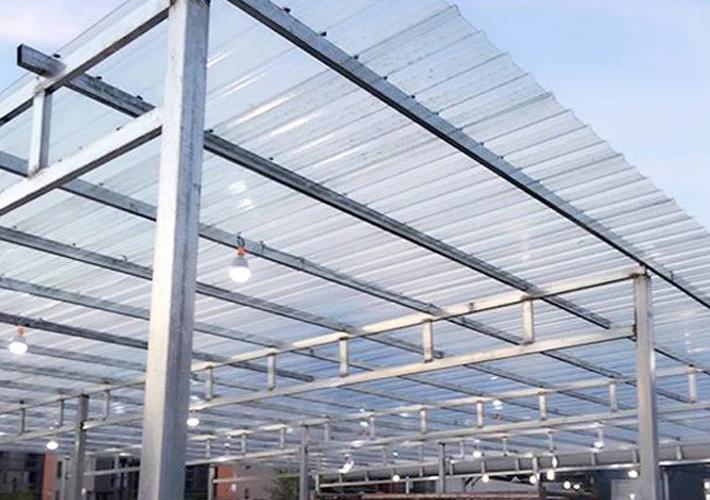
What Is the Typical Lifespan of Polycarbonate Roofing Sheets?
The typical service life of polycarbonate roofing sheets is around 10–25 years, although the actual lifespan depends heavily on product quality and environmental conditions.
Polycarbonate is a thermoplastic engineering material known for its high impact resistance. When it is formulated and manufactured correctly for outdoor roofing applications, it can withstand repeated exposure to sunlight, rain, wind, temperature changes, and physical impacts.
A basic comparison can be made as follows:
| Polycarbonate Roofing Type | Typical Service Life* | Common Applications |
|---|---|---|
| Standard polycarbonate sheet | 10–15 years | Temporary or general roofing |
| UV-protected polycarbonate sheet | 15–20 years | Residential and commercial roofing |
| High-quality multiwall sheet | 15–25 years | Skylights, commercial buildings |
| Premium UV-resistant roofing system | 20–25+ years | Long-term architectural projects |
*Actual service life varies according to material formulation, UV protection, climate, installation, and maintenance.
One important point is that warranty period and actual service life are not necessarily the same thing. A supplier may provide a product warranty for a specific number of years, while the sheet may continue functioning beyond the warranty period.
For commercial projects, buyers should therefore evaluate more than the advertised lifespan. Resin quality, UV protection, thickness, mechanical performance, test reports, production consistency, and installation requirements should all be considered.
Why Polycarbonate Can Last for Many Years
Polycarbonate roofing sheets have several properties that contribute to their durability:
- High impact resistance
- Low weight compared with many traditional roofing materials
- Good resistance to weather exposure
- Good temperature tolerance
- Available UV-resistant grades
- Flexible sheet structures
- Low maintenance requirements
- Good light transmission for translucent applications
The most important issue for outdoor applications is usually UV resistance. Polycarbonate itself can be affected by prolonged ultraviolet radiation if it does not have appropriate protection.
This is why outdoor roofing sheets should generally use a suitable UV-resistant layer or formulation designed for exterior applications.
What Factors Affect the Lifespan of Polycarbonate Roofing Sheets?
The service life of polycarbonate roofing is determined by several factors rather than one specification. For B2B purchasing, these factors should be evaluated together.
1. UV Protection
UV exposure is one of the most important factors affecting long-term polycarbonate performance.
Continuous exposure to sunlight can gradually cause polymer degradation. Without sufficient UV protection, a sheet may eventually become yellow, lose transparency, become more brittle, or experience reduced mechanical performance.
Quality outdoor polycarbonate roofing products are therefore commonly manufactured with UV protection.
UV protection can be achieved through suitable material formulation or a dedicated UV-resistant layer or coating, depending on the product structure.
For buyers in regions with intense sunlight, such as Australia, Southeast Asia, the Middle East, Africa, and parts of South America, UV performance deserves particular attention.
When comparing suppliers, ask:
- Is the sheet designed for outdoor use?
- Does it have UV protection?
- Is the UV layer co-extruded or surface-applied?
- Which side should face the sun?
- What UV-related testing has been conducted?
- What warranty is offered for outdoor exposure?
These questions can help distinguish a professional roofing product from a basic indoor-grade sheet.
2. Sheet Thickness
Thickness also affects durability.
In general, thicker sheets can provide greater resistance to impact, wind loading, and mechanical stress, although thickness alone does not guarantee a longer service life.
For example, a thin sheet made from high-quality resin with effective UV protection may outperform a thicker sheet manufactured from inferior raw materials.
Thickness should therefore be selected according to:
- Span
- Support spacing
- Wind load
- Snow load
- Installation method
- Local building requirements
- Intended application
For large commercial or industrial projects, suppliers should be able to provide technical information that allows contractors and engineers to select an appropriate thickness and structure.
3. Raw Material Quality
The quality of the polycarbonate resin has a direct influence on the finished product.
High-quality raw materials provide more consistent physical properties and can contribute to better impact resistance, weather resistance, and dimensional stability.
Low-quality or poorly controlled recycled materials may reduce product consistency, particularly when the material formulation is not properly controlled.
This does not mean every recycled material is unsuitable. The key issue is whether the manufacturer has sufficient control over the material formulation and whether the finished product meets the required performance standards.
For B2B buyers, it is worth asking a factory about:
- Raw material source
- Material grade
- Virgin versus recycled content
- UV stabilization
- Production formulation
- Quality control procedures
- Batch consistency
A reliable manufacturer should be able to explain these points clearly.
4. Climate and Environmental Conditions
Climate has a major effect on roofing lifespan.
A polycarbonate roof installed in a mild climate may experience significantly less environmental stress than the same product installed in a region with extreme solar radiation, high temperatures, strong winds, heavy rainfall, or frequent temperature changes.
Major environmental factors include:
Strong sunlight: Accelerates UV exposure and surface aging.
High temperature: Repeated heating and cooling can create thermal expansion and contraction.
Heavy rainfall: Places additional requirements on the roof’s waterproofing and drainage system.
Strong wind: Creates mechanical loads that depend on sheet size, profile, support spacing, and fixing method.
Hail and impacts: Polycarbonate is known for good impact resistance, but the actual performance depends on product structure and thickness.
Salt air: Coastal environments can create additional corrosion concerns for metal fixing components and supporting structures.
Therefore, buyers should not ask only, “How many years does the sheet last?” A better question is, “How many years is this product designed to perform under my local environmental conditions?”
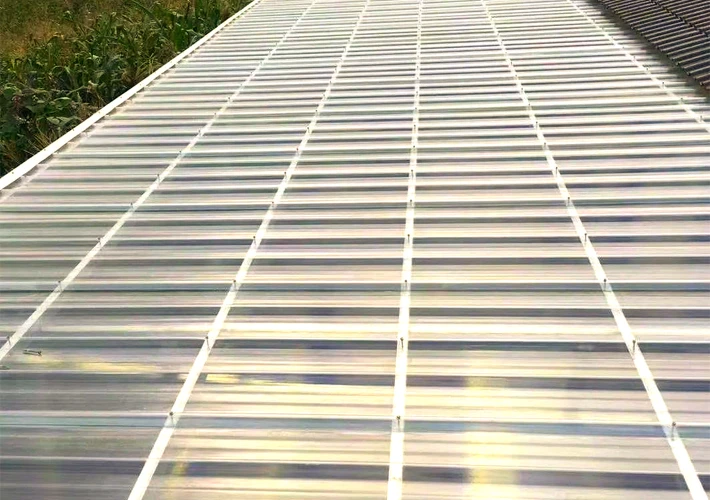
How Does UV Exposure Affect Polycarbonate Roofing?
UV exposure is one of the most important issues when discussing the lifespan of polycarbonate roofing sheets.
Over time, ultraviolet radiation can cause changes to polymer materials. Poorly protected polycarbonate may gradually lose its original appearance and mechanical properties.
Typical signs of excessive UV aging may include:
- Yellowing
- Reduced transparency
- Surface degradation
- Loss of gloss
- Increased brittleness
- Cracking
- Reduced impact performance
High-quality roofing sheets designed for outdoor use normally incorporate UV protection to slow this process.
For transparent or translucent roofing, maintaining optical performance can also be important. A skylight or daylighting roof is often installed specifically to allow natural light into a building. If the sheet becomes heavily yellowed or loses light transmission, the original design purpose can be compromised.
UV Protection Is Not the Same as UV Resistance
These terms are sometimes used loosely in marketing, so buyers should look for technical evidence.
A supplier claiming “UV resistant” should ideally be able to provide information about the construction and performance of the UV protection.
For example, some products use a UV-protected surface layer, while others rely on additives incorporated into the material.
For international B2B procurement, technical documentation is especially valuable because it allows buyers to compare products from different manufacturers using more objective criteria.
What Are the Signs That Polycarbonate Roofing Sheets Are Aging?
Polycarbonate roofing does not normally fail suddenly simply because it reaches a particular number of years. Aging tends to occur gradually.
Some common signs include:
Yellowing or Discoloration
For transparent and translucent sheets, noticeable yellowing can indicate prolonged UV exposure or material aging.
A small amount of color change does not necessarily mean the sheet has become structurally unsafe, but significant discoloration may indicate that the product is approaching the end of its useful service life for applications requiring high transparency.
Cracking
Cracks can develop because of material aging, excessive mechanical stress, improper installation, impact, or thermal movement.
If cracking appears around fixing points, installation practices should also be reviewed.
Brittleness
Aged or poorly protected polycarbonate can become more brittle. This may increase the risk of cracking during maintenance, impact, or extreme weather.
Leaks
Leaks do not always mean the polycarbonate itself has failed.
Roof leaks can result from:
- Damaged sealing components
- Incorrect screw placement
- Improper overlap
- Insufficient flashing
- Incorrect slope
- Deteriorated washers
- Poor installation
- Thermal movement
Therefore, leakage should be investigated before deciding that the entire roofing sheet needs replacement.
Loss of Surface Quality
Surface deterioration, excessive scratching, or degradation of protective layers can also indicate aging.
Regular inspections allow building owners and contractors to identify these problems before they become major repair issues.
How Can You Extend the Service Life of Polycarbonate Roofing?
Proper installation and maintenance can significantly contribute to long-term performance.
Choose the Correct Product
The first step is selecting a sheet designed for the intended environment.
For outdoor commercial roofing, do not automatically choose the cheapest product. Consider UV protection, thickness, structure, impact resistance, temperature range, warranty, and supplier quality.
For projects in high-UV regions, UV-resistant products should be prioritized.
Follow Correct Installation Procedures
Even high-quality polycarbonate can experience premature problems if installed incorrectly.
Important installation considerations include:
- Correct support spacing
- Appropriate fixing systems
- Correct screw positioning
- Suitable washers
- Proper overlap
- Adequate roof slope
- Allowance for thermal expansion
- Correct orientation of UV-protected surfaces
Polycarbonate expands and contracts with temperature changes. The fixing system should therefore accommodate normal thermal movement rather than excessively restricting the sheet.
Avoid Over-Tightening Screws
Over-tightening fasteners can place unnecessary stress on the sheet.
The correct fixing pressure should secure the sheet without deforming or crushing the material.
This is particularly important around fixing holes, where excessive stress may eventually contribute to cracking.
Keep the Roof Clean
Dirt, leaves, dust, and other debris can accumulate on roofing surfaces and drainage areas.
Regular cleaning helps maintain appearance and light transmission while reducing the risk of blocked drainage.
Cleaning should be performed using methods and materials recommended for polycarbonate. Abrasive tools and aggressive chemicals should generally be avoided because they can damage the surface.
Inspect Fixings and Seals
The supporting structure may remain in good condition while fixing components deteriorate.
Periodic inspections should therefore include:
- Screws
- Washers
- Seals
- Flashings
- Overlaps
- Edges
- Supporting frames
- Drainage channels
Replacing a relatively inexpensive washer or seal can sometimes prevent a much larger roofing repair later.
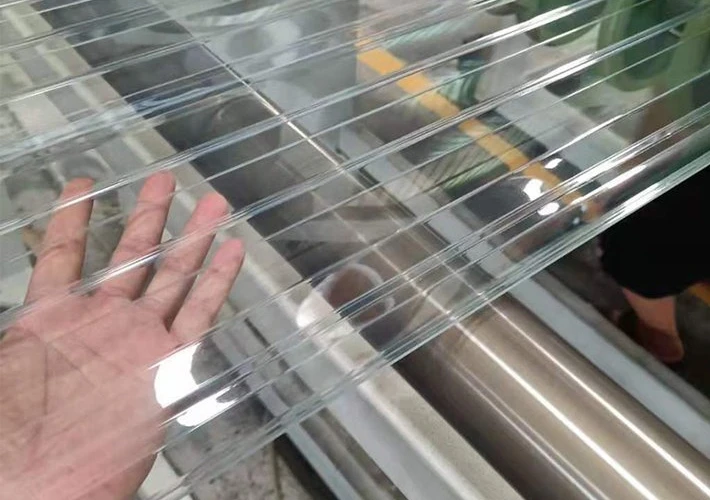
Is Polycarbonate Roofing Better Than Traditional Roofing Materials?
Whether polycarbonate is “better” depends on the application.
Polycarbonate roofing has several advantages when compared with many traditional roofing materials.
Lightweight Construction
Polycarbonate sheets are relatively lightweight, making them easier to transport and handle during installation.
This can reduce labor requirements and simplify projects where structural weight is an important consideration.
Natural Light
Transparent and translucent polycarbonate roofing can allow daylight into a building.
This makes it particularly useful for:
- Skylights
- Greenhouses
- Canopies
- Workshops
- Commercial spaces
- Agricultural buildings
- Walkways
- Covered outdoor areas
Impact Resistance
Polycarbonate is well known for its impact resistance. This makes it attractive for applications where brittle roofing materials may present a higher risk of breakage.
Design Flexibility
Polycarbonate roofing is available in different profiles, thicknesses, colors, and structures. This allows manufacturers and project designers to select products according to functional and aesthetic requirements.
Easy Handling
Compared with heavier roofing materials, polycarbonate sheets are easier to cut, transport, lift, and install when the appropriate tools and procedures are used.
However, polycarbonate is not automatically the best solution for every roof. Applications involving extremely high temperatures, specific fire requirements, heavy structural loads, or unusual chemical exposure require careful product selection.
How Should B2B Buyers Choose a Polycarbonate Roofing Sheet Supplier?
For importers and distributors, choosing the manufacturer is just as important as choosing the product.
A reliable supplier should provide more than a product catalog and quotation.
1. Check Factory Manufacturing Capability
A professional manufacturer should have controlled production processes, appropriate extrusion equipment, experienced technicians, and established quality inspection procedures.
For large-volume orders, production capacity also matters. A supplier needs to be able to maintain consistent specifications across different batches.
2. Request Technical Specifications
Before placing an order, buyers should request information such as:
- Sheet thickness
- Sheet width and length
- Weight
- Profile
- UV protection
- Light transmission
- Impact resistance
- Temperature range
- Installation requirements
- Packaging specifications
- Warranty terms
This makes it easier to compare different manufacturers.
3. Ask for Samples
A sample allows importers and contractors to evaluate:
- Surface appearance
- Thickness
- Transparency
- Color
- Profile accuracy
- Surface quality
- General rigidity
For distributors developing their own market, samples can also be used for customer presentations and project approval.
4. Evaluate Quality Control
Quality control should cover raw materials, production parameters, finished dimensions, appearance, and packaging.
For export orders, packaging is particularly important because roofing sheets can be damaged during transportation if they are not adequately protected.
5. Consider OEM and Customization
Distributors may require customized:
- Colors
- Lengths
- Profiles
- Packaging
- Labels
- Logos
- Product specifications
A factory with OEM/ODM capabilities can provide greater flexibility for international buyers.
6. Evaluate Long-Term Supply Capability
A good supplier should not only deliver one order. For distributors and project contractors, stable long-term supply is often more important.
Buyers should evaluate:
- Production capacity
- Lead time
- Export experience
- Quality consistency
- Communication
- Packaging
- After-sales support
- Replacement policy
This is especially important when a product becomes part of a distributor’s regular inventory.
Polycarbonate Roofing Lifespan: FAQs
How long do polycarbonate roofing sheets usually last?
Most quality outdoor polycarbonate roofing sheets can last approximately 10–25 years, depending on UV protection, material quality, thickness, installation, climate, and maintenance.
Does polycarbonate roofing degrade in sunlight?
Polycarbonate can gradually degrade under long-term UV exposure, particularly when it lacks adequate UV protection. Outdoor roofing products should therefore be specifically designed for UV exposure.
Can polycarbonate roofing last 20 years?
Yes. High-quality UV-protected polycarbonate roofing can potentially provide around 20 years or more of service under suitable conditions. Actual performance depends on the product and environment.
Does thicker polycarbonate last longer?
Thickness can improve mechanical performance, but it does not automatically determine lifespan. UV protection, resin quality, manufacturing quality, and installation are also important.
Can polycarbonate roofing withstand heavy rain?
Properly selected and correctly installed polycarbonate roofing can be used in areas with heavy rainfall. Roof slope, overlaps, sealing, flashing, drainage, and fixing systems are critical to waterproof performance.
Is polycarbonate suitable for hot climates?
Yes, polycarbonate roofing can be used in hot climates, but the product should be selected according to local temperature and UV conditions. UV protection and appropriate installation are particularly important.
How often should polycarbonate roofing be replaced?
There is no universal replacement schedule. A properly maintained roof may remain functional for 10–25 years or longer. Replacement should be based on actual material condition, structural performance, leakage, cracking, and project requirements.
Is polycarbonate roofing good for commercial projects?
Yes. Polycarbonate is widely suitable for applications such as commercial canopies, daylighting systems, warehouses, agricultural buildings, walkways, and architectural roofing. The correct specification should be selected according to project requirements.
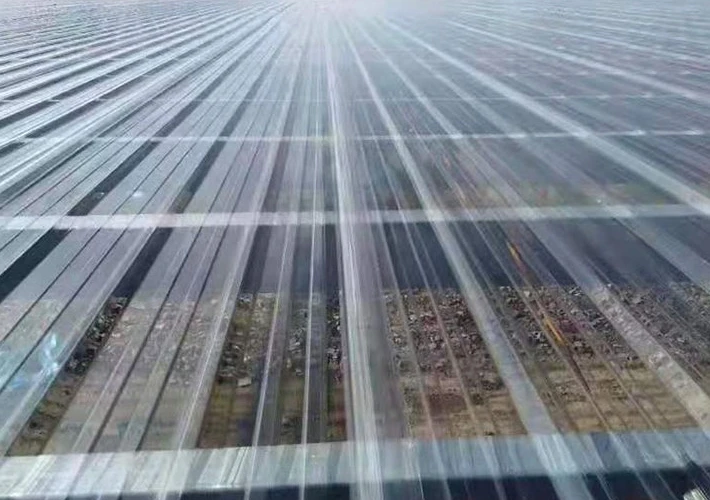
Why Choose RoofGlory for Polycarbonate Roofing Solutions?
For international B2B buyers, the value of a roofing supplier is not limited to the price per sheet. Consistent quality, production capacity, customization, packaging, technical communication, and export experience all affect the total purchasing result.
RoofGlory is a China-based building materials manufacturer serving international B2B customers with roofing and related building products.
For importers, wholesalers, contractors, and distributors, working directly with a factory can provide several advantages:
- Factory-direct supply
- Competitive China factory pricing
- OEM/ODM support
- Product customization
- Bulk order capability
- Export-oriented packaging
- Quality control
- Technical product information
- Sample support
- Long-term supply cooperation
Polycarbonate roofing is a long-term building material, so product selection should focus on performance rather than simply the lowest initial price.
A slightly higher-quality sheet with reliable UV protection, consistent material formulation, and proper installation may provide better value over the entire service life of the roof.
For projects in high-UV or demanding climates, buyers should pay particular attention to UV resistance, sheet thickness, profile design, installation requirements, and warranty conditions.
At RoofGlory, our goal is to provide reliable roofing material solutions for global distributors, importers, contractors, and project buyers. If you are sourcing polycarbonate roofing sheets in bulk, our factory team can support product selection, specifications, samples, customization, and export orders.
RoofGlory — Build With Glory!
Contact RoofGlory for polycarbonate roofing sheet specifications, samples, OEM/ODM options, and factory quotations for your next project.