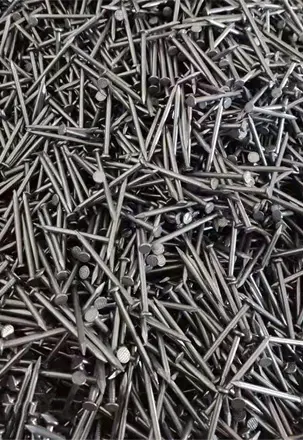
Coil roofing nails are widely used for high-speed roofing installation because they are designed to work with pneumatic or cordless coil nailers. Compared with loose roofing nails, collated coil roofing nails can significantly reduce reloading time and improve installation efficiency, making them especially useful for contractors, roofing companies, distributors, and large construction projects.
However, choosing the right coil roofing nail sizes and specifications is not simply a matter of selecting the longest nail available. Nail length, shank diameter, head diameter, shank design, coating, collation angle, material, and nail-gun compatibility all affect fastening performance.
For importers and distributors, these specifications are also important when selecting a reliable coil roofing nail manufacturer in China. A suitable product should not only meet the required dimensions but also provide consistent collation, coating quality, driving performance, and packaging.
In this guide, Roofglory, a China-based building materials and fastener supplier, explains the most important coil roofing nail sizes, specifications, applications, and purchasing considerations.
What Are Coil Roofing Nails?
Coil roofing nails are roofing fasteners that are connected together in a continuous coil and loaded into a compatible coil nail gun. Instead of manually loading individual nails, workers can load an entire coil and drive nails rapidly through roofing materials.
Most roofing coil nails are designed with a relatively large flat or round head to provide sufficient holding area. Depending on the application, the shank may be smooth, ring shank, or another mechanically deformed design.
A typical coil roofing nail specification may include:
- Nail length
- Shank diameter
- Head diameter
- Shank type
- Point type
- Material
- Surface treatment
- Collation angle
- Nails per coil
- Packaging quantity
- Nail gun compatibility
The ASTM F1667 standard includes specifications for driven fasteners and identifies roofing nails by characteristics such as material, head, point, shank, and coating. For steel roofing nails, the specification describes flat heads, diamond points, and smooth or deformed shanks, with bright or zinc-coated finishes depending on the application.
This is why buyers should look beyond the simple description “roofing nails” when placing a bulk order.
Common Coil Roofing Nail Sizes
The most important dimensions are length and shank diameter.
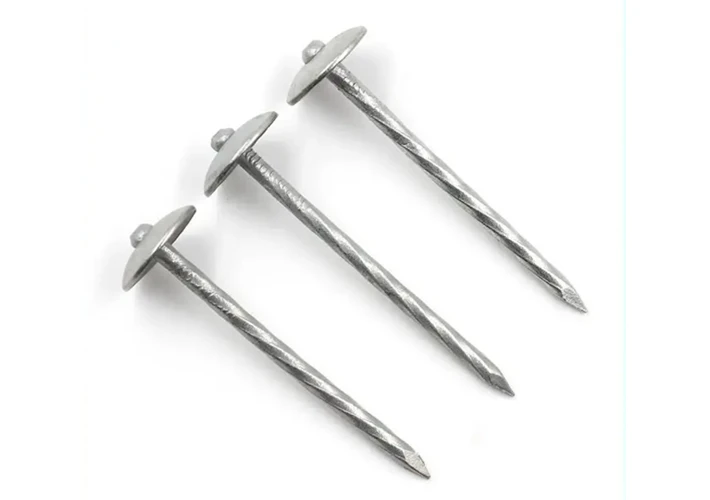
For many coil roofing nail applications, commonly ordered lengths include 3/4 inch, 7/8 inch, 1 inch, 1-1/4 inch, 1-1/2 inch, 1-3/4 inch, and 2 inches. Some manufacturers can also supply longer sizes for specialized applications.
For example, commercially available 15-degree coil roofing nails are offered in 3/4-inch length with a 0.120-inch shank diameter, while other product ranges extend to 1-3/4 inches and beyond.
Coil Roofing Nail Size Chart
| Nail Length | Approx. Metric Length | Common Applications |
|---|---|---|
| 3/4″ | 19 mm | Asphalt shingles, light roofing materials |
| 7/8″ | 22 mm | Roofing shingles, roofing underlayment |
| 1″ | 25 mm | Shingles and general roofing |
| 1-1/4″ | 32 mm | Thicker roofing assemblies |
| 1-1/2″ | 38 mm | Roofing materials requiring greater penetration |
| 1-3/4″ | 45 mm | Thick roofing systems and selected applications |
| 2″ | 50 mm | Heavy-duty or deeper fastening applications |
These sizes are common market options rather than a universal rule. The correct nail depends on the roofing material, roof deck, local building requirements, and the nail-gun manufacturer’s specifications.
ASTM F1667 also demonstrates that roofing nail dimensions vary according to diameter and head configuration. Its listed steel roofing nail sizes include lengths from 3/4 inch upward, with different shank and head dimensions available for specific applications.
0.120-Inch Coil Roofing Nails
The 0.120-inch shank diameter is one of the commonly encountered specifications in professional coil roofing nails.
It is approximately 3.05 mm in diameter.
For example, commercial 15-degree coil roofing nail products are available with a 3.05 mm shank diameter and lengths such as 19 mm and 22 mm.
When purchasing in bulk, buyers should specify both the diameter and length rather than simply ordering “standard roofing nails.”
Key Specifications of Coil Roofing Nails
Size is only one part of a complete coil roofing nail specification. For B2B buyers, several additional parameters should be confirmed before placing an order.
1. Nail Length
Nail length determines how deeply the fastener can penetrate the roofing assembly.
A nail that is too short may not provide sufficient holding power. A nail that is excessively long may penetrate too deeply or create problems with the underlying structure.
For this reason, nail length should be selected according to:
- Roofing material thickness
- Underlayment thickness
- Roof deck thickness
- Required penetration depth
- Local roofing standards
- Nail-gun specifications
2. Shank Diameter
Shank diameter influences nail strength and driving performance.
Common coil roofing nail diameters include approximately:
- 2.5 mm
- 3.05 mm
- 3.1 mm
Some manufacturers also offer customized diameters for specific equipment or applications.
A larger diameter generally provides a stronger nail, but compatibility with the nail gun and collation system must always be considered.
3. Head Diameter
Roofing nails normally use a relatively large head compared with many general construction nails.
The large head helps distribute pressure over the roofing material and reduces the risk of the fastener pulling through the material.
Depending on the design and manufacturer, coil roofing nails can have head diameters around 10–11 mm or approximately 7/16 inch.
For roofing shingles and sheet materials, head design is especially important because excessive penetration can damage the roofing surface.
4. Shank Type
Coil roofing nails are commonly available with:
Smooth shank:
The simplest design, suitable for many standard roofing applications. Smooth-shank nails are generally easy to drive.
Ring shank:
The shank contains concentric rings designed to increase withdrawal resistance. Ring shank roofing nails can be useful where stronger holding performance is required.
Twist or screw shank:
Some manufacturers supply mechanically deformed shanks for applications requiring additional holding strength.
ASTM F1667 recognizes smooth and mechanically deformed shanks for certain roofing nail configurations.
For bulk buyers, the shank type should be stated clearly on the purchase order.
Coil Roofing Nail Materials and Surface Treatments
The material and coating of roofing nails directly affect corrosion resistance and service life.
Carbon Steel Roofing Nails
Carbon steel is one of the most widely used materials for roofing nails because it provides a good balance between strength, availability, and cost.
Chinese manufacturers commonly produce roofing nails from grades such as Q195 or Q235, depending on product requirements. Some suppliers also offer higher-strength steel options.
For general roofing applications, carbon steel nails with an appropriate zinc coating can provide an economical solution.
Stainless Steel Roofing Nails
Stainless steel nails are normally selected for applications where higher corrosion resistance is required.
They can be particularly relevant for:
- Coastal construction
- High-humidity environments
- Premium roofing projects
- Long-service-life applications
- Certain metal roofing systems
Common stainless steel options include 304 and 316 stainless steel.
The higher material cost means stainless steel should be specified when environmental conditions justify the additional investment.
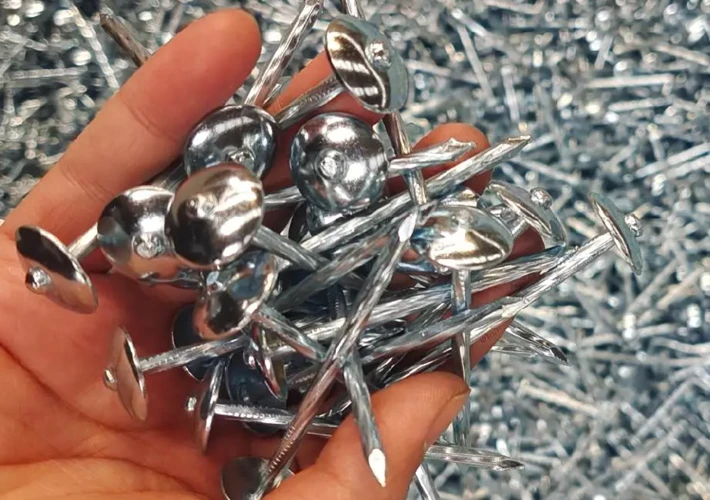
Electro-Galvanized Coil Roofing Nails
Electro-galvanized nails receive a zinc coating through an electrochemical process.
Their advantages include:
- Good appearance
- Economical price
- Basic corrosion protection
- Suitable for many indoor or relatively mild environments
Commercial roofing products are available in electro-galvanized versions, including 15-degree wire-collated coil nails.
However, electro-galvanized nails generally should not automatically be considered equivalent to hot-dip galvanized nails for severe outdoor exposure.
Hot-Dip Galvanized Coil Roofing Nails
Hot-dip galvanizing provides a thicker zinc coating and is commonly selected when improved outdoor corrosion resistance is required.
For roofing projects exposed to rain, humidity, or changing weather conditions, hot-dip galvanized coil roofing nails are often a preferred option.
Some commercial products specify hot-dip galvanized coatings for improved resistance to weathering and rust.
When importing galvanized roofing nails, buyers should ask the supplier to provide the agreed coating specification rather than relying only on the words “galvanized.”
15-Degree Coil Roofing Nails and Nail Gun Compatibility
One of the most important specifications for coil roofing nails is the collation angle.
A common configuration is the 15-degree wire-welded coil nail.
The nails are arranged in a coil at the required angle and are designed to feed through compatible coil nailers. Commercial roofing nail products commonly use 15-degree collation and are marketed for compatibility with standard roofing nail guns.
However, buyers should never assume that every 15-degree nail will work with every nail gun.
Before ordering, confirm:
- Nail angle
- Nail length range
- Shank diameter
- Head diameter
- Collation material
- Coil capacity
- Recommended nail-gun brands/models
Some manufacturers specifically list compatibility with nailer brands such as MAX, Bostitch, Hitachi, Paslode, and Senco, but compatibility should always be confirmed against the actual tool model.
A technically correct nail can still cause feeding problems if its collation does not match the nail gun.
How to Choose the Right Coil Roofing Nail Size
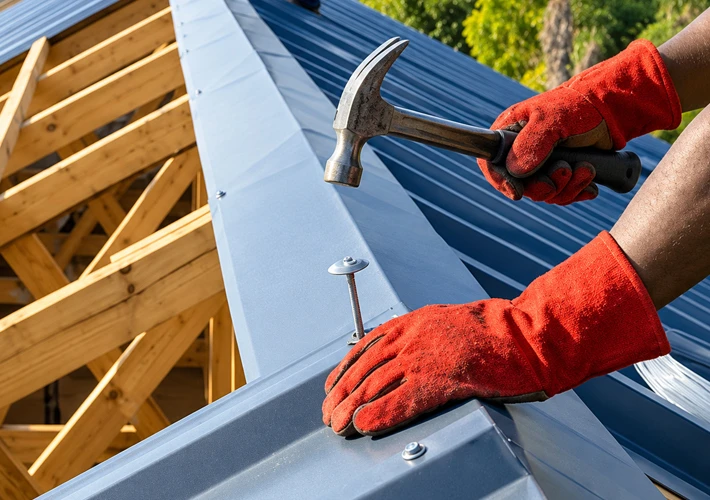
Choosing the right nail requires looking at the entire roofing assembly rather than one dimension.
Consider the Roofing Material
Different roofing materials require different fastening solutions.
For example:
- Asphalt shingles may commonly use shorter roofing nails.
- Fiberglass shingles require compatible roofing fasteners.
- Underlayment and insulation boards may require different nail specifications.
- Certain metal roofing applications require fasteners with specific heads, washers, or corrosion resistance.
- Thick roofing assemblies may require longer nails.
Commercial coil roofing nails are commonly used for asphalt and fiberglass shingles, waterproof roofing paper, insulation board, new roofs, and re-roofing applications.
Consider the Roof Deck
The substrate is equally important.
A nail selected for a wood roof deck may not be appropriate for another substrate. Buyers should confirm:
- Deck material
- Deck thickness
- Required penetration
- Pull-out requirements
- Applicable local building codes
The goal is to achieve sufficient penetration without unnecessarily driving the nail too far.
Consider the Climate
Climate affects coating selection.
For relatively mild conditions, electro-galvanized nails may be suitable for some applications.
For outdoor roofing exposed to rain and humidity, hot-dip galvanized nails may offer better corrosion protection.
For highly corrosive environments, stainless steel may be worth considering.
Consider the Nail Gun
This is one of the most frequently overlooked factors.
Before purchasing thousands of coils, confirm that the nails match the nailer.
A buyer should provide the supplier with the nail gun model whenever possible. This allows the manufacturer to verify:
- Coil angle
- Nail length
- Nail diameter
- Head diameter
- Collation type
- Feeding requirements
For professional contractors, compatibility can be more important than simply finding the lowest unit price.
Coil Roofing Nails vs. Loose Roofing Nails
Coil roofing nails and loose roofing nails can serve similar fastening functions, but their productivity is different.
Coil Roofing Nails
The main advantages include:
- Faster installation
- Less frequent reloading
- Better productivity
- Suitable for pneumatic nailers
- Efficient for large roofing projects
- Reduced manual handling
A single coil can contain many nails, allowing contractors to continue working without stopping to reload after every few fasteners.
Some commercial products contain approximately 120 nails per coil, although the exact quantity depends on nail size and manufacturer design.
Loose Roofing Nails
Loose nails are more suitable for:
- Small repairs
- Manual installation
- Occasional roofing work
- Applications without pneumatic nailers
For large commercial roofing projects, coil nails generally provide a productivity advantage.
Buying Coil Roofing Nails from a China Manufacturer
For importers, wholesalers, distributors, and roofing-material companies, product specifications should be confirmed before discussing price.
A professional coil roofing nail manufacturer in China should be able to provide a complete specification sheet covering the key parameters.
When sourcing from China, ask for:
Product Specification
Confirm:
- Nail length
- Shank diameter
- Head diameter
- Shank type
- Point type
- Material
- Surface treatment
- Collation angle
- Nails per coil
- Coils per carton
- Carton weight
- Packaging dimensions
Quality Control
Ask about:
- Raw material inspection
- Nail dimension tolerance
- Head formation
- Point quality
- Shank consistency
- Galvanizing quality
- Collation strength
- Nail-gun feeding tests
- Finished-product inspection
Consistent collation is particularly important. If nails separate from the coil during transportation or fail to feed correctly, contractors can experience jams and productivity losses.
Packaging
For export orders, packaging should protect the nails from:
- Moisture
- Rust
- Physical deformation
- Collation damage
Bulk cartons, plastic bags, pallets, and customized labels can be arranged according to the destination market and customer requirements.
OEM and Custom Specifications
Professional buyers may require customized:
- Nail sizes
- Shank patterns
- Coatings
- Coil quantities
- Carton sizes
- Product labels
- Brand packaging
- Pallet configurations
For distributors building their own fastener brand, OEM packaging can also help create a consistent product portfolio.

Roofglory Coil Roofing Nails for Wholesale Buyers
Roofglory supplies roofing and construction fasteners for international B2B customers, with a focus on consistent specifications, export packaging, and bulk-order requirements.
For wholesalers, importers, distributors, roofing contractors, and building-material suppliers, our coil roofing nails can be specified according to project and equipment requirements.
Typical options can include:
| Specification | Available Options |
|---|---|
| Nail length | 3/4″–2″ and customized sizes |
| Shank | Smooth / Ring / Deformed |
| Diameter | Common 0.120″ and other options |
| Material | Carbon steel / Stainless steel |
| Finish | Electro galvanized / Hot-dip galvanized / Bright |
| Collation | Wire-welded coil |
| Angle | Common 15° configuration |
| Point | Diamond point or customized |
| Packaging | Bulk carton / Customized |
| OEM | Available for qualified orders |
The final specification should always be confirmed according to the customer’s roofing system, nail gun, local requirements, and order quantity.
For bulk purchasing, working directly with a manufacturer can also simplify communication about specifications, packaging, inspection, and OEM requirements.
Frequently Asked Questions About Coil Roofing Nails
What is the most common coil roofing nail size?
A commonly used configuration is a 3/4-inch nail with a 0.120-inch shank diameter, particularly for roofing applications such as asphalt shingles. However, 7/8-inch, 1-inch, 1-1/4-inch, 1-1/2-inch, 1-3/4-inch, and 2-inch options are also available depending on the application.
What does 0.120 mean on a roofing nail?
0.120 inch refers to the approximate shank diameter. It is about 3.05 mm.
Are ring shank roofing nails better than smooth shank nails?
Not necessarily for every application. Ring shank nails can provide greater withdrawal resistance, while smooth shank nails are simple, economical, and suitable for many roofing applications. The correct choice depends on project requirements.
Are hot-dip galvanized nails better than electro-galvanized nails?
They serve different requirements. Hot-dip galvanized nails generally provide stronger corrosion protection than standard electro-galvanized nails, making them more appropriate for many demanding outdoor environments. The appropriate coating should be selected according to exposure conditions and project specifications.
How many nails are in one coil?
The number varies by nail size, coil design, and manufacturer. Some common commercial configurations contain approximately 120 nails per coil, while larger sizes may contain fewer nails.
What angle are coil roofing nails?
15-degree coil nails are a common configuration for roofing nailers. However, buyers should verify the angle required by their specific nail gun before ordering.
Can Roofglory provide customized coil roofing nails?
Yes. For B2B orders, specifications such as nail length, diameter, shank type, coating, packaging, labeling, and other requirements can be discussed according to the project and market.
Final Buying Checklist
Before placing a bulk order for coil roofing nails, buyers should confirm these ten points:
- Nail length
- Shank diameter
- Head diameter
- Smooth or ring shank
- Steel or stainless steel material
- Electro-galvanized or hot-dip galvanized coating
- Collation angle
- Nails per coil
- Nail-gun compatibility
- Export packaging and OEM requirements
The right coil roofing nail is not necessarily the cheapest option. The best choice is the nail that provides the required holding performance, corrosion resistance, feeding reliability, and compatibility at an appropriate total cost.
For roofing-material distributors and importers, buying directly from a reliable Chinese manufacturer can also make it easier to maintain consistent specifications across repeated orders.
Roofglory supports international B2B buyers looking for coil roofing nails and other construction fasteners from China. Contact us with your required size, material, coating, shank type, quantity, and nail-gun model to discuss specifications and wholesale supply options.