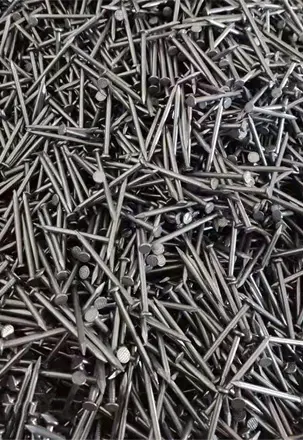
When choosing fasteners for construction, woodworking, furniture assembly, packaging, roofing, or general repair work, buyers often ask: What is the difference between a tack and a nail? Although both are driven into materials to hold components together, they are designed for different purposes and have distinct differences in size, shape, holding power, application, and installation method.
For importers, wholesalers, hardware distributors, furniture manufacturers, and construction suppliers, understanding these differences is important when selecting the right fastener for a project. Choosing the wrong type can lead to poor holding strength, material damage, inefficient installation, or higher project costs.
In simple terms, a nail is generally a longer and stronger fastener designed for structural or semi-structural fastening, while a tack is usually smaller and intended for light-duty fastening, upholstery, crafts, furniture, and temporary or decorative applications. However, the exact difference depends on the specific type of tack or nail being compared.
As a professional China-based manufacturer and supplier, Roofglory provides a range of nails and metal fasteners for international B2B customers, including wholesalers, distributors, contractors, and industrial buyers. This guide explains the differences between tacks and nails and helps buyers understand which fastener is more suitable for different applications.
What Is a Tack?
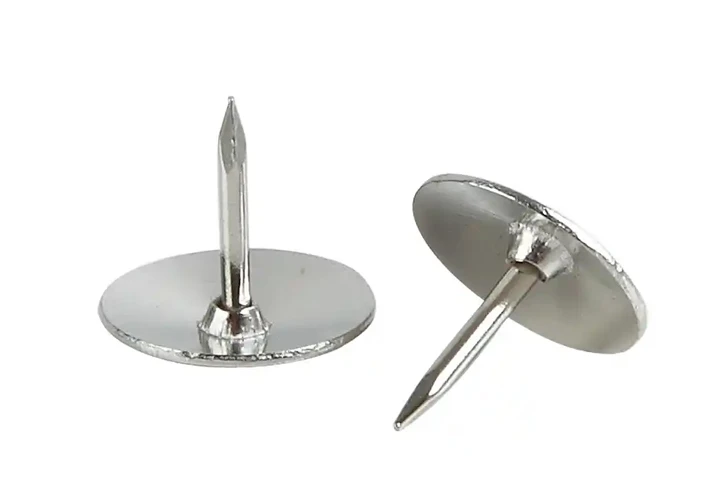
A tack is a small fastener that typically consists of a relatively short metal shank, a sharp point, and a flat or decorative head. Tacks are commonly used where high structural strength is not the primary requirement.
Traditional tacks are widely associated with upholstery, furniture, woodworking, crafts, carpeting, and light-duty fastening. Some types are designed primarily for holding materials temporarily, while others are intended to provide a finished decorative appearance.
One of the most recognizable examples is the upholstery tack. Upholstery workers may use tacks to secure fabric, leather, or other covering materials to a wooden furniture frame. Decorative tacks may have larger or shaped heads that become part of the visual design of furniture.
There are also several specialized types of tacks, including:
- Upholstery tacks
- Carpet tacks
- Drawing tacks
- Panel tacks
- Decorative tacks
- Small woodworking tacks
- Thumb tacks and drawing pins
- Tack-like specialty fasteners
The main advantage of a tack is its small size and suitability for light materials. Because it usually has a smaller shank than a conventional nail, it can be used where a larger fastener could split or damage the material.
However, this also means that most tacks do not provide the same holding power as construction nails.
For B2B buyers, it is therefore important not to treat all small fasteners as interchangeable. Tack specifications should be selected according to the material, application, head design, shank diameter, length, coating, and required holding strength.
What Is a Nail?
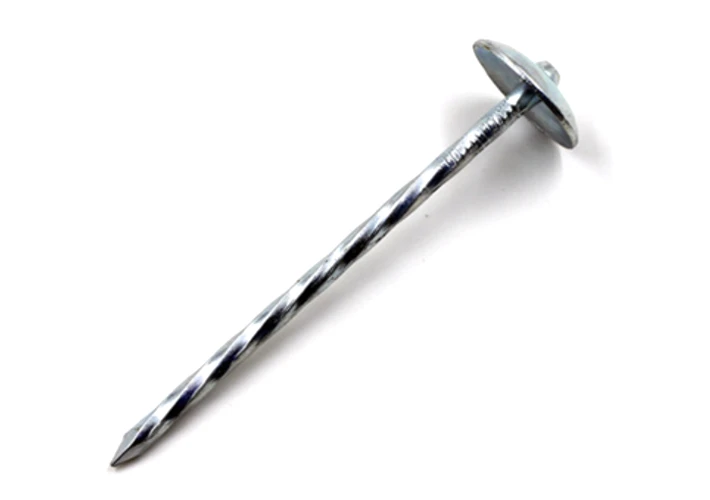
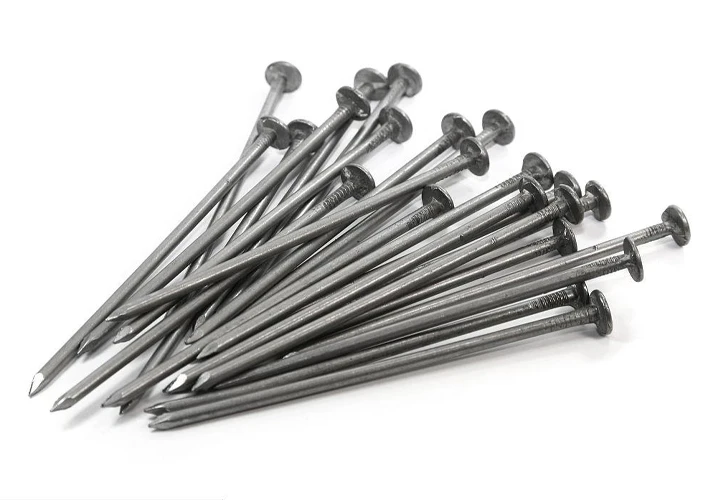
A nail is a mechanical fastener generally made from steel, stainless steel, aluminum, copper, or another suitable metal. It normally has a shank, pointed tip, and head, and is driven into a material using a hammer, pneumatic nail gun, or other installation equipment.
Nails are used across a much wider range of applications than traditional tacks. They are common in:
- Construction
- Wood framing
- Roofing
- Flooring
- Pallet manufacturing
- Furniture production
- Crating
- Fencing
- Interior finishing
- General woodworking
- Industrial assembly
Different nail designs are engineered for different requirements.
For example, common nails are frequently used for general construction and woodworking. Roofing nails have larger heads and are designed to secure roofing materials. Concrete nails are manufactured for fastening into harder substrates. Coil nails are arranged in coils for pneumatic nail guns and high-volume production.
Nails may also have different shank designs. A smooth shank is common for general applications, while ring-shank or screw-shank nails can provide increased resistance to withdrawal.
The material and coating are also important. Galvanized nails, for example, provide better corrosion resistance than untreated carbon steel nails and are commonly selected for outdoor or moisture-exposed applications.
For professional buyers, the word “nail” therefore describes a broad category rather than one single product.
Tack vs Nail: What Are the Main Differences?
The easiest way to understand the difference between a tack and a nail is to compare their size, strength, head design, application, and installation requirements.
| Feature | Tack | Nail |
|---|---|---|
| Typical size | Smaller | Generally larger |
| Shank | Usually thin and short | Available in many diameters and lengths |
| Holding strength | Light to moderate | Moderate to high, depending on type |
| Main applications | Upholstery, crafts, furniture, light-duty work | Construction, roofing, woodworking, industrial applications |
| Head | Small, flat, or decorative | Various head designs |
| Installation | Usually hand-driven | Hammer or pneumatic tool |
| Structural applications | Usually unsuitable | Many types are suitable |
| Product variety | Relatively specialized | Very broad |
| Typical material | Steel or other metals | Carbon steel, galvanized steel, stainless steel, aluminum, etc. |
| Outdoor applications | Limited depending on coating | Many suitable options |
1. Size
One of the most obvious differences is size.
Tacks are generally smaller than standard nails. Their shorter length and smaller diameter make them suitable for securing relatively thin or lightweight materials.
Nails are available in a much broader range of dimensions. Construction and industrial nails can be significantly longer and thicker, allowing them to penetrate multiple layers of material.
However, size alone should not be used to determine whether a fastener is a tack or nail. Some specialty tacks can be relatively large, while some finishing nails are extremely small.
2. Holding Power
A conventional nail generally provides greater holding strength than a tack.
The longer shank of a nail allows it to penetrate deeper into the substrate, increasing mechanical resistance. Shank diameter and design also influence withdrawal resistance.
Tacks are normally intended for lighter loads. Their purpose may be to hold fabric, trim, paper, thin boards, or decorative components rather than support structural loads.
For example, an upholstery tack may be ideal for attaching fabric to a wooden chair frame, but it would not normally be an appropriate replacement for a framing nail.
3. Head Design
The head of a tack can be a major part of its function.
Some upholstery and decorative tacks have relatively prominent heads that are intentionally visible. They can provide both fastening and decorative value.
Nails generally have heads designed primarily for installation and load distribution. Depending on the application, nail heads may be flat, countersunk, clipped, large, or specially shaped.
Roofing nails are a good example. Their relatively large heads help distribute pressure over roofing materials and reduce the risk of the fastener pulling through the material.
4. Application
Tacks are usually associated with light-duty or specialized applications, whereas nails are used for a much wider range of fastening requirements.
A tack might be used to:
- Secure upholstery fabric
- Attach decorative trim
- Hold lightweight materials
- Complete craft projects
- Fix thin boards
- Install certain types of carpet
A nail might be used to:
- Assemble wooden structures
- Install roof coverings
- Build pallets
- Secure fences
- Manufacture furniture
- Install flooring
- Fasten construction materials
The intended application should therefore be considered before selecting either product.

Are Tacks Stronger Than Nails?
In most common applications, no. A conventional nail generally has greater holding power than a tack.
However, “stronger” is not simply a matter of whether a product is called a tack or a nail. Actual performance depends on several factors.
These include:
Shank diameter: A larger diameter can increase resistance to bending and withdrawal.
Fastener length: A longer fastener can provide deeper penetration when the substrate allows it.
Shank profile: Ring-shank and screw-shank designs can significantly increase withdrawal resistance.
Material: Carbon steel, stainless steel, and other materials have different mechanical properties and corrosion resistance.
Substrate: Wood species, density, thickness, concrete, metal, and composite materials all affect fastening performance.
Installation: Incorrect installation can reduce the holding strength of even a high-quality fastener.
For example, a ring-shank nail may have considerably higher withdrawal resistance than a smooth-shank nail of similar dimensions. Conversely, a small tack is not designed to compete with a construction nail in structural applications.
Therefore, buyers should select fasteners based on engineering requirements rather than simply comparing product names.
When Should You Use a Tack Instead of a Nail?
A tack is often the better choice when the material is thin, lightweight, delicate, decorative, or when the fastener itself needs to remain visually unobtrusive or attractive.
Upholstery
Upholstery is one of the classic applications for tacks.
Fabric, leather, vinyl, and similar materials need to be secured to furniture frames without excessive damage. A tack’s relatively small size makes it suitable for this purpose.
Decorative upholstery tacks can also create a finished appearance around the edges of chairs, sofas, benches, and other furniture.
Crafts and DIY Projects
Small tacks are frequently used in craft and decorative projects. They can secure lightweight components without requiring the penetration associated with larger nails.
Furniture and Decorative Woodwork
Some furniture applications benefit from small fasteners, especially where the wood is thin or where a decorative head is desirable.
Temporary Fastening
Certain tack applications involve temporarily holding materials in position before another fastening method is applied.
However, temporary use depends on the specific product. Not every tack is designed to be removed easily or reused.
When Should You Use a Nail Instead?
A nail is normally preferable when you need higher holding power, deeper penetration, durability, or suitability for construction and industrial applications.
Construction
Framing and general construction frequently require nails with specific dimensions and mechanical properties.
Roofing
Roofing nails are specifically designed for roofing applications. They generally feature larger heads and corrosion-resistant coatings or materials suitable for exterior exposure.
For roofing projects, using an ordinary tack instead of a suitable roofing nail can lead to inadequate fastening and premature failure.
Pallets and Packaging
Industrial nails are widely used for wooden pallets, crates, and heavy-duty packaging.
The fastener needs to withstand handling, vibration, impact, and load changes. In such applications, industrial nail specifications are much more important than simply choosing the smallest available fastener.
Fencing and Outdoor Woodwork
Outdoor applications require attention to corrosion resistance. Galvanized or stainless-steel nails may be selected depending on the environmental conditions.
This is particularly important in humid, coastal, or industrial environments where untreated steel can corrode more quickly.
How to Choose the Right Fastener for B2B Projects
For importers and distributors, choosing between tacks and nails involves more than comparing price.
The correct purchasing decision should consider application, material, specifications, coating, packaging, quantity, and supplier capability.
1. Identify the Application
Start by determining exactly what the fastener will be used for.
A furniture manufacturer may need upholstery tacks and finishing nails, while a roofing distributor may require roofing nails. A pallet manufacturer may need high-volume industrial nails.
2. Confirm Dimensions
Important specifications include:
- Nail or tack length
- Shank diameter
- Head diameter
- Head shape
- Point style
- Shank type
Even a small dimensional difference can affect compatibility with an installation tool or substrate.
3. Select the Appropriate Material
Carbon steel is commonly used for general-purpose fasteners because of its combination of strength and cost efficiency.
Galvanized steel is commonly selected when improved corrosion resistance is required.
Stainless steel is suitable for more demanding corrosive environments, although it generally comes at a higher cost.
4. Consider Surface Treatment
Common surface treatments include:
- Electro-galvanized
- Hot-dip galvanized
- Polished
- Phosphate coated
- Other application-specific coatings
The appropriate coating depends on the environment and required service life.
5. Evaluate Packaging
B2B buyers should consider whether the fasteners are supplied in:
- Small retail boxes
- Bulk cartons
- Plastic bags
- Buckets
- Coil packaging
- Custom export packaging
For wholesalers and distributors, customized packaging and labeling can be especially useful for private-label business.
6. Check Factory Production Capability
For large orders, the supplier’s production capacity can be as important as the product itself.
Buyers should evaluate:
- Production capacity
- Quality control
- Raw material consistency
- Dimension tolerance
- Coating quality
- Packaging capability
- OEM/ODM support
- Export experience
- Delivery capacity
A reliable factory should be able to provide stable specifications across repeated orders.
Tack and Nail FAQs
Is a tack the same as a small nail?
Not exactly. Tacks and nails share a similar basic fastening principle, but they are generally designed for different applications. A tack is usually a smaller, lighter-duty fastener, while nails cover a much broader range of applications and strength levels.
Can I use a tack instead of a nail?
Only when the application does not require the holding power of a nail. For upholstery, crafts, decorative work, and certain light-duty applications, a tack may be appropriate. For structural construction, roofing, pallets, and heavy-duty fastening, the correct type of nail should normally be used.
Are roofing tacks the same as roofing nails?
They should not automatically be considered interchangeable. Roofing applications require fasteners with appropriate length, head size, shank design, and corrosion resistance. The correct product should be selected according to the roofing material and installation requirements.
Are nails more expensive than tacks?
Not necessarily. Price depends on material, size, coating, production volume, packaging, and specifications. Because nails are available in many different types, some specialty nails can cost considerably more than basic tacks.
Can tacks be used in wood?
Yes. Many tacks are designed for wood, particularly thin wood, furniture, upholstery, crafts, and decorative applications. However, the tack must be appropriate for the wood density and thickness.
Can nails be used for upholstery?
Some small nails or specialized upholstery nails can be used for furniture and upholstery. However, traditional upholstery tacks may be preferable when the application requires a particular head appearance or installation method.
What should wholesalers consider when buying nails?
Wholesalers should consider the target market, nail type, dimensions, raw material, coating, packaging, MOQ, quality consistency, production capacity, and export logistics. A factory capable of customized specifications can also provide more flexibility for different markets.
Why Choose Roofglory as Your China Fastener Supplier?
For B2B buyers, selecting the right fastener is only one part of the purchasing process. The supplier behind the product is equally important.
Roofglory is a China-based supplier serving international customers with a range of construction and hardware products. Our product portfolio includes different types of nails and related metal products for construction, roofing, woodworking, packaging, and industrial applications.
As a factory-oriented supplier, Roofglory focuses on providing customers with practical solutions for bulk purchasing, wholesale distribution, project supply, and OEM requirements.
Our B2B service advantages include:
- China factory supply for competitive wholesale pricing
- Multiple nail specifications for different applications
- Custom sizes and packaging according to buyer requirements
- Quality control from raw material to finished products
- Bulk order support for importers and distributors
- Export experience for international markets
- OEM/private-label support for qualified projects
- Flexible shipping options based on customer requirements
For distributors, importing companies, hardware wholesalers, roofing suppliers, and construction material buyers, working directly with a professional China supplier can help simplify sourcing and improve supply-chain efficiency.
Conclusion
So, what is the difference between a tack and a nail?
The main difference is their intended application, size, holding power, head design, and overall construction. Tacks are generally smaller fasteners designed for light-duty, decorative, upholstery, furniture, and craft applications. Nails are a much broader category and include fasteners designed for woodworking, construction, roofing, pallets, fencing, flooring, and other heavy-duty applications.
A tack may be the right choice when you need a small fastener for lightweight materials or decorative work. A nail is usually the better option when deeper penetration, higher holding power, durability, or specialized construction performance is required.
For B2B buyers, the best approach is to select fasteners based on application, substrate, dimensions, material, coating, required strength, and environmental conditions rather than simply choosing the cheapest or smallest option.
If you are looking for a reliable China nail manufacturer and bulk fastener supplier, Roofglory can provide suitable nail solutions for different construction and industrial requirements. Contact Roofglory with your required nail type, dimensions, quantity, packaging, and destination market to discuss a customized quotation and sourcing solution.