Expansion bolts are widely used in construction, machinery installation, steel structures, roofing systems, equipment mounting, and general building projects. They provide a practical way to secure components to concrete, brick, stone, and other solid base materials without requiring access to the back side of the substrate. For contractors, hardware distributors, importers, and construction material wholesalers, understanding the advantages and disadvantages of expansion bolts is important when selecting the right fastening solution for a project.
Expansion bolts are designed around a relatively simple principle. When the bolt is tightened, an expansion component such as a sleeve, wedge, or anchor element expands against the inside wall of a drilled hole. This creates friction, mechanical interlock, or both, allowing the bolt to hold the attached component securely.
However, not every expansion bolt is suitable for every application. The performance of an expansion anchor depends on the bolt design, material, diameter, embedment depth, installation method, substrate quality, environmental conditions, and applied load. Choosing the wrong type can lead to reduced holding strength, corrosion, loosening, or even anchor failure.
For B2B buyers, selecting a reliable expansion bolt supplier is equally important. Consistent dimensions, material quality, surface treatment, thread accuracy, packaging, and production capacity can directly affect installation efficiency and project reliability.
As a China-based manufacturer and supplier, Roofglory provides construction hardware and fastening products for international distributors, contractors, wholesalers, and project buyers. This article explains the main advantages and disadvantages of expansion bolts and provides practical guidance for choosing them for different applications.
What Are Expansion Bolts?
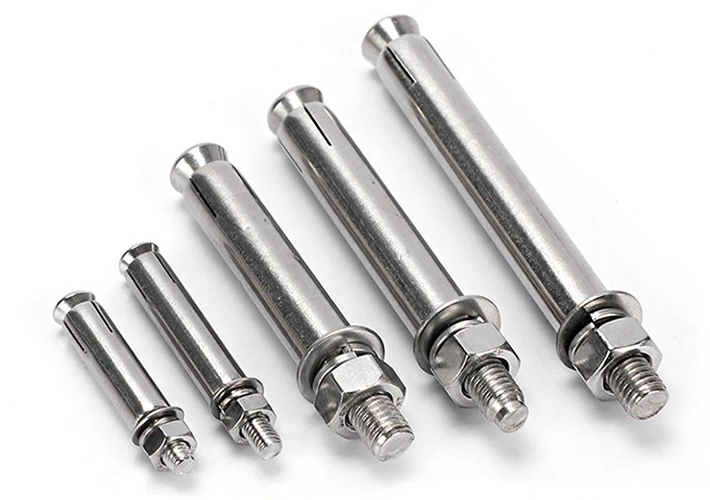
Expansion bolts, also commonly called expansion anchors or expansion anchor bolts, are mechanical fasteners designed to attach objects to solid base materials. They are particularly common when fastening into concrete, reinforced concrete, masonry, brick, and natural stone.
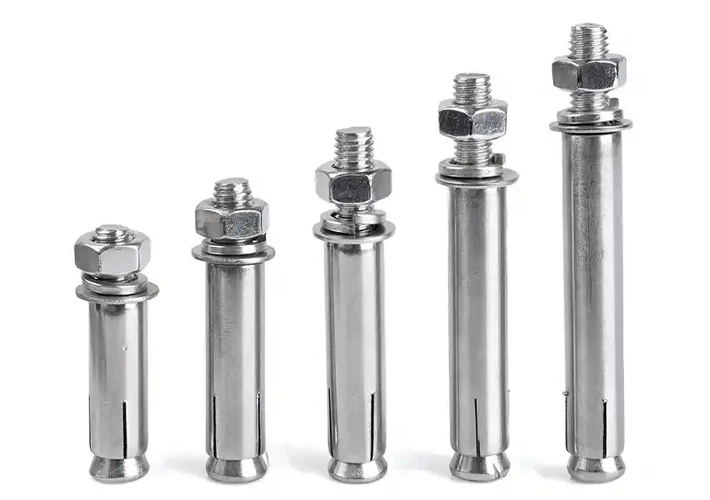
A typical expansion bolt consists of several basic components:
- A threaded bolt or stud
- An expansion sleeve, cone, or wedge mechanism
- A nut and washer
- Sometimes additional spacers, collars, or protective components
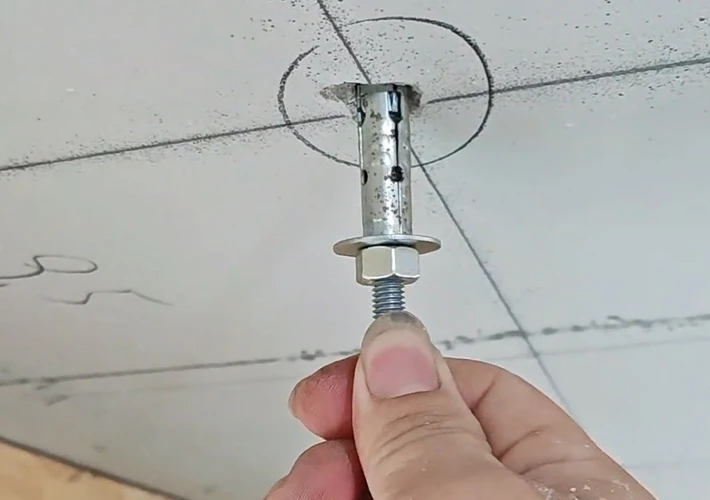
During installation, a hole is first drilled into the base material. The expansion bolt is then inserted into the hole. When the nut or bolt is tightened, the expansion mechanism moves or deforms, pressing against the surrounding substrate.
The resulting expansion creates a strong connection between the anchor and the base material.
Different expansion bolt designs use different mechanisms. Sleeve anchors expand through a sleeve that is forced outward, while wedge anchors typically use a wedge and clip system. Other designs may rely on internal expansion or specialized geometries for particular substrates.
This flexibility makes expansion bolts suitable for many construction and industrial applications.
Common Applications of Expansion Bolts
Expansion bolts are frequently used for:
- Steel structure installation
- Machinery and equipment mounting
- Handrails and guardrails
- Shelving systems
- Pipe supports
- Cable trays
- HVAC equipment
- Solar mounting structures
- Doors and frames
- Construction brackets
- Roofing-related supports
- Outdoor structures
- Concrete fixing systems
For distributors and contractors, the ability to use one fastening category across multiple construction applications is one reason expansion bolts remain popular.
Advantages of Expansion Bolts
Expansion bolts offer several practical benefits compared with some other fastening methods. Their popularity comes from a combination of mechanical performance, relatively simple installation, availability, and versatility.
1. Strong Mechanical Fixing
One of the most important advantages of expansion bolts is their ability to provide reliable mechanical anchoring in solid substrates.
When properly installed, the expansion mechanism creates pressure against the walls of the drilled hole. This allows the anchor to resist loads applied to the attached component.
Depending on the design and installation conditions, expansion anchors can resist different types of loads, including:
- Tensile loads
- Shear loads
- Combined loads
- Vibration-related forces
The actual load capacity depends heavily on the anchor design, diameter, embedment depth, substrate strength, edge distance, spacing, and installation quality. Therefore, users should not assume that a larger bolt automatically provides sufficient load capacity.
2. Easy Installation
Expansion bolts are relatively straightforward to install compared with many specialized anchoring systems.
A typical installation process includes:
- Mark the fixing location.
- Drill a hole of the required diameter and depth.
- Clean the hole if required.
- Insert the expansion bolt.
- Tighten the nut or bolt to activate the expansion mechanism.
- Check the fixing and attached component.
This simple process allows contractors to complete many installation tasks quickly.
For large construction projects, installation efficiency can have a significant impact on total labor costs. Fasteners that are easy to install can reduce installation time and improve productivity.
3. No Access to the Back of the Substrate Is Required
Expansion bolts are particularly useful when the installer can only access the front surface of a concrete wall, floor, ceiling, or other solid structure.
Unlike some through-bolting systems, expansion anchors generally do not require access behind the base material.
This makes them practical for fixing:
- Wall brackets
- Equipment
- Metal frames
- Handrails
- Electrical supports
- Pipe systems
- Construction accessories
This feature can significantly simplify installation in existing buildings.
4. Suitable for Many Construction Applications
Expansion bolts are available in different sizes, materials, thread types, and designs. This allows buyers to select products according to the required load and environment.
Common materials include carbon steel and stainless steel, while surface finishes may include zinc plating or other protective treatments.
For B2B distributors, this broad product range creates opportunities to serve different customer segments without changing to completely different fastening technologies.
5. Cost-Effective Fastening Solution
Expansion bolts are generally economical for many general construction applications.
Their cost-effectiveness comes from several factors:
- Simple mechanical design
- Easy installation
- Large-scale production
- Wide market availability
- No need for complicated installation equipment in many applications
- Good compatibility with common construction substrates
For wholesalers and importers, competitive manufacturing costs also make expansion bolts suitable for bulk purchasing.
However, the lowest unit price should not be the only purchasing criterion. Poorly manufactured anchors can result in inconsistent expansion, inaccurate dimensions, weak threads, or insufficient corrosion resistance.
6. Good Availability in Different Sizes
Expansion bolts are available in multiple diameters and lengths. This allows users to select a suitable product according to the thickness of the attached material and the required embedment depth.
Common selection factors include:
- Bolt diameter
- Bolt length
- Thread diameter
- Sleeve length
- Embedment depth
- Washer and nut dimensions
- Material grade
- Surface treatment
A supplier capable of providing multiple specifications can be particularly valuable for distributors serving different construction markets.
7. Suitable for Permanent Installations
When correctly selected and installed, expansion bolts can provide long-term mechanical fastening.
They are commonly used for fixed installations where the attached component is not expected to be removed frequently.
Examples include structural brackets, equipment supports, handrails, frames, and fixed construction accessories.
The durability of the installation depends on both the fastener and the surrounding environment. Corrosion, substrate deterioration, excessive loading, and incorrect installation can reduce service life.
Disadvantages of Expansion Bolts
Although expansion bolts have many advantages, they also have limitations. Understanding these disadvantages helps contractors and buyers determine whether expansion anchors are appropriate for a particular project.
1. Performance Depends on Substrate Quality
Expansion bolts work by transferring loads into the surrounding base material. Therefore, the strength of the substrate is extremely important.
A high-quality expansion bolt cannot compensate for weak or damaged concrete.
Problems may occur when anchors are installed into:
- Cracked concrete
- Weak concrete
- Deteriorated masonry
- Hollow materials
- Loose brick
- Damaged edges
- Materials with insufficient thickness
If the substrate breaks or cracks around the anchor, the fixing may fail even when the bolt itself remains intact.
For this reason, installers should evaluate the base material before selecting an anchor.
2. Installation Errors Can Reduce Holding Capacity
Although expansion bolts are relatively easy to install, incorrect installation can significantly affect performance.
Common mistakes include:
- Drilling an incorrect hole diameter
- Insufficient hole depth
- Excessive hole depth
- Failing to clean drilling dust
- Incorrect tightening
- Over-tightening
- Under-tightening
- Installing too close to an edge
- Using unsuitable tools
For example, if the hole is too large, the expansion mechanism may not engage properly with the substrate. If the hole is too small, installation may damage the anchor or prevent it from reaching the required position.
Training and installation instructions are therefore important for professional applications.
3. Limited Suitability for Certain Hollow or Weak Materials
Traditional expansion bolts are generally most effective in solid base materials.
They may not be the best option for hollow blocks, lightweight materials, drywall, or some types of weak masonry.
Different substrates require different anchoring systems. For example, hollow-wall anchors, chemical anchors, or specialized masonry anchors may be more appropriate in certain applications.
Choosing an expansion bolt simply because it is inexpensive can therefore lead to poor installation results.
4. Risk of Concrete Damage
Expansion anchors generate pressure inside the drilled hole. If the anchor is installed too close to a concrete edge or used in unsuitable concrete, this expansion force may contribute to cracking or edge breakout.
The risk depends on factors such as:
- Anchor diameter
- Embedment depth
- Expansion force
- Concrete strength
- Edge distance
- Anchor spacing
- Applied load
Installers should follow the manufacturer’s recommended installation parameters rather than relying only on visual judgment.
5. Corrosion Can Be a Concern
Steel expansion bolts may be exposed to moisture, chemicals, salt, or other corrosive conditions.
Standard carbon steel expansion bolts with basic zinc plating may be suitable for many indoor environments, but they may not provide adequate long-term protection in highly corrosive environments.
For outdoor, coastal, industrial, or high-humidity applications, buyers may need to consider stainless steel or other corrosion-resistant options.
The appropriate material and coating should be selected according to the actual environment.
6. Removal Can Be Difficult
Expansion bolts are primarily designed for secure fixing rather than frequent removal.
After installation, the expansion mechanism may remain engaged inside the substrate. Removing the bolt does not necessarily remove the entire anchor.
This can make replacement or relocation more difficult than with some other fastening systems.
For temporary installations or applications requiring frequent disassembly, alternative fastening solutions may be more convenient.
7. Not Every Expansion Bolt Is Suitable for Heavy Loads
The term “expansion bolt” covers many different products. Their load capacities can vary significantly.
A small sleeve anchor designed for light-duty applications should not be treated as equivalent to a heavy-duty wedge anchor.
Before selecting an anchor for structural or safety-critical applications, buyers should consider:
- Required load
- Load direction
- Static or dynamic loading
- Substrate strength
- Embedment depth
- Anchor diameter
- Installation method
- Safety factor
- Applicable standards
For critical applications, engineering calculations and approved anchoring systems may be required.
Expansion Bolts vs. Other Anchoring Methods
Expansion bolts are only one option among many mechanical and chemical anchoring solutions.
Expansion Bolts vs. Chemical Anchors
Chemical anchors use resin or another bonding compound to connect a threaded rod or reinforcement bar to the substrate.
Compared with chemical anchors, expansion bolts are generally faster to install and do not require curing time. They are convenient for many standard mechanical fixing applications.
Chemical anchors, however, can offer advantages in certain cracked concrete, close-to-edge, or high-load applications when a properly engineered system is used.
Expansion Bolts vs. Concrete Screws
Concrete screws are installed directly into pre-drilled holes and create threads in the base material.
They can be convenient for lighter-duty applications and are often easier to remove.
Expansion bolts, on the other hand, can provide strong mechanical anchoring and are widely available in heavy-duty designs.
The best option depends on the load, substrate, installation requirements, and project specifications.
Expansion Bolts vs. Through Bolts
Through bolts can provide very strong connections because the fastener passes through the base material and is secured from the opposite side.
However, access to the back of the substrate is required.
Expansion bolts provide an important advantage when only one side of the structure is accessible.
How to Choose the Right Expansion Bolts
For B2B buyers, selecting the right expansion bolt requires more than comparing prices.
Consider the Base Material
First identify the substrate:
- Solid concrete
- Reinforced concrete
- Brick
- Stone
- Masonry
- Hollow block
- Other construction materials
The anchor must be compatible with the substrate.
Select the Correct Size
Diameter and length should be selected according to the required load and installation conditions.
The length should account for the thickness of the material being fixed, washer and nut arrangement, and required embedment depth.
Larger anchors are not automatically better. Oversized anchors may increase cost and installation difficulty without providing meaningful benefits for a light-duty application.
Check Material and Surface Treatment
For indoor applications, zinc-plated carbon steel may often provide a practical balance between cost and corrosion resistance.
For outdoor or highly corrosive environments, stainless steel or enhanced protective coatings may be more appropriate.
Evaluate Manufacturer Quality
B2B buyers should evaluate a supplier’s:
- Raw material control
- Production equipment
- Dimensional accuracy
- Thread quality
- Surface treatment
- Quality inspection
- Packaging
- Production capacity
- Export experience
- OEM capability
Consistent quality is particularly important for wholesalers because inconsistent batches can create customer complaints and installation problems.
Why Buy Expansion Bolts from a China Manufacturer?
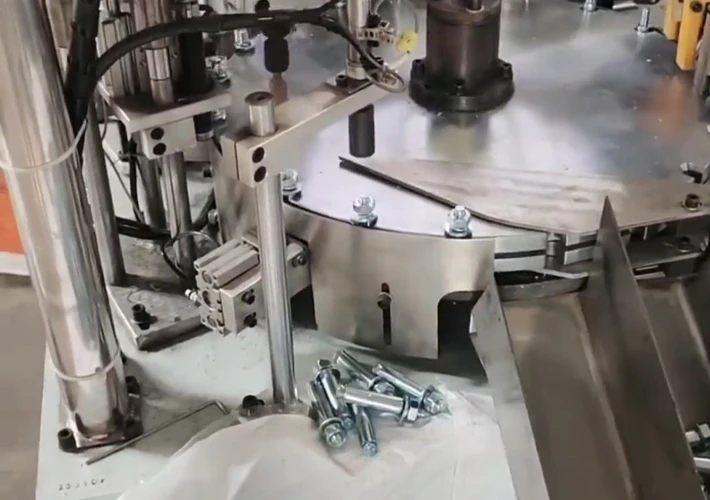
China has a mature fastener manufacturing industry with extensive production capacity and supply-chain resources.
For international importers and distributors, purchasing directly from a Chinese manufacturer can provide several advantages.
Competitive Factory Pricing
Large-scale production can help manufacturers offer competitive prices for bulk orders.
Direct factory purchasing may also reduce unnecessary intermediary costs.
Flexible Specifications
Professional manufacturers can often supply different diameters, lengths, materials, finishes, packaging methods, and labeling options.
This is valuable for distributors that need products adapted to their local market.
OEM and Private Label Support
B2B buyers may require:
- Custom packaging
- Private labels
- Carton printing
- Product markings
- Customized specifications
- Mixed-container orders
A manufacturer with OEM/ODM capabilities can support these requirements more efficiently.
Stable Bulk Supply
For wholesalers and construction material distributors, supply stability is just as important as price.
A reliable manufacturer should have sufficient production capacity, raw material sourcing, quality control, and export packaging systems to support repeat orders.
Roofglory provides construction hardware and building material products for international B2B customers. As a China-based supplier, Roofglory focuses on stable product quality, competitive factory pricing, customized specifications, and export-oriented service for distributors, wholesalers, contractors, and project buyers.
Final Thoughts
Expansion bolts remain one of the most practical mechanical fastening solutions for concrete and other solid construction substrates. Their main advantages include strong mechanical fixing, easy installation, broad application potential, competitive cost, and availability in multiple sizes and materials.
At the same time, expansion bolts have limitations. Their performance depends heavily on substrate quality and correct installation. They may be unsuitable for certain hollow or weak materials, and corrosion resistance, edge distance, load requirements, and removal requirements must all be considered before selection.
For B2B buyers, the most important point is to choose the right expansion bolt for the application rather than simply choosing the cheapest product. A reliable supplier should provide consistent dimensions, suitable materials, stable production quality, secure export packaging, and professional technical support.
If you are an importer, wholesaler, distributor, contractor, or construction material buyer looking for expansion bolts from China, Roofglory can provide suitable fastening solutions for different project requirements. Contact Roofglory to discuss specifications, packaging, OEM requirements, bulk pricing, and samples for your market.
Looking for a reliable expansion bolt supplier in China? Contact Roofglory today for product specifications, factory pricing, and a customized quotation.