Choosing the correct drywall screw size is one of the most important decisions during drywall installation. The wrong screw length or thread type can cause loose panels, popped screw heads, damaged drywall paper, and reduced wall durability.
Whether you’re a contractor, drywall installer, building material distributor, or importer, understanding drywall screw specifications helps ensure stronger installations while reducing labor costs and material waste.
As a professional Chinese drywall screw manufacturer, RoofGlory supplies high-quality drywall screws to wholesalers, distributors, construction companies, and OEM brands in over 80 countries. This guide explains everything you need to know about selecting the right drywall screw size for different projects.
Why Does Drywall Screw Size Matter?
Drywall screws are specifically engineered to fasten gypsum board securely without damaging its paper surface.
Selecting the proper screw size affects:
- Holding strength
- Installation speed
- Wall flatness
- Crack resistance
- Long-term durability
- Fire-rated wall performance
- Ceiling safety
A screw that is too short may not adequately penetrate the framing, while one that is too long wastes material and may interfere with plumbing or electrical systems hidden behind the wall.
The correct screw provides enough penetration into the framing while allowing the screw head to sit slightly below the drywall surface without tearing the paper face.
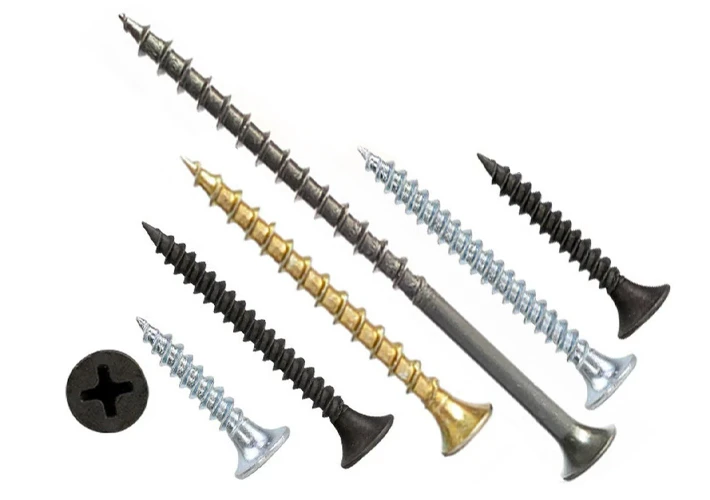
Standard Drywall Screw Sizes
The most commonly used drywall screw sizes are shown below.
| Screw Size | Length | Common Applications |
|---|---|---|
| #6 × 1″ | 25mm | 1/4″ drywall |
| #6 × 1-1/4″ | 32mm | 1/2″ drywall to wood studs |
| #6 × 1-5/8″ | 41mm | 5/8″ drywall |
| #6 × 2″ | 50mm | Double drywall layers |
| #6 × 2-1/2″ | 63mm | Triple layers or insulation boards |
| #8 × 2-1/2″ | 63mm | Heavy-duty applications |
Among these, #6 × 1-1/4 inch drywall screws are the industry standard for residential drywall installation.
Choosing Screw Size Based on Drywall Thickness
Different drywall thicknesses require different screw lengths.
1/4-Inch Drywall
Typically used for:
- Curved walls
- Repair work
- Overlay installations
Recommended screw:
- #6 × 1″
Reason:
Thin drywall requires less penetration while avoiding excessive screw exposure.
3/8-Inch Drywall
Often used in remodeling projects.
Recommended screw:
- #6 × 1-1/4″
Suitable for:
- Interior partition repairs
- Ceiling overlays
- Residential renovations
1/2-Inch Drywall
The most common drywall thickness worldwide.
Recommended screw:
- #6 × 1-1/4″
Applications include:
- Living rooms
- Bedrooms
- Offices
- Retail stores
- Commercial interiors
This size provides approximately 3/4 inch penetration into wood framing, which meets most building requirements.
5/8-Inch Drywall
Used where higher fire resistance or sound insulation is required.
Recommended screw:
- #6 × 1-5/8″
Typical applications:
- Apartment buildings
- Hotels
- Hospitals
- Schools
- Commercial ceilings
Longer screws provide adequate grip despite the thicker gypsum board.
Double Layer Drywall
Common in:
- Fire-rated assemblies
- Recording studios
- Hotels
- Cinemas
Recommended screw lengths:
- 2″
- 2-1/2″
The screw must penetrate both drywall layers while maintaining sufficient embedment into the framing.
Screw Length Recommendations for Different Stud Materials
The framing material plays a major role in screw selection.
Wood Studs
Recommended:
- Coarse-thread drywall screws
Common lengths:
- 1-1/4″
- 1-5/8″
- 2″
Coarse threads bite deeply into wood fibers, providing excellent holding strength.
Metal Studs
Recommended:
- Fine-thread drywall screws
Common lengths:
- 1-1/4″
- 1-5/8″
Fine threads cut into thin steel without stripping.
For heavier steel studs (20–14 gauge), self-drilling drywall screws are often preferred.
Light Gauge Steel
Recommended screw:
- Fine thread
- Sharp point
Typical thickness:
0.5–0.8mm steel framing.
Heavy Gauge Steel
Recommended screw:
- Self-drilling TEK point
Advantages include:
- Faster installation
- No pilot hole
- Reduced labor time
Understanding Drywall Screw Gauge
Besides length, screw diameter also matters.
The two most common gauges are:
#6 Drywall Screws
Best for:
- Standard drywall
- Residential projects
- Interior partitions
Advantages:
- Easy installation
- Lower torque
- Reduced drywall damage
#8 Drywall Screws
Suitable for:
- Heavy ceiling panels
- Thick drywall
- High-load installations
Advantages:
- Higher pull-out strength
- Better structural support
Most contractors prefer #6 screws unless additional holding power is required.
Coarse Thread vs Fine Thread Drywall Screws
Thread design affects installation performance.
Coarse Thread Screws
Best for:
- Wood studs
- Timber framing
- Softwood
Advantages:
- Strong grip
- Faster driving
- Less stripping
Fine Thread Screws
Ideal for:
- Metal studs
- Steel framing
- Commercial buildings
Advantages:
- Cleaner penetration
- Better metal engagement
- Lower chance of thread damage
Choosing the wrong thread type can reduce holding strength significantly.
Drywall Screw Spacing Guidelines
Correct spacing is just as important as selecting the right screw size.
Walls
Typical spacing:
- Every 16 inches on center
- Approximately 8 inches along edges
Ceilings
Typical spacing:
- Every 12 inches
Ceilings require closer spacing because gravity continuously pulls downward on the drywall.
Double-Layer Installations
Spacing depends on:
- Fire-rating requirements
- Local building codes
- Manufacturer recommendations
Many commercial projects use tighter screw spacing for improved structural performance.
Common Drywall Screw Mistakes to Avoid
Even experienced installers occasionally make mistakes.
Using Screws That Are Too Short
Problems include:
- Poor holding strength
- Loose drywall
- Nail pops
Using Screws That Are Too Long
Problems include:
- Increased installation time
- Material waste
- Potential interference with utilities behind walls
Overdriving the Screw
This tears the drywall paper and weakens holding power.
A properly installed screw head should sit slightly below the surface without breaking the paper.
Underdriving the Screw
The screw head remains above the surface, making finishing difficult.
Proper adjustment of screw gun depth helps eliminate this issue.
Choosing the Wrong Thread
Using coarse threads in steel studs or fine threads in wood framing reduces fastening performance.
Always match thread type to framing material.
Drywall Screw Materials and Surface Finishes
Drywall screws are available with different coatings for various environments.
Black Phosphate
Most popular finish.
Benefits:
- Corrosion resistance for interior use
- Smooth driving
- Excellent paint compatibility
Gray Phosphate
Provides:
- Enhanced corrosion resistance
- Uniform appearance
- Better durability
Zinc-Plated
Suitable for:
- Mild humidity
- Utility rooms
- Indoor commercial applications
Ruspert Coating
Designed for:
- Exterior environments
- High humidity
- Coastal projects
Offers excellent corrosion resistance.
How Many Drywall Screws Do You Need?
The quantity depends on drywall size and screw spacing.
Approximate usage per 4×8 sheet:
| Application | Number of Screws |
|---|---|
| Wall | 32–40 |
| Ceiling | 45–55 |
| Double Layer | 60–80 |
Large commercial projects often require millions of drywall screws, making bulk purchasing a cost-effective option.
Why Contractors Prefer Professional Drywall Screws
Professional-grade drywall screws provide:
- Consistent hardness
- Precise thread rolling
- Accurate point geometry
- Better corrosion resistance
- Reduced driver bit wear
- Faster installation
- Lower breakage rates
Premium screws help reduce callbacks and improve installation efficiency.
How RoofGlory Manufactures High-Quality Drywall Screws
As a professional Chinese manufacturer, RoofGlory operates advanced production lines equipped with automated cold-heading, thread rolling, heat treatment, and surface finishing systems.
Our manufacturing advantages include:
- Automated production for consistent quality
- Strict dimensional tolerance control
- High-strength carbon steel materials
- Advanced heat treatment technology
- Durable phosphate and zinc coatings
- Comprehensive quality inspections before shipment
Each production batch undergoes rigorous testing for hardness, tensile strength, torque performance, coating adhesion, and dimensional accuracy to ensure reliable performance in demanding construction environments.
Frequently Asked Questions
What size drywall screw is used most often?
The most commonly used drywall screw is #6 × 1-1/4 inch, which is ideal for attaching 1/2-inch drywall to wood studs in residential construction.
Can I use wood screws instead of drywall screws?
Wood screws are not recommended for drywall installation. Drywall screws have bugle heads designed to recess into gypsum board without tearing the paper surface, ensuring better holding performance and easier finishing.
What screw length should I use for 5/8-inch drywall?
A 1-5/8 inch drywall screw is generally recommended for fastening 5/8-inch drywall to wood or metal framing.
Should drywall screws penetrate the stud completely?
No. They only need to penetrate the framing by approximately 5/8 to 3/4 inch, depending on local building codes and the framing material.
Are coarse-thread screws stronger?
Coarse-thread screws provide better grip in wood studs, while fine-thread screws offer superior performance in metal studs. The “stronger” option depends on the framing material.
Do ceilings require more screws than walls?
Yes. Because ceilings are subjected to constant downward force from gravity, they typically require closer screw spacing and therefore more screws per sheet.
Conclusion
Choosing the best drywall screw size depends on three primary factors: drywall thickness, framing material, and application. For most residential projects, a #6 × 1-1/4 inch drywall screw is the preferred choice, while thicker drywall, multi-layer assemblies, or specialized framing systems require longer screws or different thread types.
Using the correct screw size improves installation speed, enhances wall stability, minimizes finishing defects, and extends the lifespan of the entire drywall system.
As a trusted China drywall screw manufacturer, RoofGlory is committed to delivering high-quality fastening solutions for global distributors, contractors, and building material suppliers. From standard drywall screws to customized OEM production, we combine advanced manufacturing, strict quality control, and flexible packaging services to meet the needs of projects of every scale.
If you’re looking for reliable drywall screw suppliers with competitive factory pricing and consistent export quality, RoofGlory is ready to support your business with dependable products and professional service.