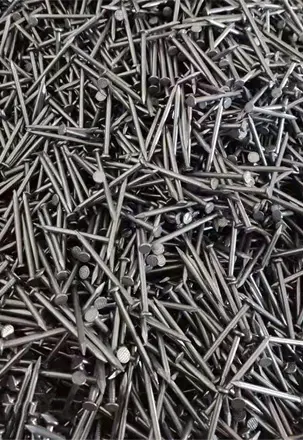
In the construction industry, common nails remain one of the most widely used fasteners for wood framing, roofing, decking, pallets, furniture, and general carpentry. Whether you are a contractor, building materials distributor, wholesaler, or importer, understanding the difference between 8D, 10D, and 16D common nails is essential for selecting the right product.
Many buyers outside North America are often confused by the “D” designation used in nail sizing. Questions such as “What does 8D mean?”, “Is a 10D nail stronger than an 8D nail?”, and “When should I use a 16D nail?” are common among international customers.
As a professional Chinese nail manufacturer, Roofglory supplies high-quality common nails to customers in North America, South America, Africa, the Middle East, and Southeast Asia. In this guide, we explain everything you need to know about 8D, 10D, and 16D nails, including dimensions, applications, strength comparisons, and purchasing recommendations.
Understanding the Meaning of the “D” in Common Nails
Before comparing different nail sizes, it is important to understand what the “D” actually means.
The letter “D” stands for “Penny,” an old English unit that originated hundreds of years ago. Historically, the number of pennies represented the cost of purchasing 100 nails of a particular size.
Although the pricing system no longer applies today, the sizing convention remains widely used in the United States and Canada.
Common examples include:
| Nail Size | Name |
|---|---|
| 2D | Finish Nail |
| 4D | Small Framing Nail |
| 6D | Light Construction Nail |
| 8D | Standard Framing Nail |
| 10D | Heavy Framing Nail |
| 16D | Structural Framing Nail |
| 20D | Large Structural Nail |
The higher the penny number, the longer and generally thicker the nail.
For builders and importers, understanding these size classifications helps ensure compliance with local building codes and project specifications.
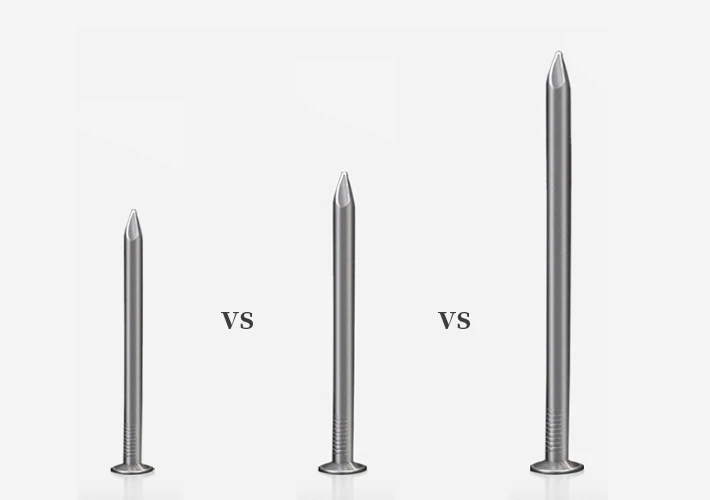
Dimensions of 8D, 10D, and 16D Common Nails
The most significant difference among these nails is their length and diameter.
| Nail Type | Length (Inches) | Length (mm) | Diameter (Approx.) |
| 8D Common Nail | 2.5″ | 63.5 mm | 3.33 mm |
| 10D Common Nail | 3″ | 76.2 mm | 3.76 mm |
| 16D Common Nail | 3.5″ | 88.9 mm | 4.11 mm |
The increase in length and diameter directly affects:
- Holding power
- Shear strength
- Pull-out resistance
- Structural stability
Generally speaking:
8D < 10D < 16D in terms of strength and load-bearing capacity.
Because of these differences, each nail size serves a different purpose in construction projects.
What Is an 8D Common Nail Used For?
The 8D common nail is one of the most versatile nail sizes used in residential construction.
With a length of approximately 2.5 inches, it offers a balance between holding power and ease of installation.
Typical Applications
- Wall sheathing
- Subfloor installation
- Deck boards
- Fence construction
- Light framing
- Plywood fastening
- Interior carpentry
Advantages of 8D Nails
Easier Installation
Shorter length reduces splitting in thinner lumber.
Lower Material Cost
Consumes less steel than larger nails.
Faster Production Speed
Suitable for high-volume construction projects.
Better for Thin Materials
Prevents excessive penetration and wood damage.
Common Industries Using 8D Nails
- Residential construction
- Furniture manufacturing
- Wooden packaging
- Pallet production
- DIY projects
For export customers, 8D nails are among the most frequently ordered sizes because they fit a broad range of applications.
What Is a 10D Common Nail Used For?
The 10D common nail is considered a medium-duty structural nail.
At approximately 3 inches long, it provides stronger holding power than an 8D nail while remaining easy to drive into wood.
Typical Applications
- Structural framing
- Stud-to-plate connections
- Floor joists
- Truss assembly
- Wood framing systems
- Exterior construction
Benefits of 10D Nails
Increased Holding Strength
Greater penetration improves joint stability.
Better Structural Performance
Suitable for heavier loads.
Enhanced Pull-Out Resistance
Reduces loosening caused by vibration and movement.
Popular Markets
10D nails are widely used in:
- United States
- Canada
- Australia
- New Zealand
Builders often specify 10D nails where additional structural integrity is required but 16D nails may be excessive.
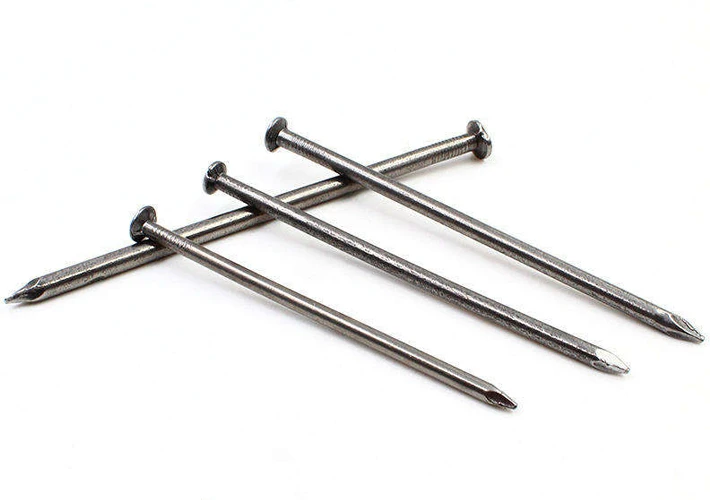
What Is a 16D Common Nail Used For?
The 16D common nail is one of the most important fasteners in wood-frame construction.
At approximately 3.5 inches long, it is the standard choice for major framing connections.
Typical Applications
- House framing
- Load-bearing walls
- Roof trusses
- Timber structures
- Structural beams
- Post and beam construction
Advantages of 16D Nails
Maximum Holding Power
Provides deep penetration into framing members.
Superior Shear Strength
Handles significant structural loads.
Compliance with Building Codes
Many North American framing standards specify 16D nails.
Long-Term Durability
Suitable for demanding environments.
Industries Using 16D Nails
- Residential housing
- Commercial construction
- Industrial buildings
- Agricultural structures
- Modular housing
Because of their structural importance, 16D nails represent one of the highest-volume nail categories imported globally.
Comparing 8D vs 10D vs 16D Common Nails
The following comparison helps buyers quickly identify the best choice for their projects.
| Feature | 8D Nail | 10D Nail | 16D Nail |
| Length | 2.5″ | 3″ | 3.5″ |
| Diameter | Smaller | Medium | Largest |
| Holding Power | Good | Better | Best |
| Structural Strength | Moderate | High | Very High |
| Installation Ease | Easy | Moderate | More Force Required |
| Material Cost | Lowest | Medium | Highest |
| Best Applications | Sheathing, Decking | Framing, Joists | Structural Framing |
In general:
- Choose 8D for lighter construction.
- Choose 10D for medium structural work.
- Choose 16D for heavy framing and load-bearing applications.
How to Choose the Right Nail Size for Your Project
Selecting the correct nail depends on several factors.
Lumber Thickness
Thicker lumber requires longer nails.
General rule:
The nail should penetrate at least three times the thickness of the material being attached.
Structural Requirements
Load-bearing connections require stronger and longer fasteners.
Building Codes
Many projects in North America must follow specific code requirements regarding nail size and spacing.
Environmental Conditions
For outdoor projects, galvanized or hot-dip galvanized nails are recommended to prevent corrosion.
Cost Considerations
Using larger nails than necessary increases costs without providing additional benefits.
Professional suppliers such as Roofglory can recommend the most suitable nail specifications according to project requirements.
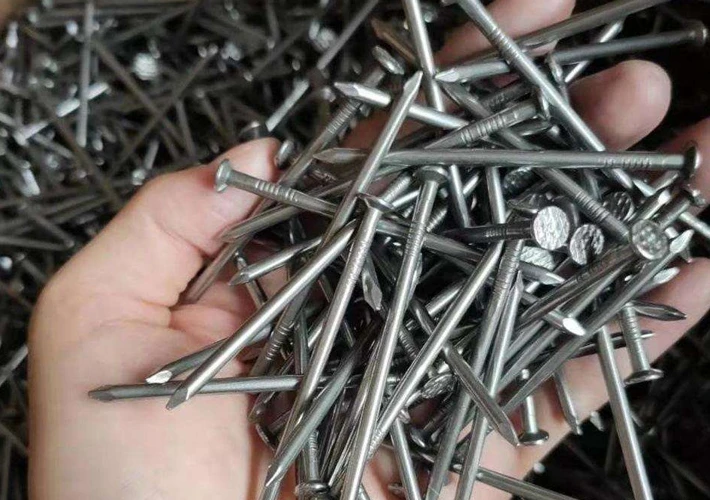
Why Importers Choose Roofglory Common Nails from China
As a professional Chinese nail manufacturer, Roofglory provides reliable nail solutions for distributors, wholesalers, and construction companies worldwide.
Advanced Manufacturing Facilities
Our automated production lines ensure:
- Consistent dimensions
- Stable quality
- High production efficiency
Strict Quality Control
Every batch undergoes:
- Tensile strength testing
- Diameter inspection
- Length verification
- Surface treatment inspection
Multiple Surface Finishes
Available options include:
- Bright common nails
- Electro galvanized nails
- Hot-dip galvanized nails
- Cement coated nails
- Vinyl coated nails
Flexible OEM Services
We support:
- Customized packaging
- Private labels
- Bulk container orders
- Retail packaging
Strong Export Experience
Roofglory products are exported to more than 50 countries worldwide.
Our team understands international standards and can help customers select the right nail specifications for their target markets.
Conclusion
Understanding the differences between 8D, 10D, and 16D common nails is essential for builders, distributors, and importers.
While 8D nails are ideal for light framing and sheathing, 10D nails offer improved structural performance for medium-duty applications. For major framing projects and load-bearing structures, 16D nails remain the industry standard due to their superior holding power and strength.
When sourcing common nails, working with an experienced manufacturer is just as important as selecting the correct size.
Roofglory is a trusted China nail factory offering high-quality common nails, galvanized nails, roofing nails, and custom fastening solutions for global wholesale customers.
Whether you need 8D, 10D, or 16D common nails, Roofglory can provide competitive pricing, reliable quality, and professional export support.
Contact Roofglory Today
Looking for a dependable nail supplier in China?
Contact Roofglory now to get:
- Free quotations
- OEM packaging solutions
- Sample support
- Bulk wholesale pricing
- Fast global delivery
Roofglory – Your Trusted Partner for High-Quality Construction Fasteners.