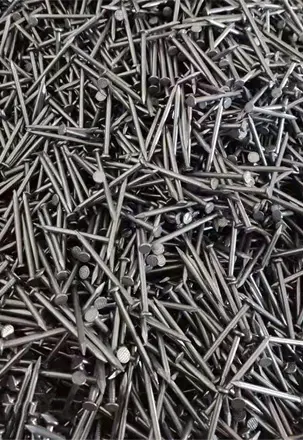
In global construction and manufacturing supply chains, common nails remain one of the highest-volume fastener products traded by tonnage. For importers, distributors, and project contractors, understanding the price per ton of common nails is essential for budgeting, procurement strategy, and long-term supplier cooperation.
Unlike retail nail pricing, bulk industrial pricing depends heavily on steel raw material cost, production technology, coating treatment, energy consumption, and labor efficiency. In recent years, nail prices have shown clear correlation with global steel markets and energy fluctuations.
Industry data shows that bulk common nail prices typically range between $800 and $1,200 per ton, while coated or specialty nails may reach $950 to $1,300 per ton or higher depending on specification and treatment.
At the same time, the raw material — low carbon steel wire rod — usually costs around $550 to $750 per ton, forming the largest share of production cost.
This article provides a comprehensive optimized analysis covering raw material costs, manufacturing cost structure, pricing drivers, and future market trends.
Current Global Common Nails Price per Ton Overview
Global Market Price Benchmarks
Based on global industrial procurement data:
- Standard common nails: $800 – $950 / ton
- Galvanized common nails: $1,050 – $1,200 / ton
- Coated structural nails: $950 – $1,300 / ton
- Basic bulk steel nails (high-volume deals): $450 – $850 / ton
These ranges vary based on:
- Raw material steel grade
- Coating requirements
- Nail size and weight
- Order quantity
- Packaging standard
- Certification requirements
Global industrial averages also indicate total nail product price often lands between $950 and $1,300 per ton for coated or premium construction nails.
Meanwhile, some Chinese export suppliers offer bulk plain nails around $450–700 per ton depending on order volume and specification.
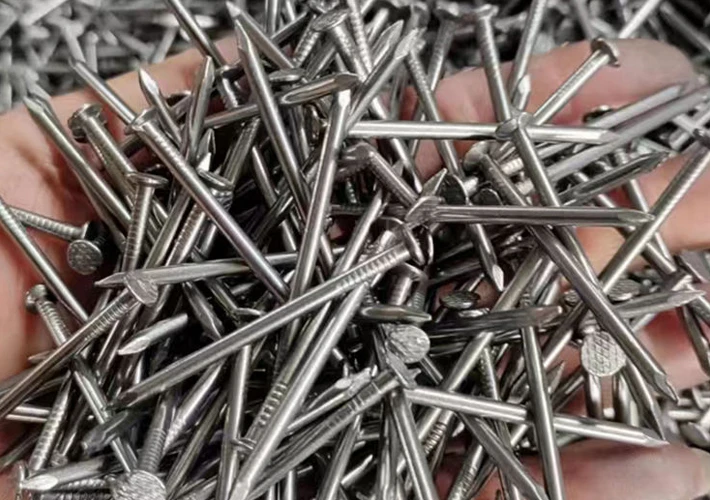
FOB and Export Pricing Example
Typical export-level offers:
- FOB China common nails: about $580–$610 per ton for basic models
- Material often uses Q195 low-carbon steel wire
This shows how strongly pricing depends on coating, packaging, and quality standard.
Raw Material Cost Structure in Nail Production
Steel Wire Rod — The Core Cost Driver
The most critical cost element is steel wire rod, usually accounting for 60–75% of total nail manufacturing cost.
Current global average pricing:
- Low carbon steel wire rod: $550 – $750 / ton
- Medium carbon steel wire rod: $650 – $800 / ton
- High carbon steel wire rod: $800 – $1,000 / ton
These materials determine:
- Nail strength
- Bending resistance
- Drawing performance
- Surface finish
- Production yield
Low-carbon steel is most widely used for standard construction nails due to cost efficiency and forming performance.
Wire Rod Quality vs Production Efficiency
Higher quality wire rod may cost more upfront but can:
- Reduce machine downtime
- Lower scrap rate
- Improve nail consistency
- Reduce maintenance cost
Poor wire quality can cause production losses. One case study showed defective wiring caused 5 tons of scrap nails in one month, demonstrating how raw material quality directly impacts total cost.
Manufacturing Process and Cost Contribution Breakdown
Typical nail manufacturing cost structure:
| Cost Category | Percentage |
|---|---|
| Raw material steel | 60–75% |
| Labor | 5–10% |
| Energy | 5–8% |
| Machine depreciation | 5–10% |
| Coating & surface treatment | 5–12% |
| Packaging & logistics | 3–8% |
Production Workflow Cost Points
Main production stages:
1.Wire rod pickling
2.Wire drawing
3.Nail forming
4.Heat treatment (optional)
5.Polishing or coating
6.Sorting and packaging
Each step adds incremental cost and affects final price positioning.
Energy, Labor, and Automation Impact on Nail Pricing
Energy Cost
Example production data shows:
- 10kW nail machine uses ~10kWh/hour
- Industrial electricity cost ~RMB 1/kWh
- Daily energy cost ~RMB 80 per machine
Energy costs fluctuate with:
- Regional electricity price
- Furnace usage
- Heat treatment requirements
Labor Cost
Modern automation dramatically reduces labor requirements.
Example:
- 5 machines can run with 5 operators + 1 technician
- Monthly labor ~RMB 30,000 – 40,000
Automation allows stable pricing even when wages rise.
Product Specification Factors Affecting Nail Price Per Ton
1.Nail Size and Weight
Larger nails require:
- More raw material
- Higher drawing force
- Longer forming time
Thus higher cost per ton.
2.Coating Type
Cost ranking:
Plain bright nail → lowest cost
Electro galvanized → medium cost
Hot dip galvanized → higher cost
Stainless steel → highest cost
Stainless steel wire rod alone can reach $1,800 – $2,500 per ton, significantly increasing nail price.
Supply Chain and Global Market Influencing Factors
Steel Industry Fluctuation
Nail prices directly follow:
- Iron ore price
- Scrap steel price
- Energy cost
- Steel mill capacity
- Trade tariffs
Global construction demand also drives price volatility.
Logistics and Freight Cost
Export nail pricing must include:
- Sea freight
- Port charges
- Import duties
- Currency exchange
Bulk orders often reduce cost by 5–10% due to scale efficiency.
Regional Price Differences and Market Demand
Price differences exist due to:
Asia Manufacturing Advantage
- Lower labor cost
- Large steel production capacity
- Mature nail manufacturing clusters
Europe and North America
- Higher compliance requirements
- Higher labor and energy cost
- Stronger certification standards
These factors lead to higher local manufacturing price but strong demand for imports.
Future Trend of Common Nails Price Per Ton
Key Trend Drivers
1. Green Steel Production
Carbon-neutral steel may increase raw material cost short term.
2. Automation Expansion
Higher automation → lower labor cost → price stabilization.
3. Construction Demand Cycles
Infrastructure spending directly impacts fastener demand.
4. Coated Nail Growth
Outdoor construction demand increases galvanized nail share.

How Buyers Can Control Nail Procurement Cost
Strategy 1 — Lock Raw Material Price
Long-term wire rod contracts help reduce volatility risk.
Strategy 2 — Optimize Nail Specification
Avoid over-specifying:
- Over-thick coating
- High carbon material when not required
Strategy 3 — Choose Stable Supplier
Reliable suppliers reduce hidden costs:
- Rework
- Delay
- Quality complaints
Conclusion
The price per ton of common nails is determined primarily by steel raw material cost, followed by manufacturing efficiency, coating treatment, labor, and energy expenses.
Typical global price ranges today:
- Raw steel wire rod: $550 – $750 / ton
- Common nails bulk: $800 – $1,200 / ton
- Coated or premium nails: $950 – $1,300+ / ton
For B2B buyers and importers, the key to cost control is understanding total production economics rather than focusing only on unit price. Selecting reliable raw material, optimized specifications, and stable suppliers can reduce lifecycle cost significantly.