Flat bars are one of the most widely used metal profiles in modern engineering, construction, and manufacturing. Whether used in structural reinforcement, machine components, brackets, frames, or heavy infrastructure, selecting the correct flat bar size and thickness directly impacts performance, safety, cost efficiency, and manufacturability.
This comprehensive guide explains how engineers, procurement managers, and project designers can select the right flat bar dimensions based on load requirements, material properties, fabrication constraints, and real-world application scenarios.
Understanding What a Flat Bar Is and Why It Is So Widely Used
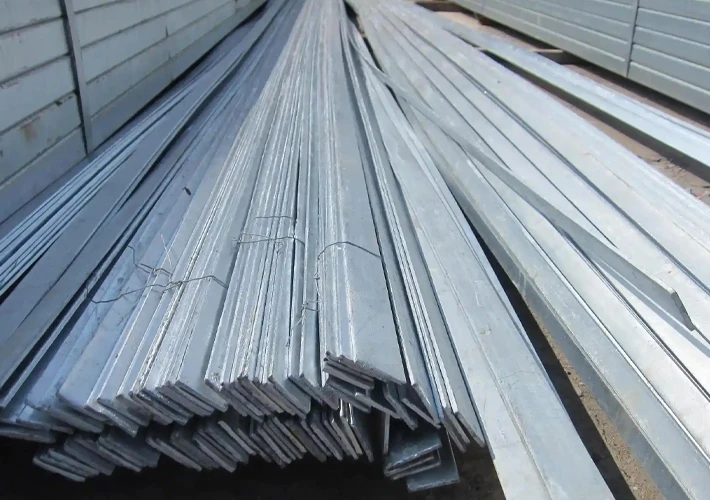
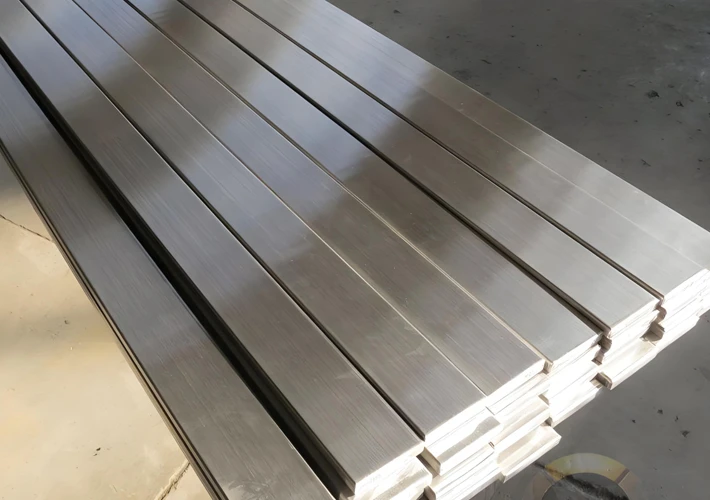
A flat bar is a rectangular cross-section metal bar, typically manufactured through hot rolling, cold drawing, or precision machining. It is available in various metals such as carbon steel, stainless steel, and alloy steel.
Flat bars are commonly used across industries such as:
- Construction and structural engineering
- Machinery manufacturing
- Transportation equipment
- Shipbuilding
- Energy and mining equipment
- Fabrication workshops
Flat bars are preferred because they provide a strong balance of strength, machinability, weldability, and cost-effectiveness, making them suitable for both light-duty and heavy-duty applications.
In production terms, flat bars are usually specified by:
- Width (W)
- Thickness (T)
- Length (L)
- Material grade
Typically, width is listed first, followed by thickness.
Standard Flat Bar Size Ranges Used in Engineering
Although custom sizes are possible, most engineering projects rely on standard industrial ranges for availability and cost efficiency.
Typical Thickness Range
Flat bar thickness commonly ranges from 2 mm to 100 mm, depending on application and manufacturing method.
Common Width Range
Standard widths often range from:
- 10 mm for light fabrication
- Up to 200 mm or more for heavy structural applications
Examples of Common Engineering Sizes
| Size (mm) | Typical Use |
|---|---|
| 20 × 3 | Light brackets, decorative trim |
| 25 × 4 | Handrails, small frames |
| 30 × 5 | General fabrication |
| 50 × 8 | Machine supports |
| 80 × 10 | Structural reinforcement |
| 150 × 15 | Heavy industrial structures |
These size combinations are widely used because they provide predictable mechanical performance and easy sourcing.
Key Factors That Determine the Right Flat Bar Thickness
Choosing thickness is one of the most critical engineering decisions. It directly affects load capacity, bending resistance, and fatigue life.
1.Load Type
Different loads require different thickness levels:
- Axial load → thinner bar may be acceptable
- Bending load → thicker bar required
- Torsional load → consider width + thickness combination
2.Load Magnitude
Higher loads require exponentially stronger sections, not just slightly thicker bars.
3.Safety Factor
Engineering design normally includes safety factors such as:
- 1.5 → Controlled environment
- 2–3 → Structural use
- 4+ → High-risk applications
How Width and Thickness Work Together Structurally
Many engineers mistakenly focus only on thickness. In reality:
Section strength depends on cross-sectional geometry.
For bending resistance:
- Increasing thickness greatly increases bending stiffness
- Increasing width increases surface area and stability
For example:
- Doubling thickness increases bending resistance significantly
- Doubling width improves distribution but less dramatically
That is why heavy load designs often increase thickness first.
Flat Bar Strength and Load Calculation Basics
While detailed design requires finite element analysis or structural codes, basic calculations help with preliminary selection.
Basic Stress Formula
Stress = Load / Cross-sectional Area
Area = Width × Thickness
If stress exceeds yield strength → permanent deformation occurs.
Bending Strength Concept
Bending resistance depends on:
- Moment of inertia
- Section modulus
- Material yield strength
In practical engineering:
- Thin flat bars bend easily
- Thick flat bars resist bending and vibration
Material Selection and Its Impact on Size Choice
Material grade often determines how thick a flat bar must be.
Mild Steel
- Low cost
- Easy welding
- Medium strength
Stainless Steel
- Corrosion resistant
- Lower yield vs some alloy steels
- Often requires thicker sections
Alloy Steel
- High strength
- May allow thinner design
Flat bars are available under standards such as ASTM, DIN, JIS, and EN depending on project location and compliance requirements.

Application-Based Flat Bar Size Selection Guide
Light Fabrication
Typical Size:
- 20×3
- 25×4
Applications:
- Furniture
- Decorative metalwork
- Light brackets
General Industrial Use
Typical Size:
- 30×5
- 40×6
- 50×5
Applications:
- Machine frames
- Equipment supports
Heavy Structural Use
Typical Size:
- 80×10
- 100×12
- 150×15
Applications:
- Structural reinforcement
- Crane supports
- Industrial base plates
Manufacturing Method and Dimensional Accuracy Considerations
Hot Rolled Flat Bars
- Lower cost
- Rounded edges
- Used in construction
Cold Drawn Flat Bars
- Higher dimensional accuracy
- Smooth finish
- Used in precision machinery
Hot rolled bars are commonly used in construction, while cold drawn bars are preferred for precision mechanical components.
Weight Calculation and Logistics Considerations
Flat bar weight is critical for:
- Transportation cost
- Structural load calculations
- Installation planning
Weight depends on density and volume. Most steel flat bar charts assume density around 7.85 t/m³.
Example:
- 50 × 8 mm ≈ 3.14 kg/m
- 100 × 10 mm ≈ 7.85 kg/m
Tolerance and Quality Control Requirements
Flat bars have standard tolerance ranges.
Example thickness tolerance:
≤ 12 mm → ±0.5 mm
12 mm → around ±4% (max 1.5 mm)
Understanding tolerances is essential for:
- CNC machining
- Welding fit-up
- Assembly alignment
International Standards and Compliance
Flat bars can be produced according to:
- ASTM (USA)
- DIN (Germany)
- EN (Europe)
- JIS (Japan)
- BS (UK)
Selecting the right standard ensures:
- Certification approval
- Market compliance
- Export compatibility
Common Engineering Mistakes When Selecting Flat Bars
Choosing Based Only on Price
Can lead to structural failure or excessive deflection.
Ignoring Fabrication Process
Some flat bars may crack during bending if thickness is too high.
Not Considering Corrosion
Outdoor applications may require stainless or coated steel.
Conclusion: Engineering Methodology for Selecting Flat Bar Size and Thickness
Choosing the right flat bar size requires balancing:
- Mechanical strength
- Material properties
- Cost efficiency
- Manufacturing feasibility
- Compliance requirements
A structured approach should include:
Define load conditions
Select material grade
Calculate required section size
Verify safety factor
Confirm standard availability
Check fabrication compatibility
By following this engineering-driven selection method, businesses can improve safety, reduce cost, and optimize performance across industrial applications.