Steel roofing sheets are widely used in industrial buildings, commercial projects, agricultural structures, and residential housing across global markets. For buyers, contractors, architects, and importers, understanding common steel roofing sheet sizes is essential for accurate material estimation, cost control, installation efficiency, and compliance with local building standards.
This article provides a comprehensive overview of the standard sizes, thickness ranges, profiles, and regional preferences of steel roofing sheets. It also explains how size selection impacts performance, logistics, and long-term durability, helping global buyers make informed decisions when sourcing steel roofing materials.
Understanding Steel Roofing Sheet Dimensions
Steel roofing sheet size is not defined by a single measurement. Instead, it is a combination of length, width, thickness, and profile shape. Each dimension serves a specific functional purpose and affects structural performance, installation speed, and overall project cost.
Length of Steel Roofing Sheets
Steel roofing sheets are typically manufactured in standard lengths or customized lengths, depending on project requirements.
Common standard lengths include:
- 1,800 mm (6 ft)
- 2,400 mm (8 ft)
- 3,000 mm (10 ft)
- 3,600 mm (12 ft)
- 4,800 mm (16 ft)
For industrial and commercial projects, custom cut-to-length sheets are increasingly popular. These can range from 2 meters up to 12 meters or more, depending on transportation limits and roof design.
Key considerations when choosing length:
- Longer sheets reduce horizontal overlaps and leakage risks
- Shorter sheets are easier to transport and handle manually
- Local transport regulations may limit maximum length
Width of Steel Roofing Sheets
The width of steel roofing sheets is usually expressed as overall width and effective (cover) width.
- Overall width: The total width including overlaps
- Effective width: The actual coverage after overlapping during installation
Common overall widths:
- 762 mm
- 914 mm
- 1,000 mm
- 1,050 mm
- 1,200 mm
Common effective widths:
- 686 mm
- 750 mm
- 900 mm
- 950 mm
- 1,000 mm
Effective width is critical for calculating material quantities accurately, especially in large-scale roofing projects.
Thickness of Steel Roofing Sheets
Thickness directly influences the strength, load-bearing capacity, wind resistance, and lifespan of steel roofing sheets.
Steel roofing thickness is commonly measured in millimeters (mm) or gauge (GA).
Common thickness ranges:
- 0.25 mm – Lightweight residential roofing
- 0.30 mm – Economic agricultural buildings
- 0.35 mm – Standard commercial use
- 0.40 mm – Industrial buildings
- 0.45 mm – Heavy-duty roofing
- 0.50 mm and above – High wind and cyclone zones
Common gauge equivalents:
- 26 GA ≈ 0.45 mm
- 28 GA ≈ 0.38 mm
- 30 GA ≈ 0.30 mm
Choosing the correct thickness ensures compliance with local building codes and prevents premature deformation.
Common Steel Roofing Sheet Profiles and Their Sizes
Steel roofing sheets are formed into different profiles to enhance strength and water drainage. Each profile type has its own standard size range.
Corrugated Steel Roofing Sheets
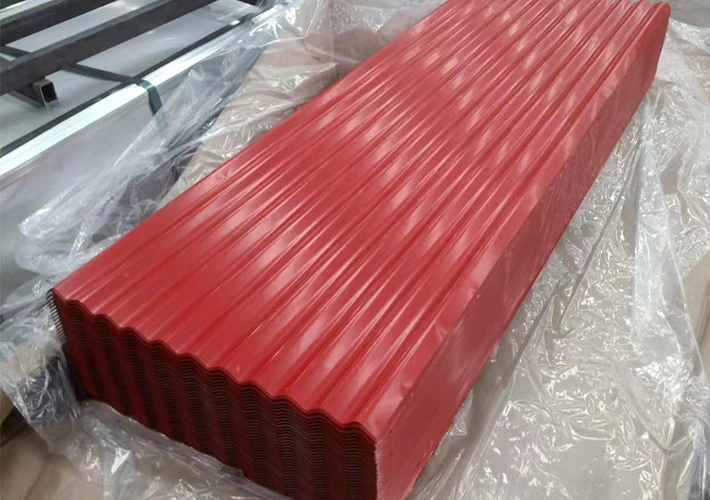
Corrugated roofing sheets are one of the most widely used profiles globally due to their simplicity and cost-effectiveness.
Typical dimensions:
- Width: 762 mm – 914 mm
- Effective width: 686 mm – 762 mm
- Thickness: 0.25 mm – 0.50 mm
- Corrugation height: 18 mm – 25 mm
Applications:
- Warehouses
- Agricultural sheds
- Temporary buildings
- Residential roofing in developing regions
Trapezoidal (Ribbed) Steel Roofing Sheets
Trapezoidal sheets offer higher strength and are preferred for modern industrial and commercial structures.
Common sizes:
- Overall width: 1,000 mm – 1,200 mm
- Effective width: 900 mm – 1,050 mm
- Thickness: 0.30 mm – 0.60 mm
- Rib height: 20 mm – 45 mm
Advantages:
- Stronger load resistance
- Better water drainage
- Suitable for long-span roofing systems
Standing Seam Steel Roofing Panels
Standing seam roofing systems are commonly used in high-end commercial and architectural projects.
Typical panel sizes:
- Panel width: 300 mm – 500 mm
- Custom lengths: Up to 15 meters
- Thickness: 0.40 mm – 0.70 mm
Key features:
- Concealed fasteners
- Excellent waterproof performance
- Clean, modern appearance
Regional Preferences for Steel Roofing Sheet Sizes
Steel roofing sheet sizes often vary based on regional construction practices, climate conditions, and logistics infrastructure.
Asia and Southeast Asia
- Common widths: 762 mm, 914 mm
- Thickness: 0.30 mm – 0.40 mm
- Length: 1.8 m – 3.6 m
- Focus on cost efficiency and ease of installation
Europe
- Common widths: 1,000 mm, 1,050 mm
- Thickness: 0.40 mm – 0.50 mm
- Greater emphasis on insulation compatibility and wind resistance
Africa
- Popular widths: 762 mm, 914 mm
- Thickness: 0.25 mm – 0.35 mm
- Shorter lengths for easier inland transportation
Australia and New Zealand
- Wider panels: 1,000 mm – 1,200 mm
- Thickness: 0.42 mm – 0.55 mm
- Designed for cyclone and high UV exposure zones
North America
- Gauge-based standards
- Custom cut lengths widely used
- Heavy emphasis on snow load performance
How Steel Roofing Sheet Size Affects Performance
Selecting the right size is not just about coverage—it directly affects roofing performance.
Structural Strength
- Thicker sheets and deeper profiles provide better load-bearing capacity
- Wider sheets require adequate support spacing
Wind Resistance
- Longer sheets reduce joints but need stronger fastening systems
- Proper overlap width is critical in storm-prone areas
Water Drainage
- Deeper corrugations improve water flow
- Correct effective width ensures leak prevention
Thermal Expansion
- Longer panels must allow for thermal movement
- Standing seam systems are preferred for long lengths
Transportation and Packaging Considerations
Steel roofing sheet size also affects shipping costs and handling safety.
Key logistics factors:
- Container length limits (usually 5.8 m or 11.8 m)
- Pallet stacking height
- Protection against scratching and corrosion
Smaller standard sizes are easier to consolidate, while custom long panels may require special transport arrangements.
Custom Sizes vs Standard Sizes
Many manufacturers offer both standard and custom steel roofing sheet sizes.
Standard Sizes
Benefits:
- Faster production
- Lower cost
- Easier inventory management
Custom Sizes
Benefits:
- Reduced waste
- Faster installation
- Better roof aesthetics
For large-scale projects, custom sizes often result in long-term cost savings despite higher initial pricing.
How to Choose the Right Steel Roofing Sheet Size
When selecting steel roofing sheet sizes, buyers should evaluate:
1.Roof span and slope
2.Local climate conditions
3.Structural support spacing
4.Installation method
5.Transportation limitations
6.Local building regulations
Consulting with experienced manufacturers helps ensure that the selected size meets both performance and budget requirements.
Future Trends in Steel Roofing Sheet Sizing
With the growth of prefabricated construction and green buildings, steel roofing sheet sizes are evolving.
Emerging trends include:
- Longer single-span roofing panels
- Wider effective coverage designs
- Lightweight high-strength steel materials
- Integration with insulation and solar systems
These innovations aim to reduce installation time and improve energy efficiency.
Conclusion
Understanding common sizes for steel roofing sheets is a critical step in successful roofing projects. From width and length to thickness and profile type, each dimension plays a vital role in performance, cost, and durability.
By choosing the right size based on project requirements and regional standards, buyers can optimize material usage, ensure structural safety, and achieve long-term value. Whether sourcing standard panels or customized solutions, informed size selection is the foundation of reliable steel roofing systems.