Since entering the 21st century, the global construction industry has been undergoing a profound and continuous transformation. If the 20th century was largely driven by basic structural materials such as reinforced concrete, bricks, and natural timber, the 21st century has clearly moved into a new stage defined by functional integration, system-based design, industrialized production, aesthetic diversity, and sustainable development.
Against this background, a large number of new building material products have been invented, upgraded, or rapidly popularized, gradually forming mature industrial chains and stable application scenarios. From stone-coated metal roofing systems, to interior decorative materials such as bamboo charcoal wood veneer panels, WPC wall panels, and wooden acoustic panels, and further to highly integrated capsule houses and modular buildings, these innovations have not only changed architectural appearances, but also reshaped construction methods, business models, and spatial concepts.
This article focuses on three major categories—hardware & structural building materials, decorative materials, and capsule houses—to systematically analyze the most influential building material inventions and trends of the 21st century. Through a logical framework of products → systems → application scenarios, these categories are integrated into a complete building material ecosystem, providing a solid and professional reference for independent websites presenting comprehensive building material solutions.
Key Innovations and Evolution Trends in Hardware & Structural Building Materials
1.From “Auxiliary Components” to “System-Level Elements”
For a long time, traditional hardware building materials were regarded as secondary components, mainly responsible for connection, fixation, and load-bearing. In the 21st century, however, with the rapid development of industrialized and prefabricated construction, hardware products have evolved from single-function parts into core components of complete building systems.
In modern roofing, façade, and envelope systems, hardware is no longer limited to screws, keels, and brackets, but has expanded into:
- High-corrosion-resistance fastening systems
- Wind- and earthquake-resistant connectors
- Prefabricated installation structures
- Concealed and modular fixing solutions
This transformation has directly driven the global popularity of stone-coated metal roofing, metal roofing systems, and composite wall systems.
2.Stone-Coated Metal Roofing: A Lightweight Revolution in Roofing Systems
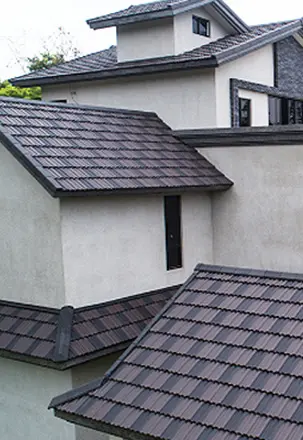
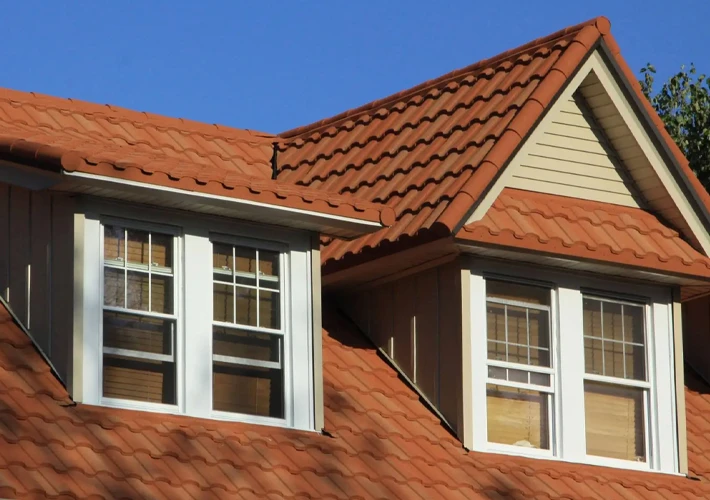
Stone-coated metal roofing tiles are among the most representative roofing innovations of the 21st century. Manufactured with Al-Zn coated steel sheets as the base material and covered with natural stone granules bonded by high-performance resin, they combine the structural strength of metal roofing with the aesthetic appeal of traditional tiles.
Key Reasons for Their Global Popularity:
Lightweight: Only about 1/6–1/7 the weight of traditional clay or concrete tiles, significantly reducing structural load
Excellent wind and seismic resistance, ideal for earthquake-prone and typhoon regions
High installation efficiency with dry installation methods
Long service life, commonly exceeding 50 years
Diverse profiles, including Roman, shake, Milan, and flat tile designs
Typical Applications:
- Residential roofing systems
- Villas and resort buildings
- Light steel structure houses
- Capsule houses and modular buildings
Within the hardware building material category, stone-coated roofing is not just a single product, but a complete system highly dependent on fastening components, structural frameworks, and waterproof accessories.
3.The Rise of Integrated Fasteners and Structural Framework Systems
As stone-coated roofing, metal façades, and prefabricated wall systems continue to develop, specialized hardware systems have become increasingly important:
- Stainless steel and galvanized composite screws
- Anti-loosening self-drilling fasteners
- Adjustable framework and keel systems
- Concealed clips and locking structures
Although often invisible after installation, these components play a decisive role in structural safety, durability, and construction efficiency, making them an indispensable part of modern hardware building materials.
Decorative Materials in the 21st Century: From Surface Decoration to Integrated Function & Aesthetics
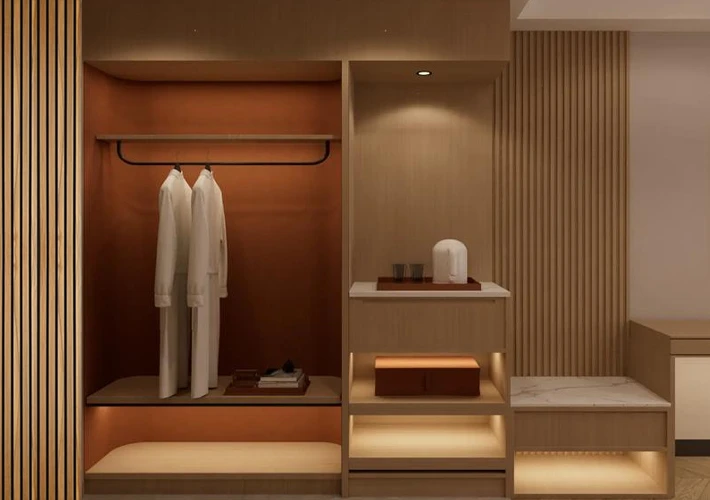
If hardware materials define the “skeleton” of a building, decorative materials shape its “soul”. Decorative materials in the 21st century show three clear trends:
1.Material hybridization
2.Functional integration
3.System-oriented design
Under these trends, bamboo charcoal bamboo charcoal wood veneer panels, WPC wall panels, and wooden acoustic panels have become some of the most influential decorative products worldwide.
1.Bamboo Charcoal Wood Veneer Panels: From Natural Timber to Industrialized Decorative Systems
Bamboo wood veneer panels are not a new invention, but their large-scale global adoption is a phenomenon of the 21st century.
Key Transformations in Modern Bamboo Charcoal Wood Veneer Panels:
- From solid wood to engineered and composite substrates
- From handcrafted installation to standardized, modular sizing
- From pure decoration to materials with defined fire, moisture, and environmental performance
Main Types of Bamboo Charcoal Bamboo Charcoal Wood Veneer Panels:
- Natural bamboo charcoal bamboo charcoal wood veneer panels
- Engineered bamboo charcoal bamboo charcoal wood veneer panels
- Bamboo charcoal bamboo charcoal bamboo charcoal wood veneer panels
- Wood-grain PVC or PP composite panels
Application Scenarios:
- Hotels and commercial spaces
- High-end residential interiors
- Office buildings
- Interior systems of capsule houses
The long-term popularity of bamboo charcoal bamboo charcoal wood veneer panels lies in their ability to balance natural aesthetics with industrial-scale production.
2.WPC Wall Panels: A Design Language for Modern Spatial Order
WPC wall panels (originally referred to as grille systems in design terminology) have rapidly risen as a key interior and exterior decorative system in the 21st century.
Reasons for Their Popularity:
- Strong visual rhythm and spatial layering
- Ability to divide, guide, and partially screen spaces
- Excellent compatibility with lighting and acoustic systems
Common Materials:
- WPC composite panels
- Aluminum-based composite panels
- PVC-based decorative panels
WPC wall panel systems are typically installed together with structural frameworks, concealed fixing systems, and acoustic back layers, making them a classic example of the deep integration between hardware components and decorative materials.
3.Wooden Acoustic Panels: A Material Trend Driven by Acoustic Performance
With the rapid growth of offices, hotels, cinemas, studios, and content-creation spaces, acoustic performance has become a critical design consideration in modern architecture.
As a result, wooden acoustic panels have gained widespread global adoption.
Core Features:
- Dual function of sound absorption and decoration
- Modular designs for efficient installation
- Visual consistency with bamboo charcoal wood veneer and WPC wall panel systems
Common Structures:
- Perforated wooden acoustic panels
- Slatted wooden acoustic panels
- Panels combined with PET acoustic felt backing
Wooden acoustic panels represent a new generation of functional decorative materials, naturally extending into architectural acoustics, hospitality design, and workspace optimization.
Capsule Houses: A System-Level Innovation in 21st Century Architecture
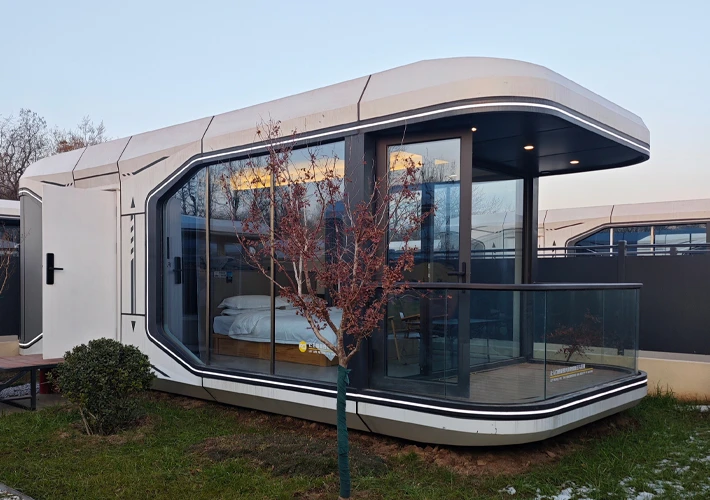
While hardware and decorative materials represent material-level innovation, capsule houses symbolize a breakthrough in architectural models.
1.The Essence of Capsule Houses: Highly Integrated Building Products
A capsule house is not simply a “small house”, but a highly integrated product combining:
- Structural systems
- Building envelope systems
- Interior decorative systems
- Hardware and fastening systems
- Mechanical and electrical systems
Naturally, capsule houses rely on:
- Stone-coated metal roofing or metal roof systems
- Light steel or aluminum structural frameworks
- Wood veneer panels and decorative wall systems
- Acoustic and insulation panel systems
Thus, capsule houses serve as the ultimate integration platform for hardware materials and decorative products.
2.Background of the Capsule House Trend
The rise of capsule houses is driven by multiple global factors:
- Increasing urban land costs
- Growth of tourism, glamping, and resort economies
- Demand for fast construction and temporary buildings
- Rising interest in personalized living and commercial spaces
As a result, capsule houses, modular homes, and container buildings have gained rapid international recognition.
3.Core Building Material Trends in Capsule Houses
(1) Lightweight Structural Hardware
- High-strength light steel
- Aluminum alloy profiles
- Rapid-connection hardware systems
(2) Modular Decorative Materials
- Standardized bamboo charcoal bamboo charcoal wood veneer panels
- Integrated WPC wall panel systems
- Prefabricated acoustic wall panels
(3) Integrated Roofing and Envelope Systems
- Stone-coated metal roofing
- Metal composite panels
- Thermal insulation and waterproof integrated solutions
Capsule houses elevate individual building materials into complete system solutions, creating a natural bridge between products, systems, and applications.
The Convergence Trend of the Three Major Categories
1.From Individual Products to Integrated Solutions
Modern building material platforms increasingly focus on complete solutions rather than isolated products, emphasizing:
- Application scenarios
- System compatibility
- Overall architectural performance
For example:
- Stone-coated roofing → light steel houses → capsule houses
- Wood veneer panels → WPC wall panels → wooden acoustic panels → hotel and office interior solutions
This approach helps users clearly understand how different materials work together within a single architectural concept.
2.A Three-Layer Content Logic for Modern Building Materials
Material Layer: product properties, specifications, and structures
System Layer: installation methods and system combinations
Application Layer: real-world scenarios such as hotels, residences, and capsule houses
This layered logic reflects the true development direction of 21st century building materials.
Conclusion: The Long-Term Direction of Building Materials in the 21st Century
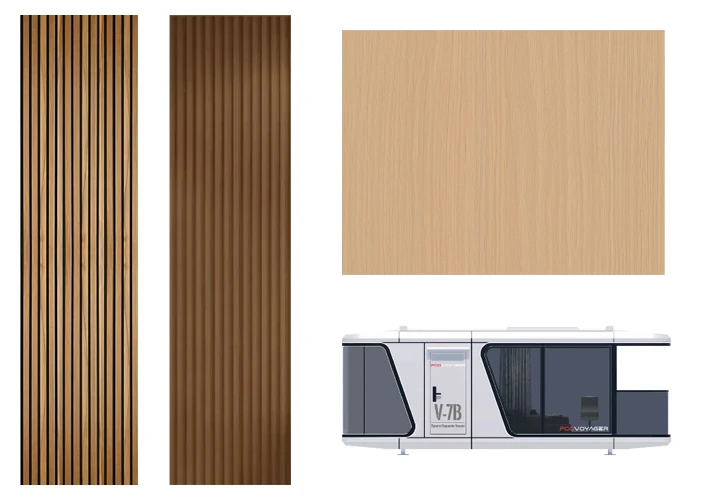
Looking back at the most influential building material innovations of the 21st century, one clear direction emerges:
Building materials no longer exist independently, but function as integrated systems serving complete architectural solutions.
Whether stone-coated metal roofing, bamboo charcoal bamboo charcoal wood veneer panels, WPC wall panels, wooden acoustic panels, or capsule houses, all represent the same core values:
- Industrialized production
- Modular design
- Functional integration
- Application-oriented development
For building material enterprises, the ability to present products within a systematic and trend-driven framework is becoming a key factor in establishing long-term competitiveness in the global market.
This is the true significance of building material innovation in the 21st century.