In the world of modern construction, choosing the right roofing material is essential for ensuring structural durability, aesthetic appeal, energy efficiency, and cost-effectiveness. Among the wide array of roofing products available globally, IBR roof sheeting (Inverted Box Rib sheeting) has emerged as one of the most efficient and reliable roofing solutions, particularly in regions like Africa, Asia, and the Middle East.
This in-depth article will comprehensively compare IBR roof sheeting with other commonly used roofing products, and explain why IBR has gained widespread acceptance among builders, architects, wholesalers, and developers.
What is IBR Roof Sheeting?
IBR (Inverted Box Rib) roofing sheet is a steel roofing profile characterized by its bold square flutes. Unlike traditional wavy or curved corrugated profiles, IBR sheets are designed for strength, stability, and ease of installation. They are available in:
- Galvanized steel (zinc-coated)
- Galvalume/aluzinc (zinc-aluminum coated)
- Color-coated steel (PPGI or PPGL)
- Thicknesses: Typically from 0.3mm to 0.8mm
- Coverage width: Usually 686mm or 890mm
- Length: Customizable, with standard lengths of 6m, 9m, or 12m
What Makes IBR Roof Sheeting Different?
IBR roof sheeting is a profiled steel roofing product designed to combine structural rigidity, efficient water drainage, lightweight handling, and relatively simple installation. Its inverted box rib profile increases stiffness compared with many conventional corrugated profiles, making it suitable for residential, agricultural, commercial, and industrial buildings.
For buyers comparing roofing materials, the main advantage of IBR is not simply its appearance or material type. Its performance depends on several factors, including steel thickness, coating type, roof slope, purlin spacing, fixing method, local wind conditions, and the quality of installation. Therefore, IBR should be selected according to the project environment rather than based on profile shape alone.
In practical terms, IBR roof sheeting is particularly suitable when a project requires a durable metal roof, relatively low structural weight, fast installation, customizable lengths, and a balance between upfront cost and long-term performance.
Comparison with Other Roofing Products
2.1 Corrugated Iron Sheets
- Pros: Cheap, widely available, familiar in rural areas
- Cons: Lower strength, poor aesthetics, prone to leaking if not overlapped properly
- Comparison: IBR has better load-bearing capacity, more professional finish, and superior water drainage.
2.2 Asphalt Shingles
- Pros: Good appearance, flexible in design
- Cons: Short lifespan (15–20 years), not suited for high temperatures or heavy rainfall, frequent maintenance required
- Comparison: IBR lasts twice as long, is more suitable for tropical/humid climates, and doesn’t require high maintenance.
2.3 Clay or Concrete Tiles
- Pros: Long lifespan, good insulation
- Cons: Heavy, expensive, high labor cost, brittle
- Comparison: IBR is lightweight, more affordable, and faster to install.
2.4 Standing Seam Metal Roof
- Pros: Modern look, excellent waterproofing
- Cons: Very expensive, requires skilled labor, longer installation time
- Comparison: IBR achieves similar strength and waterproofing at a fraction of the cost.
IBR Roof Sheeting vs Other Roofing Materials: Which Should You Choose?
The best roofing material depends on the project’s structural requirements, climate, budget, appearance, and expected service conditions. IBR roof sheeting is generally a strong choice when buyers prioritize lightweight construction, installation efficiency, weather resistance, and cost control.
A simple decision framework is:
- Choose IBR when you need a lightweight steel roof with good rigidity and efficient drainage.
- Choose corrugated sheets when the lowest initial material cost is the primary concern.
- Choose clay or concrete tiles when traditional appearance and mass are acceptable and the supporting structure can handle the additional weight.
- Choose asphalt shingles when residential aesthetics and flexible roof design are more important than the advantages of a steel roofing system.
- Choose standing seam roofing when premium architectural appearance, concealed fastening, and specialized waterproofing requirements justify a higher installation cost.
For wholesalers, contractors, and project buyers, the decision should also consider sheet thickness, coating system, available profile dimensions, minimum order quantity, production lead time, packaging, and export logistics rather than comparing material prices alone.
Advantages of IBR Roof Sheeting
3.1 Structural Strength & Stability
- The bold square flutes of IBR provide superior rigidity compared to traditional wavy profiles.
- Able to span long distances without deformation.
- Ideal for wind-prone and storm-affected regions.
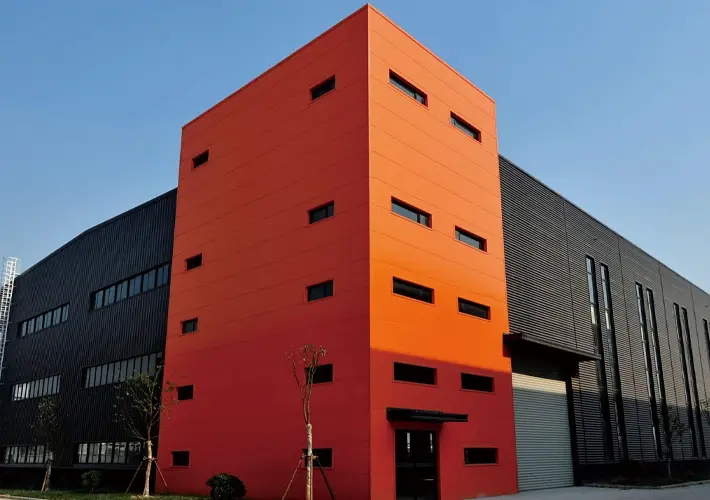
- Excellent choice for large-scale warehouses, factories, stadiums, and commercial spaces.
How Does IBR Profile Affect Roofing Performance?
The performance of an IBR roof is influenced by the geometry of the profile as well as the steel grade and thickness. The deeper, box-shaped ribs increase the sheet’s resistance to bending compared with flatter profiles. However, profile geometry alone does not determine the maximum allowable span or wind resistance.
For a construction project, engineers and contractors should consider:
- Steel thickness and grade
- Purlin spacing
- Roof slope
- Building location and wind loads
- Fastener type and fixing spacing
- Overlap and flashing details
- Local building regulations and engineering requirements
This means that a thicker IBR sheet is not automatically the best solution for every project. The correct specification should be determined according to the structural design and environmental conditions.
3.2 Lightweight Yet Durable
- Reduces structural load, saving cost on support structures like trusses.
- A 0.5mm thick galvanized IBR sheet weighs about 4.5kg/m², whereas clay tiles can weigh 40–60kg/m².
- Lower weight = lower transportation costs and faster installation.
3.3 Easy Handling & Installation
- Standard widths and custom lengths enable quicker laying.
- Requires fewer fasteners and overlaps, reducing both labor and material waste.
- Ideal for fast-track construction projects.
3.4 Cost-Effectiveness
- Lower material and labor costs compared to tiles and standing seam panels.
- Offers excellent lifespan-to-cost ratio.
- Minimal maintenance needs = reduced long-term costs.
Weather Resistance
4.1 Rain & Water Drainage
- Deep ribs and slope design ensure excellent water flow, preventing leakage and pooling.
- Ideal for areas with heavy seasonal rains or monsoons.
4.2 Wind Resistance
- IBR’s design prevents wind uplift and ensures secure anchorage to the purlins.
- Better suited for high-wind zones than shingles or flat panels.
4.3 Heat Reflectivity
- Color-coated IBR sheets with cool roofing pigments can reflect heat and lower indoor temperatures.
- Helps reduce air conditioning costs in hot climates.
4.4 UV & Corrosion Protection
With galvalume or PPGI/PPGL coatings, IBR sheets resist:
- UV damage
- Salinity (for coastal projects)
- Rust and corrosion (ideal for humid and industrial zones)
Is IBR Roofing Suitable for Heavy Rain and High-Wind Areas?
Yes, IBR roof sheeting can be suitable for areas with heavy rainfall and strong winds when the correct specification and installation method are used. Its ribbed profile supports efficient water drainage, while mechanical fastening provides secure attachment to the supporting structure.
However, weather resistance depends on more than the roofing profile. For projects in tropical, coastal, monsoon, or high-wind environments, buyers should evaluate:
- Appropriate steel thickness
- Galvanized, Galvalume, PPGI, or PPGL coating
- Coating thickness and corrosion resistance
- Roof slope and drainage design
- Fastener quality
- Purlin spacing
- Edge and corner fixing
- Flashing and overlap details
For coastal or highly humid locations, corrosion protection should receive particular attention. Galvalume or appropriately specified galvanized and color-coated steel can provide additional protection, but the final specification should match the project’s environmental exposure.
Aesthetics and Color Variety
Modern IBR sheeting is not only functional but visually appealing.
- Available in a wide range of RAL colors, glossy or matte finishes.
- Compatible with modern architectural styles.
- Seamless look for both roofing and wall cladding.
Applications:
- Contemporary villas
- School buildings
- Airports and transport hubs
- Large commercial facilities
Customization Options
| Feature | Range |
|---|---|
| Thickness | 0.3mm – 0.8mm |
| Material | Galvanized / Galvalume / PPGI |
| Color | Full RAL color chart |
| Length | Custom-cut (up to 12m or longer) |
| Width | 686mm (typical coverage) |
Manufacturers can also offer options like:
- Anti-condensation back fleece
- Anti-scratch coating
- Embossed texture for architectural use
How to Choose the Right IBR Roof Sheet Thickness?
There is no single IBR thickness that is suitable for every building. The appropriate thickness depends on the building structure, purlin spacing, wind conditions, expected loads, handling requirements, and project budget.
For general purchasing decisions, thinner sheets may help reduce material cost and structural weight, while thicker sheets generally provide greater resistance to impact and deformation. However, buyers should not select thickness based only on price or sheet weight.
When requesting an IBR roofing quotation, international buyers should provide the supplier with at least the following information:
- Required thickness
- Steel grade, if specified
- Galvanized, Galvalume, PPGI, or PPGL material
- Coating requirements
- Profile and effective coverage width
- Sheet length
- Quantity or total square meters
- Required color
- Destination port
- Packaging requirements
Providing these details allows manufacturers to prepare a more accurate quotation and reduces the risk of specification differences between suppliers.
Sustainability and Recyclability
- Made from recyclable steel coils, IBR sheeting contributes to sustainable construction.
- Generates less waste during installation.
- At the end of life, metal can be recycled into new products, unlike non-recyclable shingles or fiber cement.
Low Maintenance
- No moss or algae growth (unlike tiles).
- No cracking or blistering (unlike asphalt).
- No repainting needed if color-coated.
- Periodic washing and inspection are enough to maintain performance.
Popular Use Cases
| Sector | Usage Examples |
|---|---|
| Industrial | Factories, warehouses, plants |
| Agricultural | Grain stores, poultry houses, barns |
| Residential | Houses, garages, shelters |
| Commercial | Supermarkets, offices, malls |
| Educational | Schools, lecture halls |
| Government | Health centers, border stations, halls |
IBR Roof Sheeting for B2B Projects
For importers and distributors, IBR roofing should be evaluated as a complete supply-chain product rather than simply as a steel sheet. A reliable IBR supplier should be able to provide consistent profile dimensions, stable coating quality, customized lengths, suitable packaging, and export documentation.
Before placing a bulk order, buyers should confirm:
| Item | What to Check |
|---|---|
| Material | GI, GL, PPGI or PPGL |
| Thickness | Actual steel thickness and tolerance |
| Profile | IBR profile dimensions and coverage |
| Coating | Zinc or aluminum-zinc coating requirements |
| Color | RAL color and coating system |
| Length | Fixed or customized length |
| Packaging | Export packaging and loading method |
| Quantity | Sheets, square meters, tons or containers |
| Delivery | Production lead time and shipping terms |
| Documents | Commercial invoice, packing list and required certificates |
For distributors, these details are especially important because small differences in thickness, coating, profile dimensions, or effective coverage can affect selling price, installation requirements, and customer satisfaction in the destination market.
Challenges & How to Overcome Them
| Challenge | Solution |
|---|---|
| Heat retention (dark colors) | Use white/light-colored PPGI coatings or insulation |
| Denting from heavy impact | Choose thicker sheets (≥0.5mm) or add foam backing |
| Noise during rain | Use insulation or anti-condensation layers |
What Should Importers Check Before Buying IBR Roofing from China?
Importers purchasing IBR roof sheeting from China should compare suppliers based on product specification, manufacturing consistency, quality control, customization capability, packaging, and export experience, rather than choosing a supplier only because of the lowest quotation.
A practical supplier evaluation should include:
1. Product specification
Confirm thickness, profile, effective coverage, steel substrate, coating type, coating thickness, color, and length.
2. Quality consistency
Ask whether the supplier can maintain consistent dimensions and coating quality throughout a bulk production run.
3. Customization capability
For projects requiring specific lengths, colors, profiles, or packaging, confirm the manufacturer’s production capability before placing the order.
4. Export packaging
IBR sheets should be packaged appropriately for long-distance sea transportation to minimize scratching, deformation, moisture exposure, and handling damage.
5. Production and delivery capacity
For container-scale orders, buyers should confirm production lead time, loading capacity, shipping port, and required export documents.
6. Samples and technical confirmation
A sample or specification sheet should be reviewed before mass production, especially when the buyer has strict requirements for profile dimensions, coating, or color.
Frequently Asked Questions About IBR Roof Sheeting
Is IBR roofing better than corrugated roofing?
IBR roofing can offer greater profile rigidity, a more modern appearance, and efficient water drainage compared with many conventional corrugated profiles. However, the better option depends on the project’s budget, structural requirements, climate, and installation conditions.
Is IBR roofing suitable for residential buildings?
Yes. IBR roof sheeting can be used for houses, garages, extensions, shelters, and other residential structures. Its lightweight construction, customizable lengths, and range of colors make it suitable for both functional and architectural applications.
What thickness is best for IBR roofing?
There is no universal best thickness. The appropriate thickness depends on purlin spacing, wind conditions, structural requirements, impact risk, and project budget. Buyers should obtain the specification recommended for their specific building rather than selecting thickness based solely on price.
Does IBR roofing rust?
IBR sheets made from unprotected steel can corrode, but galvanized, Galvalume, PPGI, and PPGL coatings are designed to improve corrosion resistance. The expected performance depends on coating specification, environmental exposure, installation quality, and maintenance.
Is IBR roofing good for heavy rain?
IBR roofing can perform well in heavy-rain environments because its ribbed profile supports effective water drainage. Correct roof slope, overlaps, flashing, fasteners, and installation are also essential for minimizing leakage.
Is IBR roofing suitable for hot climates?
Yes. IBR roofing can be used in hot climates. Light-colored or appropriately formulated color-coated steel can help reduce solar heat absorption, while insulation and ventilation can further improve indoor thermal comfort.
How long does IBR roofing last?
The service life of IBR roofing varies according to steel quality, coating system, environmental exposure, installation, and maintenance. Therefore, suppliers should avoid treating a single lifespan figure as universal. Buyers should evaluate the coating specification and expected environmental conditions when comparing products.
Can IBR roof sheets be customized?
Yes. Depending on the manufacturer’s equipment, IBR sheets can commonly be customized in terms of length, thickness, color, coating, packaging, and sometimes profile specifications. Buyers should confirm available dimensions and minimum order requirements before production.
Final Thoughts
IBR roofing is not just a trend—it is a proven, long-term roofing solution. It offers the perfect balance of performance, affordability, durability, and aesthetics, making it ideal for markets where climate resilience and fast construction are key.
Compared with corrugated iron, shingles, tiles, or even more premium roofing systems like standing seam, IBR roofing delivers excellent value and versatility for a wide range of projects—from industrial megastructures to small rural homes.
Key Takeaway
The main advantage of IBR roof sheeting is its balance of structural performance, lightweight construction, installation efficiency, weather resistance, customization, and cost control. It is particularly suitable for buyers who need a practical steel roofing solution for residential, agricultural, commercial, and industrial projects.
For international buyers, however, the quality of an IBR roofing system depends not only on the profile but also on steel thickness, substrate quality, protective coating, manufacturing consistency, installation method, and project-specific engineering requirements.
Therefore, when comparing IBR roof sheeting suppliers, buyers should evaluate the complete specification and supply capability instead of comparing the price per sheet alone.
Want to Import IBR Roofing Sheets from China?
As a leading roofing materials supplier and exporter, we offer:
- High-quality IBR sheets in GI / GL / PPGI / PPGL
- OEM packaging and branding
- Competitive factory prices
- Support for bulk export and logistics
- Custom color and profile matching
- Fast production and on-time delivery
Global building materials suppliers, wholesalers, project contractors, welcome to discuss cooperation!
Get the latest quotation and product samples, and expand the global market with us!