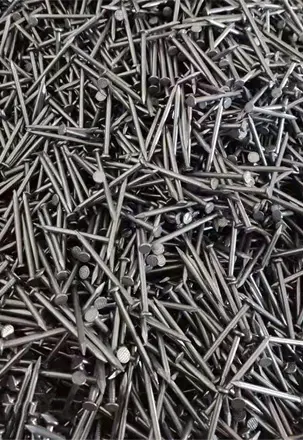
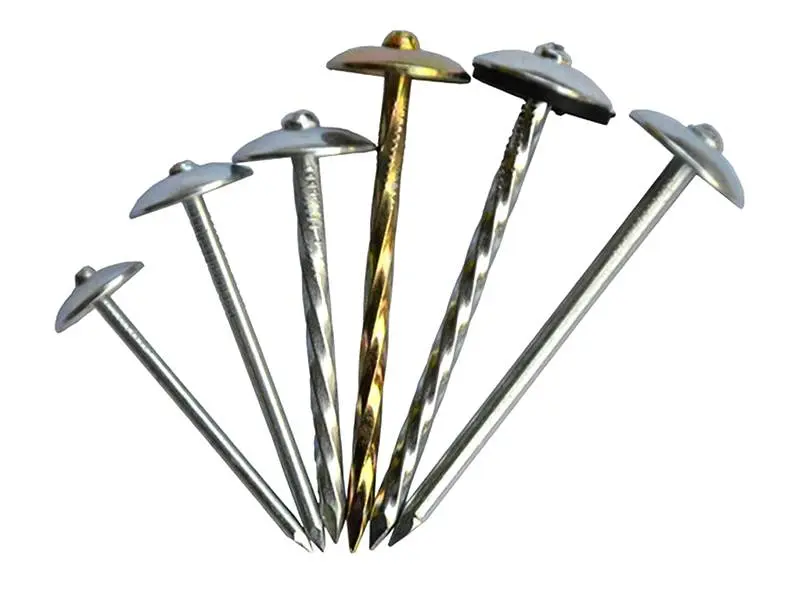
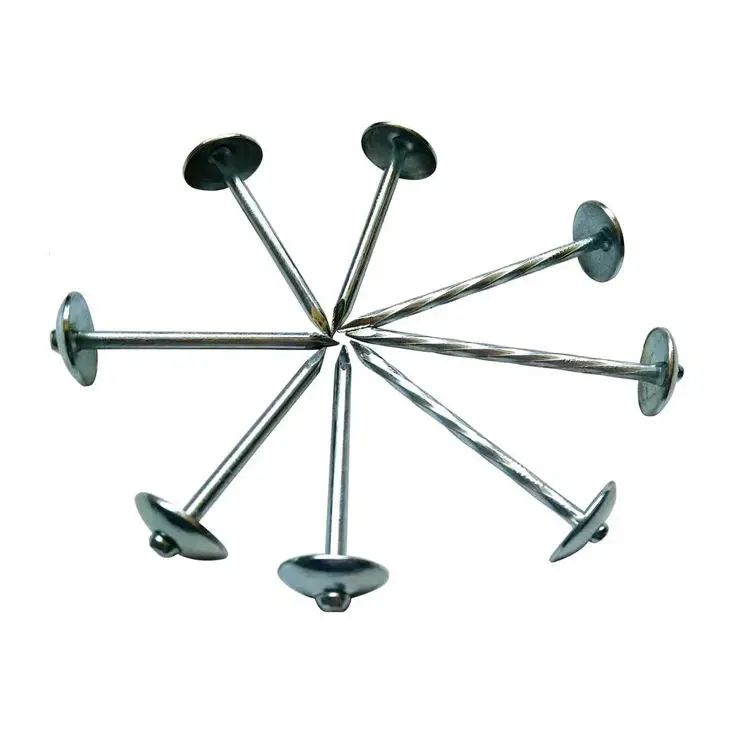
Umbrella nails are specialized roofing nails characterized by their wide, rounded heads, which resemble an umbrella. These nails are specifically designed to provide superior holding power, especially in materials like roofing felt, shingles, and other roofing components. Below is a more detailed breakdown of their sizes and specifications:
Quick Answer: What Sizes Are Umbrella Nails?
Umbrella nails are commonly available in different lengths, shank diameters, and head diameters to suit different roofing applications. Typical lengths range from 1 to 4 inches (25 to 100 mm), while common shank diameters range from 2.5 to 3.75 mm and umbrella head diameters range from approximately 9 to 12 mm. The right size depends mainly on the roofing material, material thickness, required holding power, and installation conditions.
For most standard roofing applications, medium-length umbrella nails with a standard shank diameter are commonly considered, while lightweight materials may require shorter nails and heavier roofing systems may require longer or thicker nails.
1. Length
- Short Lengths (1 to 1.5 inches or 25 to 38 mm):
- Used for thin roofing materials such as felt, tar paper, and lighter shingles.
- Common in regions with less severe weather where extreme hold isn’t required.
- Medium Lengths (2 to 2.5 inches or 50 to 64 mm):
- Ideal for standard asphalt shingles, roofing tiles, and moderate weather conditions.
- Provides a balance between holding power and material penetration.
- Long Lengths (3 to 4 inches or 75 to 100 mm):
- Used for thicker roofing materials, such as wooden shingles, metal roofing, or when installing over an additional layer of roofing.
- Required in areas with high wind or heavy rainfall to ensure the roofing material stays in place.
How to Choose the Right Umbrella Nail Length?
The correct umbrella nail length depends on the thickness of the roofing material and the substrate underneath it. A nail should provide sufficient penetration to achieve reliable holding power without being unnecessarily long. For this reason, buyers should consider the complete roofing structure rather than selecting a nail based on length alone.
For lightweight roofing materials such as roofing felt and tar paper, shorter nails may be sufficient. Standard roofing materials may require medium-length nails, while thicker roofing assemblies, wooden shingles, or installations involving multiple layers may require longer nails. Weather conditions, especially strong wind and heavy rainfall, should also be considered when determining the required fastening strength.
2. Shank Diameter
- Thin Shank (2.5 mm):
- Suitable for lighter roofing materials where minimal penetration resistance is needed.
- Provides less holding power, but reduces the risk of splitting thin materials.
- Standard Shank (3.0 to 3.25 mm):
- Most common diameter, offering a good balance of strength and ease of driving into standard roofing materials.
- Suitable for most residential roofing applications.
- Thick Shank (3.5 to 3.75 mm):
- Designed for heavier-duty applications, such as thicker roofing materials or areas subject to extreme weather conditions.
- Ensures maximum holding power but may require more force to drive into harder substrates.
How Does Shank Diameter Affect Umbrella Nail Performance?
Shank diameter directly affects the strength and holding power of an umbrella nail. In general, a thicker shank can provide greater mechanical strength, while a thinner shank can be easier to drive into lightweight roofing materials and may reduce the risk of splitting thin materials.
Therefore, selecting shank diameter should be based on both the roofing material and the required holding strength. For standard roofing applications, a 3.0–3.25 mm shank can provide a practical balance, while heavier-duty applications may require a 3.5–3.75 mm shank.
3. Umbrella Head Diameter
- Small Head (9 mm):
- Used for lightweight materials where a smaller surface area is sufficient to hold the material in place.
- Common in less demanding applications.
- Standard Head (10 to 11 mm):
- The most common size, providing ample surface area to hold down shingles or other roofing materials without tearing.
- Suitable for most roofing applications.
- Large Head (12 mm):
- Provides maximum surface area for holding power, ideal for softer materials that may tear easily or in high-wind areas.
- Often used in commercial applications or in regions with severe weather conditions.
How to Choose the Right Umbrella Nail Head Diameter?
The umbrella head diameter should be selected according to the roofing material and the amount of surface coverage required. A larger head provides a greater contact area and can help distribute pressure over a wider section of the roofing material.
For lightweight materials, a 9 mm head may be sufficient. A 10–11 mm head is suitable for many standard roofing applications, while a 12 mm head can provide additional surface coverage for softer materials or applications where stronger holding support is required.
4. Material & Coating
- Galvanized Steel:
- Most common material due to its corrosion-resistant properties, ideal for outdoor use in various climates.
- Available in both electro-galvanized and hot-dipped galvanized finishes, with hot-dipped offering better corrosion resistance.
- Stainless Steel:
- Used in coastal areas or environments where exposure to saltwater or high humidity is a concern.
- More expensive but offers superior corrosion resistance.
- Aluminum:
- Lightweight and corrosion-resistant, suitable for some specialized roofing applications but not as strong as steel.
- Copper:
- Used in high-end or historical roofing applications where appearance and longevity are key factors.
- Provides excellent corrosion resistance but is more expensive and not as strong as steel.
Which Umbrella Nail Material Is Best for Different Environments?
The best umbrella nail material depends on the environment in which the roofing system will be installed. Galvanized steel is commonly selected for general outdoor roofing because of its balance of strength, cost, and corrosion resistance. Stainless steel can be considered for coastal or high-humidity environments where corrosion resistance is particularly important.
For wholesalers, distributors, and roofing contractors, material selection should also take the target market and expected service conditions into account. When purchasing umbrella nails in bulk, buyers should confirm the material, coating type, nail dimensions, and intended application with the manufacturer before placing an order.
5. Special Features
- Rings or Grooves on Shank:
- Some umbrella nails have a ring-shanked or grooved design, which increases the holding power by preventing the nail from backing out over time.
- Particularly useful in areas prone to high winds or for materials that may expand and contract with temperature changes.
- Coating:
- Some nails may be coated with additional materials (like polymer coatings) to enhance corrosion resistance or improve driving performance.
Are Ring-Shank Umbrella Nails Better for High-Wind Applications?
Ring-shank or grooved umbrella nails can provide additional resistance against nail pull-out compared with some smooth-shank designs. This feature can be useful in roofing applications exposed to strong wind or repeated movement caused by temperature changes.
However, ring shank is only one factor affecting nail performance. Nail length, shank diameter, head diameter, material, coating, and the roofing substrate should also be considered when selecting the final specification.
6. Packaging
- Umbrella nails are usually sold by weight (e.g., kilograms) or by the count (e.g., per thousand nails).
- Available in bulk for large projects or pre-packaged in smaller quantities for DIY use.
What Should Wholesale Buyers Consider When Purchasing Umbrella Nails?
For wholesale and bulk purchases, packaging is an important part of the overall product specification. Buyers may need to confirm the quantity or weight per package, carton configuration, labeling requirements, and export packaging before placing an order.
For distributors and importers, suppliers may also be able to provide different packaging quantities or customized labels depending on order volume. Confirming these details in advance can help buyers calculate container loading, warehouse requirements, and final purchasing costs more accurately.
7. Regional Variations
- European Standards: Often use metric measurements, with slight variations in lengths and diameters compared to North American standards.
- Asian Standards: May offer additional sizes or materials based on local roofing practices and weather conditions.
Frequently Asked Questions About Umbrella Nail Sizes
What is the standard size of an umbrella nail?
There is no single standard size for all umbrella nails. Common lengths range from 1 to 4 inches (25 to 100 mm), with shank diameters generally ranging from 2.5 to 3.75 mm and head diameters from approximately 9 to 12 mm.
What size umbrella nail is best for roofing felt?
Short umbrella nails in the range of 1 to 1.5 inches (25 to 38 mm) can be suitable for thin roofing materials such as roofing felt and tar paper. The final size should depend on the thickness of the material and the substrate.
What size umbrella nail is commonly used for asphalt shingles?
Medium-length umbrella nails, approximately 2 to 2.5 inches (50 to 64 mm), are commonly used for standard asphalt shingles and similar roofing applications.
What is the largest common umbrella nail size?
Based on the sizes discussed in this guide, umbrella nails can be available in lengths up to approximately 4 inches (100 mm), with shank diameters up to about 3.75 mm and head diameters around 12 mm.
Are galvanized umbrella nails suitable for outdoor use?
Yes. Galvanized steel is commonly used for outdoor roofing applications because the zinc coating provides corrosion resistance. Hot-dipped galvanized umbrella nails generally offer greater corrosion resistance than electro-galvanized products.
Does a larger umbrella nail head provide better holding power?
A larger head provides a greater contact area with the roofing material, which can help distribute pressure and reduce the risk of the nail pulling through softer materials. However, head diameter should be selected together with nail length, shank diameter, and roofing material.
Can umbrella nail sizes be customized?
Umbrella nail specifications can vary by manufacturer. Buyers with bulk requirements should confirm whether customized lengths, diameters, materials, coatings, shank designs, or packaging are available from their supplier.
These detailed specifications can vary slightly depending on the manufacturer, so it’s important to consult with a supplier or manufacturer to ensure you’re selecting the right size and type of umbrella nail for your specific application.