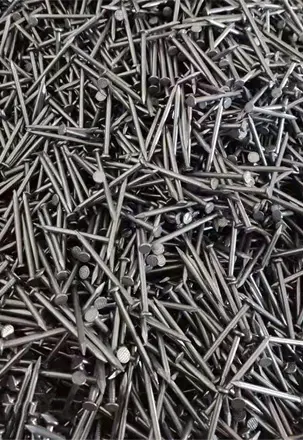
Concrete nails, also known as masonry nails, come in various sizes to accommodate different applications. The common sizes typically refer to the length of the nail, measured in inches or millimeters. Here are some of the standard sizes for concrete nails:
Types of Concrete Nails
Smooth Shank Concrete Nails: These have a smooth shank and are often used for light-duty applications.
Twisted Shank (Spiral) Concrete Nails: These have a twisted shank which provides better holding power and is suitable for more demanding applications.
Fluted Shank Concrete Nails: These have vertical flutes along the shank for improved grip in the concrete.
Annular Ring Shank Concrete Nails: These have rings along the shank that enhance their holding power.
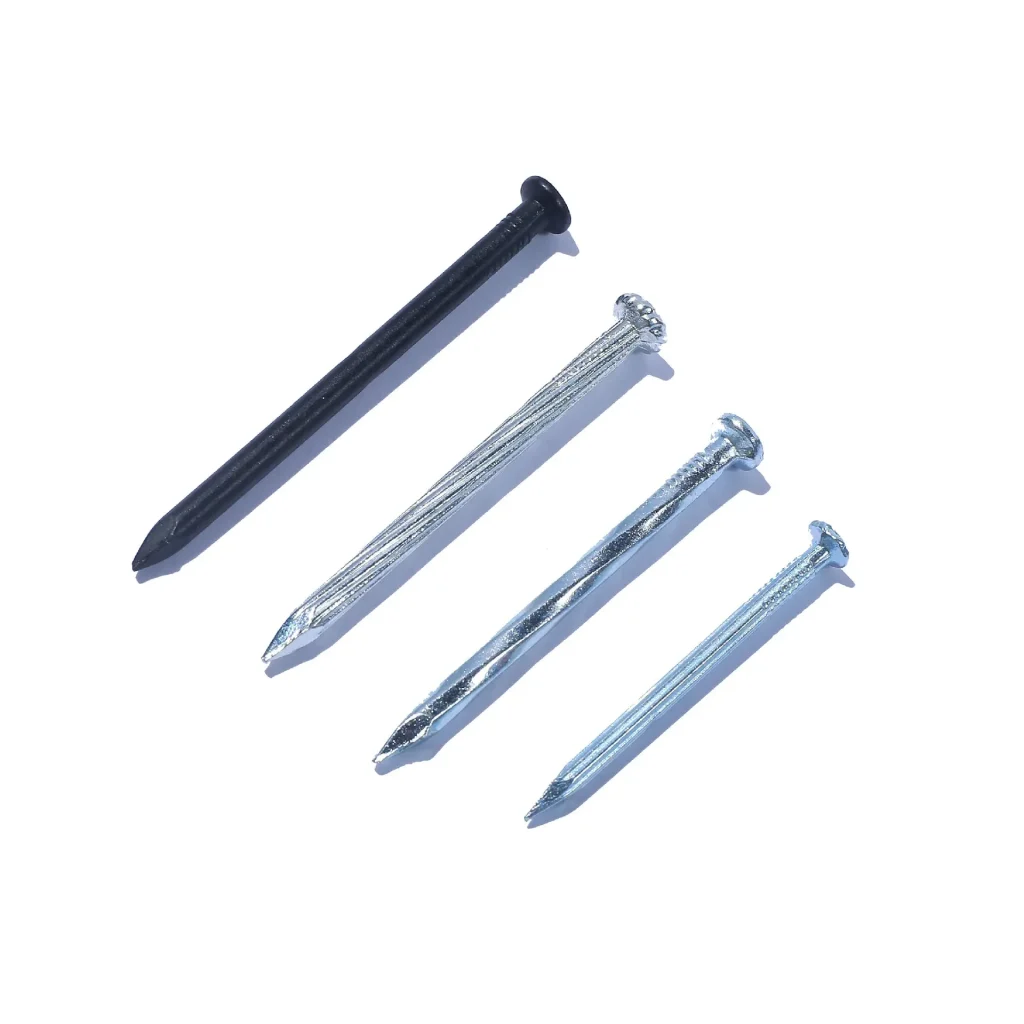
Concrete nails are made of hardened steel and have fluted shafts that help them sink into the concrete. You can also use masonry nails, which have a square cross-section and are tapered from the head to the tip.View More
Specific Sizes and Uses
- inch (25 mm):Diameter: Typically 12 gauge.
- Use: Light-duty applications such as securing electrical boxes to concrete or masonry walls. inches (38 mm):
- Diameter: Typically 10 or 12 gauge.
- Use: Attaching thin materials like plywood or paneling to concrete surfaces.
- inches (50 mm):
- Diameter: Typically 9 or 10 gauge.
- Use: Medium-duty tasks such as securing wooden battens or furring strips to concrete or brick.
- inches (63 mm):
- Diameter: Typically 9 gauge.
- Use: Attaching thicker materials, such as 2x4s, to concrete walls for framing purposes.
- inches (75 mm):
- Diameter: Typically 9 gauge.
- Use: Heavy-duty applications such as attaching thick lumber or large metal brackets to concrete.
- inches (89 mm):
- Diameter: Typically 9 gauge.
- Use: Securing very thick materials or for construction work that requires deep penetration into the concrete.
- inches (100 mm):
- Diameter: Typically 9 gauge.
- Use: Very heavy-duty applications, often in industrial or commercial construction.
Concrete Nail Size Chart for Common Construction Applications
The following chart helps buyers quickly identify the most suitable concrete nail size for different projects.
| Nail Length | Metric Size | Typical Application |
|---|---|---|
| 1 inch | 25 mm | Electrical boxes |
| 1.5 inch | 38 mm | Thin plywood |
| 2 inch | 50 mm | Furring strips |
| 2.5 inch | 63 mm | Timber framing |
| 3 inch | 75 mm | Structural wood attachment |
| 3.5 inch | 89 mm | Heavy construction |
| 4 inch | 100 mm | Industrial projects |
This sizing guide is commonly used by builders, wholesalers, and hardware distributors when purchasing concrete nails in bulk.
Materials and Coatings

- Galvanized: These nails have a zinc coating to resist rust and corrosion, making them suitable for outdoor use or in damp environments.
- Bright (Uncoated): These are used in indoor applications where there is no exposure to moisture.
- Blue Coated: These nails have a special blue coating that offers additional rust resistance and is often used for masonry work.
Selecting the Right Concrete Nail
When selecting the right concrete nail for a job, consider the following factors:
- Material to be fastened: Thicker materials require longer and thicker nails.
- Environment: Use galvanized or coated nails in environments where moisture is present to prevent rust.
- Load and stress: Heavier loads require thicker and longer nails with better holding power, such as twisted or annular ring shank nails.
- Depth of penetration: Ensure the nail length is sufficient to penetrate the concrete deeply enough for a secure hold.
How Deep Should Concrete Nails Penetrate Into Concrete?
One of the most frequently asked questions by contractors and distributors is how deep a concrete nail should penetrate into the concrete substrate.
As a general rule:
| Material Thickness | Recommended Penetration |
|---|---|
| Light-duty installation | 20-25 mm |
| Medium-duty installation | 25-32 mm |
| Heavy-duty installation | 32-50 mm |
| Industrial applications | 50 mm+ |
For example, when attaching a 20 mm wooden strip to a concrete wall, a 50 mm concrete nail is usually recommended. This allows approximately 30 mm of penetration into the concrete, providing reliable holding power.
Insufficient penetration can lead to pull-out failure, while excessive penetration may cause cracking in older concrete structures.
Frequently Asked Questions About Concrete Nails
What Size Concrete Nail Is Used for 2×4 Lumber?
For attaching 2×4 lumber to concrete walls, contractors typically use 2.5-inch (63 mm) to 3-inch (75 mm) concrete nails.
Are Concrete Nails Stronger Than Masonry Screws?
Concrete nails provide faster installation and lower cost, while masonry screws generally offer higher pull-out strength and removability.
Can Concrete Nails Be Used Outdoors?
Yes. Galvanized or blue-coated concrete nails are recommended for outdoor environments because they provide enhanced corrosion resistance.
What Material Are Concrete Nails Made From?
Most concrete nails are manufactured from high-carbon hardened steel. The heat-treatment process increases hardness, allowing the nail to penetrate concrete and masonry without bending.
What Is the Most Popular Concrete Nail Size?
Globally, the most commonly purchased sizes are:
- 2 inch (50 mm)
- 2.5 inch (63 mm)
- 3 inch (75 mm)
These sizes cover the majority of residential and commercial construction applications.
Wholesale Concrete Nails: What Importers Should Consider
For importers and distributors, selecting a reliable concrete nail supplier is as important as choosing the correct nail size.
Important purchasing factors include:
Consistent Hardness
Improper heat treatment can cause nails to bend or break during installation.
Coating Quality
High-quality galvanizing improves corrosion resistance and extends product lifespan.
Dimensional Accuracy
Uniform shank diameter and length improve installation efficiency and reduce waste.
Packaging Options
Many distributors require:
- 1 kg boxes
- 5 kg boxes
- 25 kg cartons
- Customized private-label packaging
Production Capacity
Large-volume projects often require stable monthly production to avoid delivery delays.
Working directly with a manufacturer can help reduce procurement costs while ensuring consistent product quality.
Why Choose Roofglory as Your Concrete Nail Supplier?
Roofglory is a professional Chinese manufacturer and exporter of construction fasteners and building materials.
Our advantages include:
- High-carbon hardened steel production
- Strict quality inspection procedures
- OEM and private-label services
- Customized packaging solutions
- Global export experience
- Competitive factory-direct pricing
- Fast production and shipment schedules
We serve distributors, wholesalers, hardware chains, building material suppliers, and construction companies worldwide.
Whether you need standard concrete nails, galvanized masonry nails, or customized fastener solutions, Roofglory can provide reliable products and professional export support.
Conclusion
Concrete nails are typically driven into the concrete using a hammer or a nail gun designed for masonry. Proper safety equipment, such as safety glasses and gloves, should be worn when working with concrete nails.
More details:https://www.sinogrp.com/contact-us/