
Anchor bolts and expansion bolts are both types of fasteners used to secure objects to concrete, masonry, or other solid materials. However, they differ in terms of their design, installation methods, and specific applications. Let’s explore the differences between anchor bolts and expansion bolts:
1.Anchor Bolts:
Anchor bolts are typically threaded rods or bolts that are embedded in concrete or masonry during construction. They are used to secure heavy structures, such as columns, beams, equipment, and machinery, to a solid foundation. Anchor bolts come in various shapes and sizes, but they generally have a threaded end that extends above the surface of the concrete or masonry.
Installation: Anchor bolts are installed by drilling holes into the concrete or masonry, placing the bolt into the hole, and then securing it with a nut and washer on the exposed threaded end. The bolt is held firmly in place due to the expansion of the concrete or grout around it.
Types: There are several types of anchor bolts, including wedge anchors, epoxy anchors, sleeve anchors, and more. Each type has its own design and installation requirements based on the specific application and load requirements.
2.Expansion Bolts:
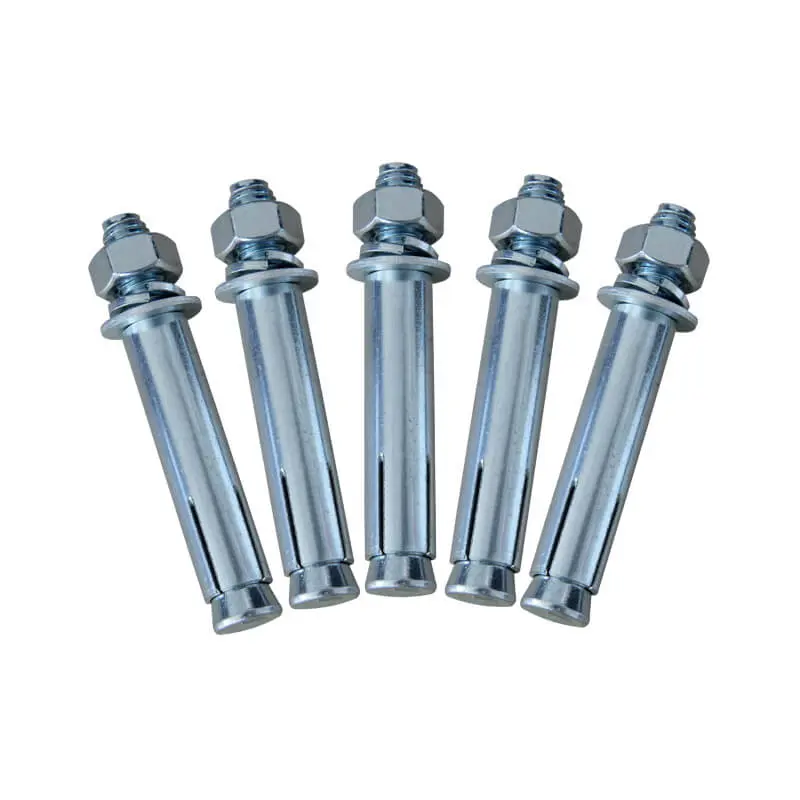
Expansion bolts, also known as wedge anchors or expansion anchors, are a specific type of anchor bolt that relies on expansion to create a secure connection. These bolts consist of a threaded shaft and an expansion mechanism, typically a cone-shaped expander plug or a sleeve.
Installation: To install an expansion bolt, a hole is drilled into the concrete or masonry. The bolt is then inserted into the hole, and a wrench is used to tighten the bolt. As the bolt is tightened, the expansion mechanism is pulled up, causing it to expand and wedge against the walls of the hole. This creates a strong and secure connection.
Applications: Expansion bolts are commonly used for light to medium loads and in applications where a high degree of holding strength is required. They are often used to secure fixtures like shelves, brackets, and light fixtures to concrete or masonry surfaces.
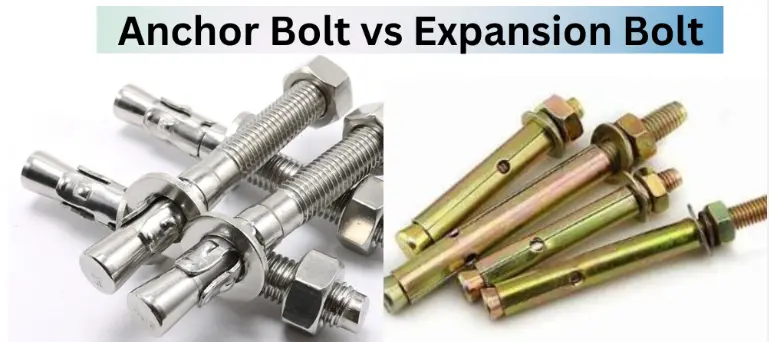
Anchor Bolt vs Expansion Bolt
| Feature | Anchor Bolt | Expansion Bolt |
|---|---|---|
| Definition | General category of bolts used for anchoring | A specific type of anchor bolt |
| Installation | Can be cast-in-place or post-installed | Always post-installed |
| Load Capacity | Medium to extremely heavy loads | Light to medium loads |
| Applications | Steel structures, machinery, foundations | Shelves, brackets, handrails |
| Service Life | Longer | Moderate |
| Cost | Higher | Lower |
When Should You Use Anchor Bolts?
Anchor bolts are widely used in:
- Steel structure buildings
- Industrial workshops
- Warehouses
- Solar mounting systems
- Telecommunication towers
- Heavy machinery foundations
- Bridge construction
- Infrastructure projects
Because they transfer large tensile and shear loads directly into concrete foundations, anchor bolts offer superior long-term stability.
For projects requiring seismic resistance or wind-load resistance, engineers often specify heavy-duty anchor bolt systems instead of conventional expansion anchors.
When Should You Use Expansion Bolts?
Expansion bolts are ideal for:
- Wall-mounted shelving
- Air conditioning units
- Cable trays
- Lighting fixtures
- Security cameras
- Pipe supports
- Handrails
- Residential renovation projects
Their greatest advantage is easy installation. Contractors can install expansion bolts quickly without special equipment.
However, expansion bolts may not perform well in cracked concrete or under repeated vibration loads.
How to Choose the Right Anchoring Solution
When selecting between anchor bolts and expansion bolts, consider:
Load Requirements
Heavy industrial equipment requires high-capacity anchor bolts.
Base Material
Concrete, brick, and masonry may require different anchoring systems.
Environmental Conditions
For coastal or corrosive environments, stainless steel anchor bolts are recommended.
Installation Method
Expansion bolts offer faster installation, while anchor bolts provide greater structural strength.
Project Budget
Expansion bolts are generally less expensive but may not meet heavy-duty structural requirements.
Why Global Buyers Choose Roofglory
Roofglory is a professional Chinese manufacturer supplying anchoring systems and construction fastening solutions to distributors, contractors, and building material importers worldwide.
Our Advantages
- Advanced automated production lines
- Strict quality control procedures
- Galvanized and stainless steel options
- OEM & ODM manufacturing services
- Customized dimensions available
- Export experience in over 50 countries
- Competitive factory-direct pricing
- Fast production and global delivery
Whether you need anchor bolts for industrial construction or expansion bolts for commercial projects, Roofglory can provide reliable fastening solutions tailored to your market requirements.
In summary, the main differences between anchor bolts and expansion bolts lie in their installation methods, designs, and intended applications. Anchor bolts are a broader category that includes various types of bolts used for anchoring purposes, while expansion bolts are a specific subset of anchor bolts that rely on an expansion mechanism to achieve a secure connection. The choice between these two types of bolts depends on factors such as the load requirements, the type of material being anchored to, and the specific application.