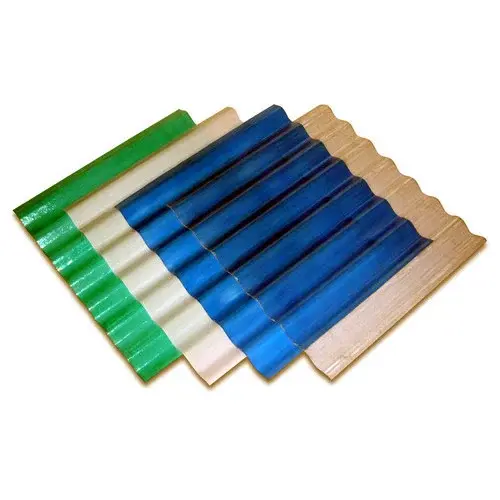
FRP (Fiberglass Reinforced Plastic) and polycarbonate sheets are both popular materials used in construction and various applications due to their unique properties. Here’s a comparison of the two:
Composition:
- FRP: FRP is a composite material made from a combination of fiberglass and a polymer matrix, typically a thermosetting resin like polyester or epoxy.
- Polycarbonate Sheet: Polycarbonate is a type of thermoplastic polymer, which means it can be melted and reshaped multiple times without undergoing significant degradation.
Strength and Durability:
- FRP: FRP sheets are known for their excellent strength-to-weight ratio, making them strong and durable. They are often used in applications where high strength and corrosion resistance are required.
- Polycarbonate Sheet: Polycarbonate sheets are also strong, but they may not be as durable as FRP in certain extreme conditions. They are more impact-resistant than glass and have good tensile strength.
Transparency and Appearance:
- FRP: FRP sheets are not transparent and are usually opaque or semi-opaque, often used for industrial and structural purposes.
- Polycarbonate Sheet: Polycarbonate sheets are known for their excellent optical clarity and transparency. They are often used in applications where clear or tinted panels are desired, such as greenhouse panels, skylights, and windows.
Flexibility and Formability:
- FRP: FRP sheets can be molded into complex shapes, making them suitable for custom applications and designs.
- Polycarbonate Sheet: Polycarbonate sheets are more flexible and can be bent or thermoformed to create curved surfaces or unique designs.
Insulation and Thermal Properties:
- FRP: FRP sheets provide some insulation, but they are not as effective in terms of thermal insulation as other materials.
- Polycarbonate Sheet: Polycarbonate sheets have better thermal insulation properties, helping to reduce heat transfer and maintain a more stable indoor environment.
Installation and Maintenance:
- FRP: FRP sheets are relatively easy to install and require minimal maintenance. They are resistant to corrosion and chemicals.
- Polycarbonate Sheet: Polycarbonate sheets are lightweight and easy to install. They are also resistant to weathering, UV radiation, and impact, requiring less maintenance compared to some other materials.

Global Demand Trends for FRP and Polycarbonate Sheets
In recent years, the international construction materials market has shown growing demand for lightweight, corrosion-resistant, and energy-efficient panel materials. FRP roofing sheets and polycarbonate sheets are increasingly used in:
- Industrial factories
- Agricultural greenhouses
- Commercial skylights
- Warehouse roofing systems
- Airport terminals
- Sports stadiums
- Coastal construction projects
In regions such as Southeast Asia, the Middle East, Africa, and South America, buyers prefer roofing materials with strong UV resistance and long service life due to extreme climate conditions. Meanwhile, European and North American buyers focus more on environmental performance, thermal insulation, and sustainable building certifications.
As a China-based manufacturing supplier, RoofGlory provides OEM and wholesale solutions for global distributors, contractors, and project developers seeking cost-effective roofing and wall cladding materials.
FRP vs Polycarbonate Sheet: Which Material is Better for Different Projects?
FRP Sheets Are Better For:
- Chemical plants
- Industrial workshops
- Corrosive environments
- Livestock farms
- Coastal projects
- Heavy-duty roofing systems
FRP sheets offer excellent corrosion resistance and structural durability, especially in industrial environments with high humidity or chemical exposure.
Polycarbonate Sheets Are Better For:
- Greenhouses
- Skylights
- Shopping malls
- Sunrooms
- Architectural facades
- Carports
Polycarbonate sheets provide superior transparency and impact resistance, making them ideal for projects requiring natural daylight.
Important Technical Parameters Buyers Should Consider
When sourcing FRP or polycarbonate sheets internationally, B2B buyers usually focus on the following specifications:
| Technical Parameter | FRP Sheet | Polycarbonate Sheet |
|---|---|---|
| Thickness Range | 0.8mm–5mm | 2mm–20mm |
| Light Transmission | Low | Up to 90% |
| UV Resistance | Excellent | Excellent |
| Impact Resistance | High | Extremely High |
| Fire Rating | Optional FR Grade | Optional FR Grade |
| Temperature Resistance | Good | Excellent |
| Corrosion Resistance | Excellent | Moderate |
| Service Life | 15–25 Years | 10–20 Years |
Including these technical keywords can help improve Google indexing and attract professional overseas buyers searching for precise specifications.
RoofGlory Factory Advantages
As a professional Chinese roofing materials manufacturer, RoofGlory focuses on providing high-quality roofing and wall cladding solutions for international B2B customers.
RoofGlory Advantages:
- Advanced automated production lines
- Strict quality inspection system
- Stable raw material supply chain
- OEM & ODM customization support
- Fast delivery for bulk orders
- Professional export packaging
- Global project experience
RoofGlory is committed to helping distributors, wholesalers, contractors, and project owners source reliable roofing materials at competitive factory prices.
Conclusion
In summary, both FRP and polycarbonate sheets have their own unique advantages and applications. FRP is often chosen for its strength and industrial use, while polycarbonate sheets are valued for their transparency, impact resistance, and thermal properties. The choice between the two will depend on the specific requirements of the project or application.
As a trusted China factory supplier, RoofGlory provides customized FRP and polycarbonate sheet solutions for global B2B buyers, wholesalers, distributors, and construction projects. Whether you need industrial roofing panels, transparent skylight sheets, or OEM building materials, RoofGlory can support your sourcing needs with stable quality and competitive pricing.